Advanced: Real-Life Reliability
Workload: 12–15 minutes/day. Context: moderate distractions, added distance and duration, and practical routines for everyday owners. Stay with the same daily-card mindset: one task, one signal, one next step.
Readiness check: Use Advanced only when Foundation feels easy in quiet settings. If an exercise increases fear, aggression, pain, guarding, or unsafe pulling, stop, add distance, and use qualified local support.
Advanced readiness gate
- Your dog can complete Foundation drills in quiet setups without repeated frustration.
- Your dog can eat, check in, and recover after mild triggers within a few seconds.
- You can keep the leash loose and add only one challenge at a time: distance, duration, or distraction.
- If the answer is no, repeat Foundation or use the Safety Tracker before raising difficulty.
Day 1Advanced
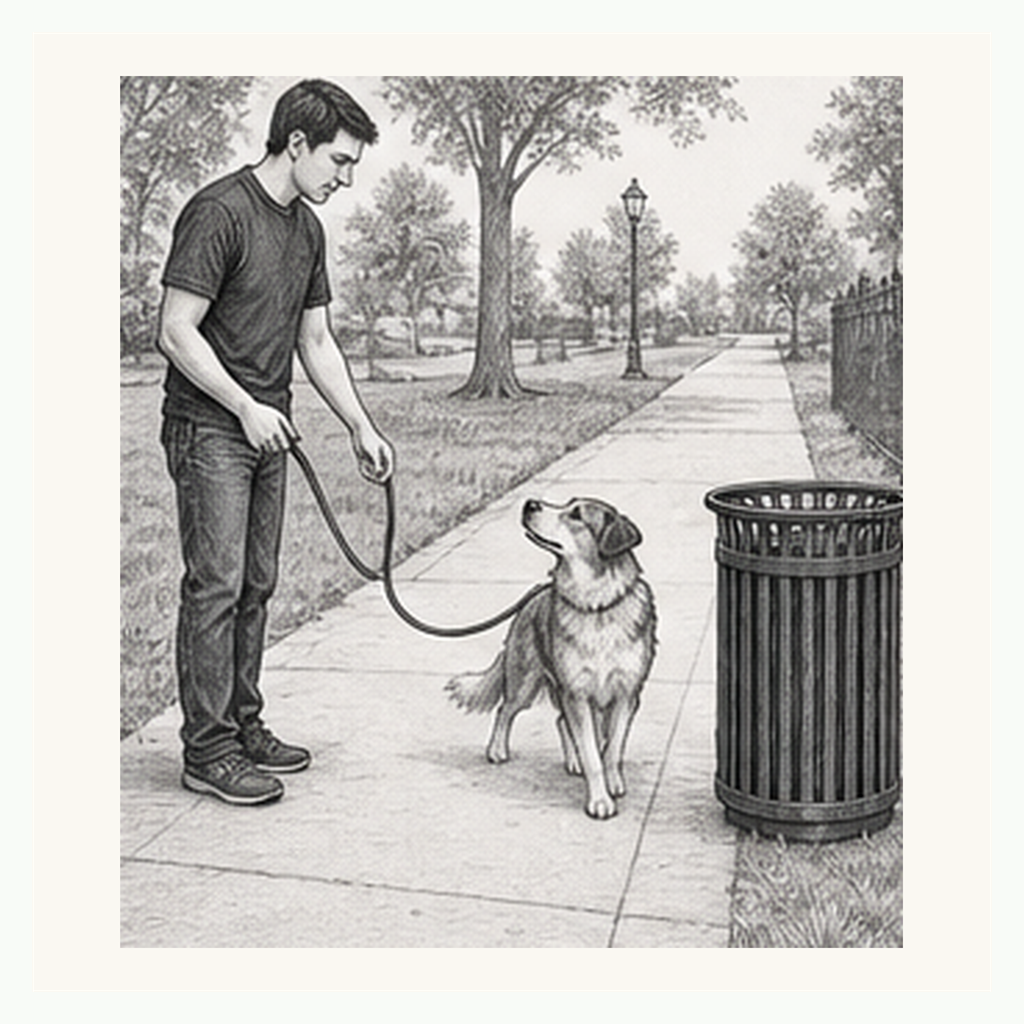
Loose Leash Reset Loop
Tiny Win
Your dog feels the leash tighten, checks back in, and reconnects without a correction.
Do This - 10 Minutes
- Walk with treats hidden and leash relaxed.
- When the leash tightens, stop without speaking or pulling.
- Wait for a glance back or one step toward you.
- Mark “Yes,” reward beside your leg, and walk forward.
- Repeat on three different sidewalk sections.
Watch For
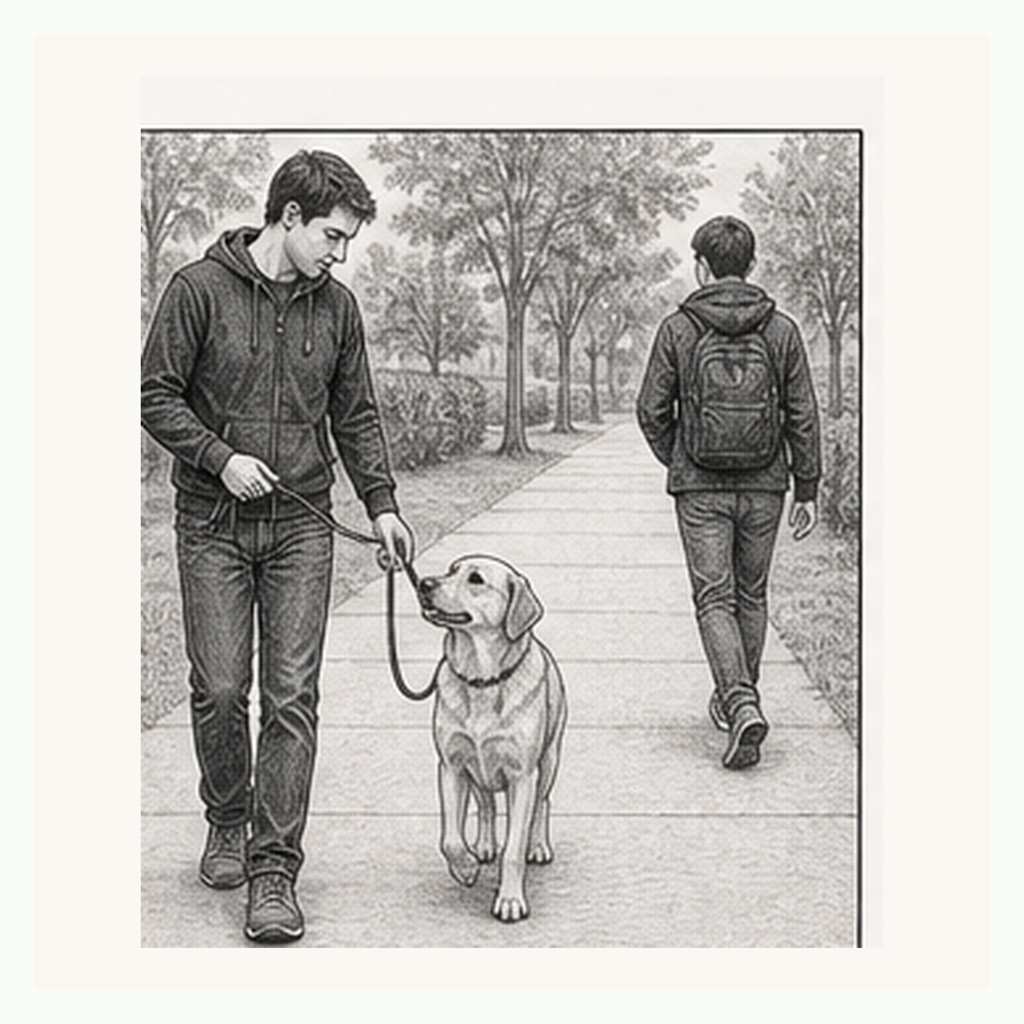
- Your dog pulls toward a trash can; you stop, they glance back, and you reward at your leg before moving on.
- 6 self-corrections in 12 minutes.
- Your dog can reset before the session gets noisy or frustrated.
If It Gets Messy: Forward movement is part of the reward, so do not rush the reset.
Track One Thing: 6 self-corrections in 12 minutes.
Need More Help?
- Setup: 6-foot leash, soft treats, quiet sidewalk.
- Why it works: The leash tightening becomes a cue to reconnect instead of a cue to pull harder.
- Common mistake: Making the setup too hard before the easy version is fluent.
- Level up: Repeat with one small increase in distance, duration, or distraction.
Day 2Advanced
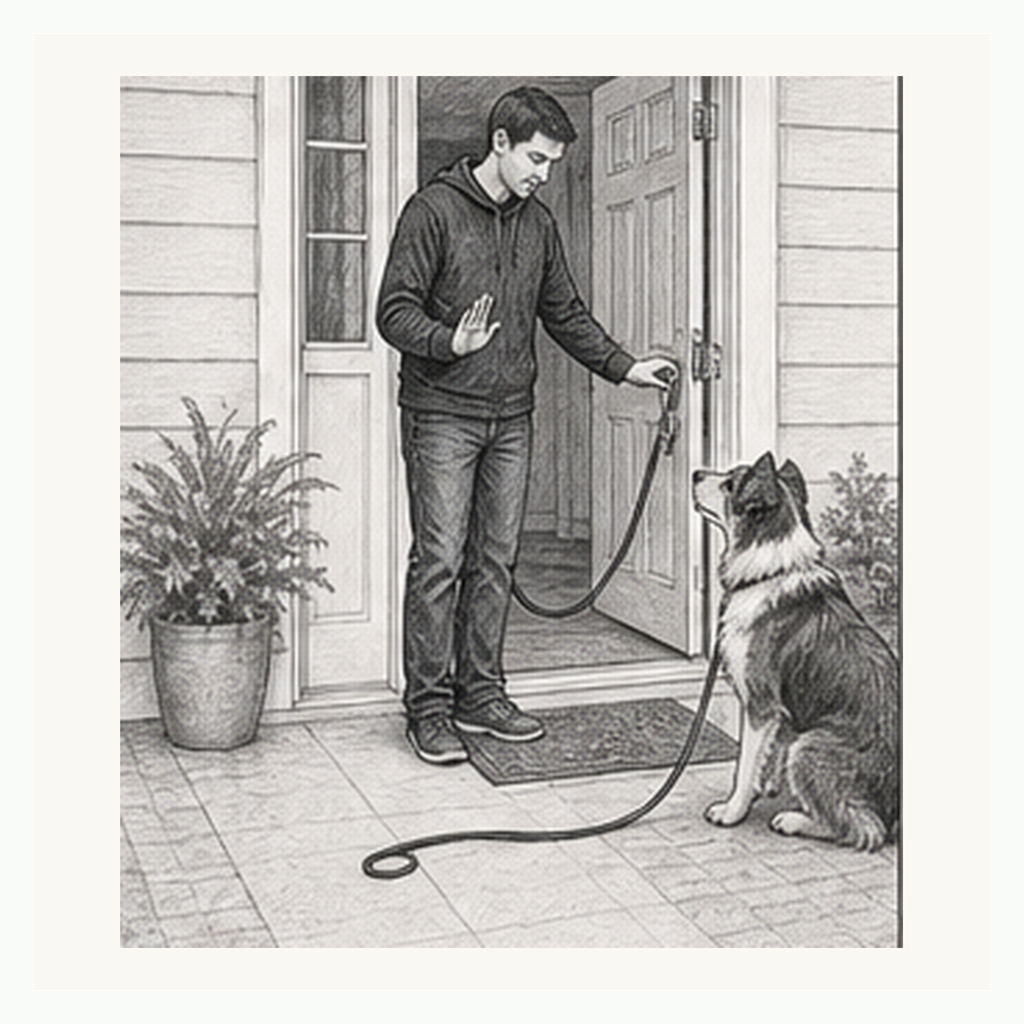
Doorway Pause With Release
Tiny Win
Your dog pauses at a doorway and waits for your release before moving through.
Do This - 10 Minutes
- Stop three feet before the threshold.
- Ask for a sit or quiet stand.
- Touch the handle, then open the door one inch.
- Close the door if your dog surges; reward stillness.
- Release with “let’s go” and walk through together.
Watch For
- Your dog waits while the front door opens halfway and exits only after your release cue.
- 4 of 5 doorway openings with no rushing.
- Your dog can reset before the session gets noisy or frustrated.
If It Gets Messy: This is a calm check-in, not a long stay contest.
Track One Thing: 4 of 5 doorway openings with no rushing.
Need More Help?
- Setup: Leash, treats, safe doorway.
- Why it works: This builds polite impulse control before doors, gates, and elevators.
- Common mistake: Making the setup too hard before the easy version is fluent.
- Level up: Repeat with one small increase in distance, duration, or distraction.
Day 3Advanced
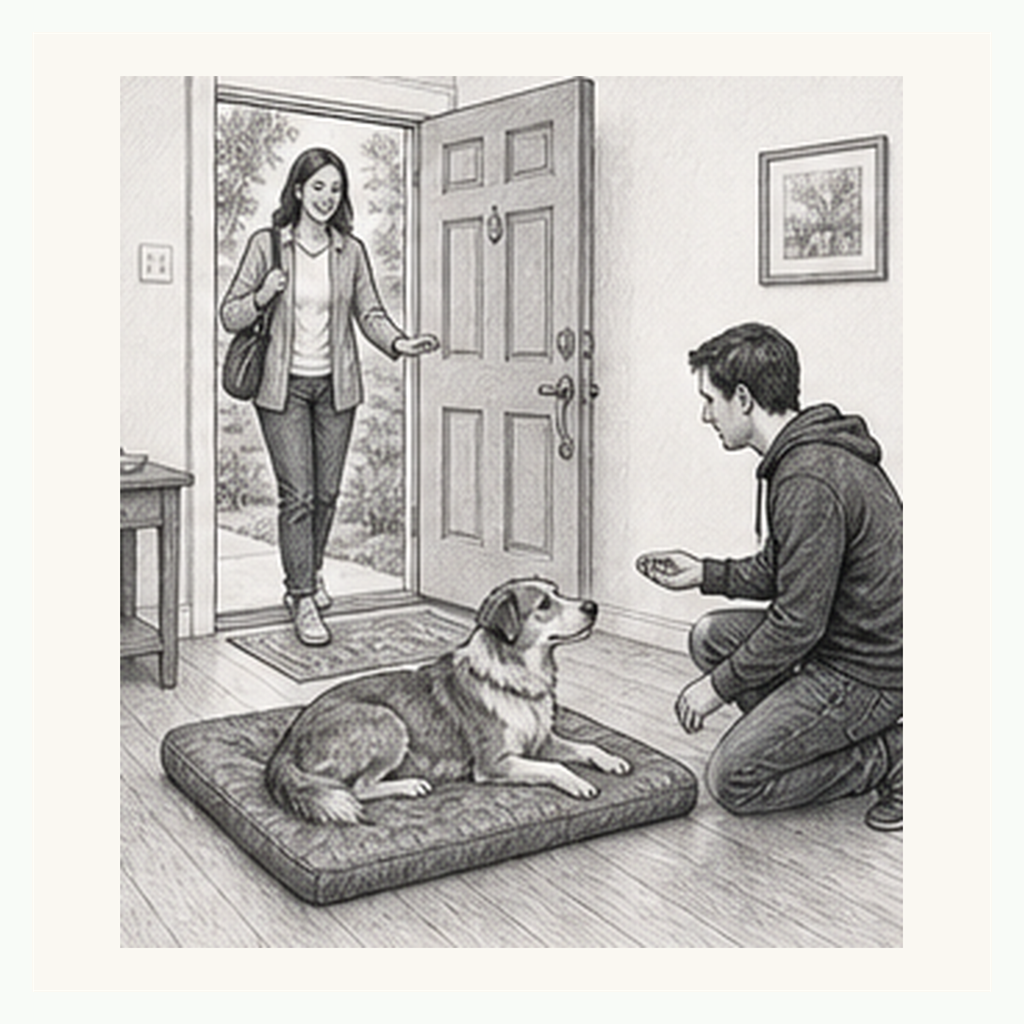
Guest Arrival Anchor
Tiny Win
Settle on a station while a familiar visitor enters.
Do This - 10 Minutes
- Place the mat 6–10 feet from the door.
- Send your dog to the mat before the knock.
- Feed small treats while the helper opens the door.
- Ask the helper to ignore the dog for 30 seconds.
- Release for a brief greeting only if four paws stay down.
Watch For
- A friend enters while your dog stays on the mat instead of jumping at the door.
- One full guest entry with no jumping.
- Your dog can reset before the session gets noisy or frustrated.
If It Gets Messy: Delay greetings until your dog’s body looks softer.
Track One Thing: One full guest entry with no jumping.
Need More Help?
- Setup: Mat, treats, leash if needed, calm helper.
- Why it works: Settle on a station while a familiar visitor enters.
- Common mistake: Making the setup too hard before the easy version is fluent.
- Level up: Repeat with one small increase in distance, duration, or distraction.
Day 4Advanced
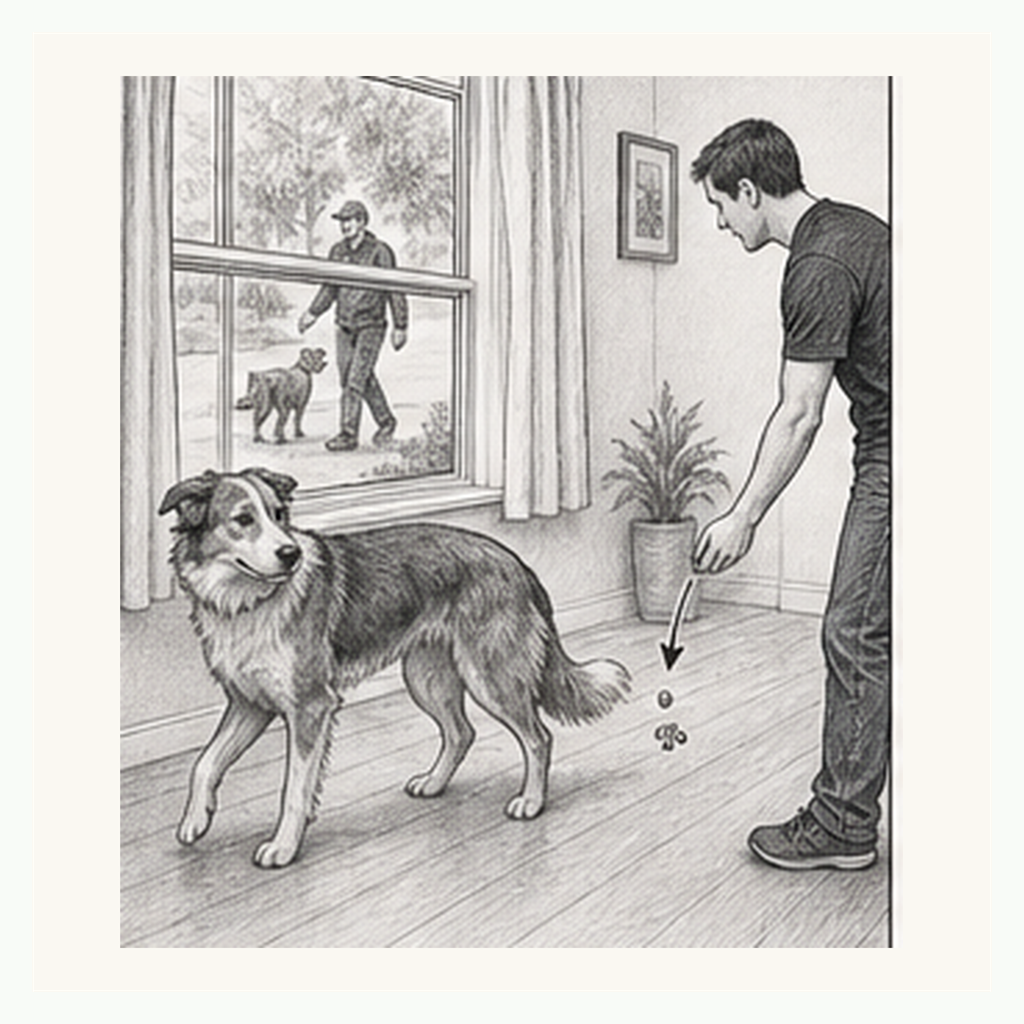
Window Watch Disengage
Tiny Win
Notice outdoor movement, turn away, and reset before barking builds.
Do This - 10 Minutes
- Stand several feet from the window.
- Say “thanks” once when your dog notices movement.
- Drop a treat behind your dog to encourage turning away.
- Ask for touch or sit away from the glass.
- End the round before barking escalates.
Watch For
- Your dog sees a neighbor, turns for the floor treat, and sits beside you.
- 5 turn-aways within 3 seconds.
- Your dog can reset before the session gets noisy or frustrated.
If It Gets Messy: Reward the disengagement, not the trigger.
Track One Thing: 5 turn-aways within 3 seconds.
Need More Help?
- Setup: Treats, window with mild activity, optional leash.
- Why it works: Notice outdoor movement, turn away, and reset before barking builds.
- Common mistake: Making the setup too hard before the easy version is fluent.
- Level up: Repeat with one small increase in distance, duration, or distraction.
Day 5Advanced
Mat Stay With Household Motion
Tiny Win
Stay relaxed on a mat while normal home movement happens.
Do This - 10 Minutes
- Cue your dog onto the mat.
- Take one step away and return to reward.
- Fold a towel or pick up keys while your dog stays.
- Increase reward gaps to 10–20 seconds.
- Release clearly before your dog gets up.
Watch For
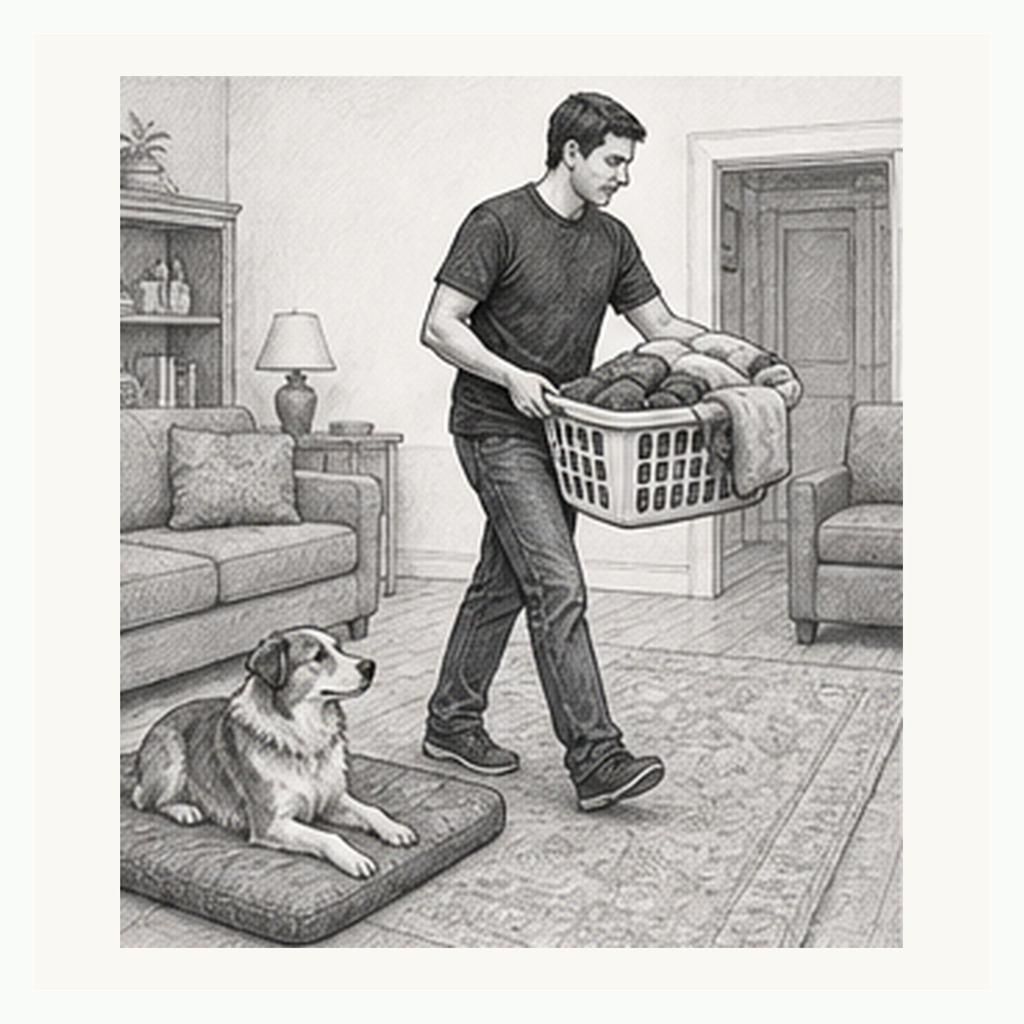
- Your dog stays on the mat while you carry laundry across the room.
- 2 minutes on mat with moderate motion.
- Your dog can reset before the session gets noisy or frustrated.
If It Gets Messy: Your movement is the distraction; add one action at a time.
Track One Thing: 2 minutes on mat with moderate motion.
Need More Help?
- Setup: Mat, treats, laundry, keys, or dishes.
- Why it works: Stay relaxed on a mat while normal home movement happens.
- Common mistake: Making the setup too hard before the easy version is fluent.
- Level up: Repeat with one small increase in distance, duration, or distraction.
Day 6Advanced
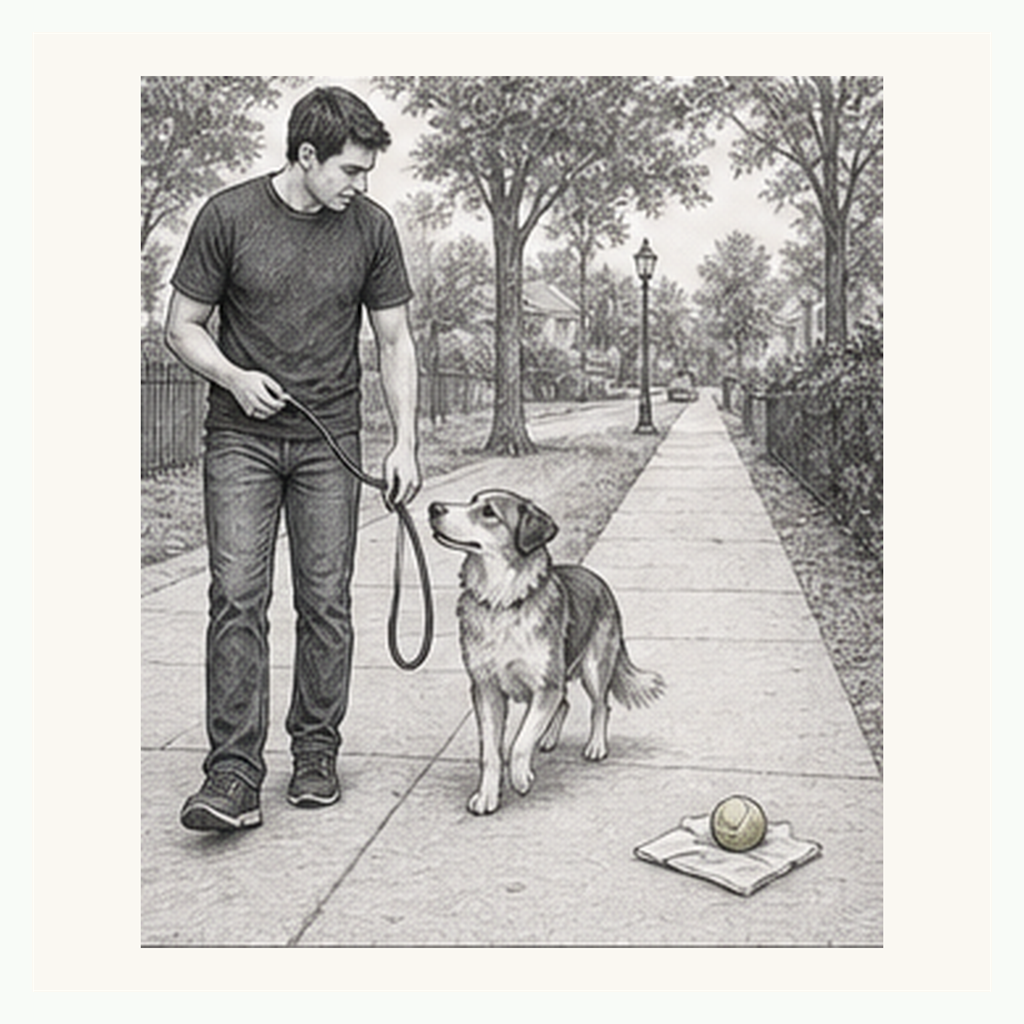
Leave-It Walk Past
Tiny Win
Pass safe tempting objects without diving toward them.
Do This - 10 Minutes
- Place the item 8–10 feet ahead.
- Cue “leave it” once before your dog reaches it.
- Reward the first head turn away.
- Pass with enough distance for a loose leash.
- Repeat from another angle.
Watch For
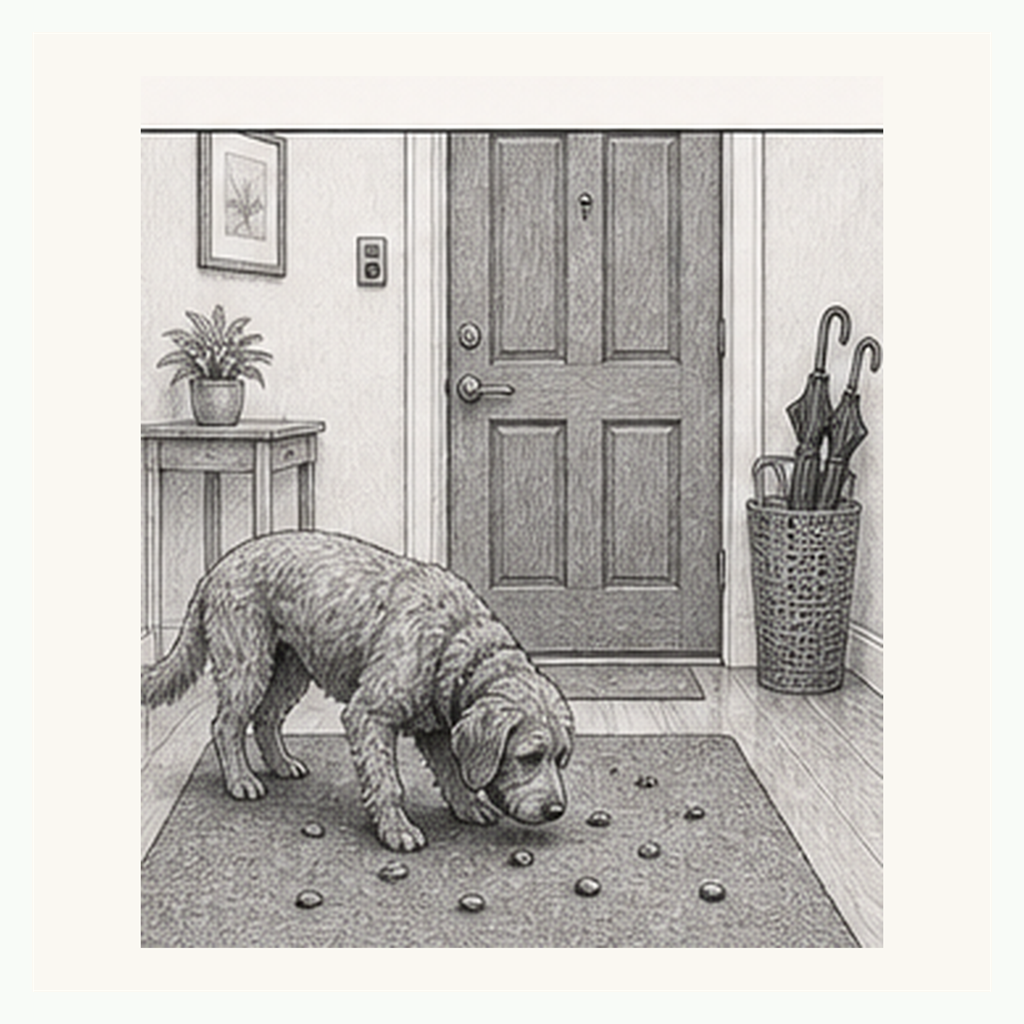
- Your dog notices a tennis ball, checks in, and walks past for chicken.
- 3 items passed without grabbing.
- Your dog can reset before the session gets noisy or frustrated.
If It Gets Messy: If you need to repeat the cue, add distance. Practice only with planted safe objects, never real trash, unknown food, medication, sharp items, or anything your dog may guard.
Track One Thing: 3 items passed without grabbing.
Need More Help?
- Setup: Leash, high-value treats, planted toy or napkin.
- Why it works: Pass safe tempting objects without diving toward them.
- Common mistake: Making the setup too hard before the easy version is fluent.
- Level up: Repeat with one small increase in distance, duration, or distraction.
Day 7Advanced
Drop-and-Trade Upgrade
Tiny Win
Release toys or safe household items without conflict.
Do This - 10 Minutes
- Start a short game with toy one.
- Freeze the toy and say “drop” once.
- Mark the release and give a treat.
- Offer the toy back or switch toys.
- Repeat with playful breaks.
Watch For
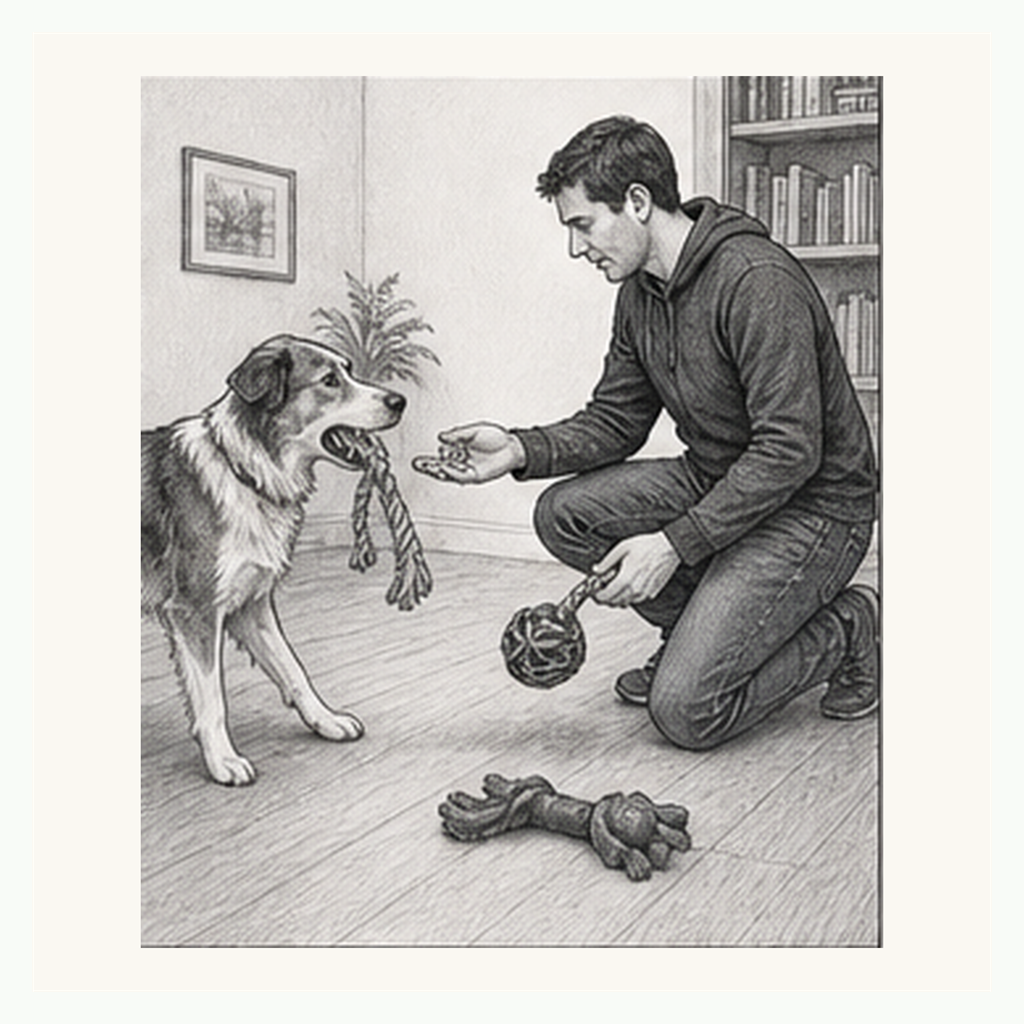
- Your dog releases a rope toy, eats a treat, and gets the rope back.
- 8 of 10 drops within 2 seconds.
- Your dog can reset before the session gets noisy or frustrated.
If It Gets Messy: Giving the item back prevents “drop” from feeling like a loss. Do not use stolen, high-value, or guarded items; freezing, growling, snapping, or hovering over the item means stop and get help.
Track One Thing: 8 of 10 drops within 2 seconds.
Need More Help?
- Setup: Two toys, treats, quiet room.
- Why it works: Release toys or safe household items without conflict.
- Common mistake: Making the setup too hard before the easy version is fluent.
- Level up: Repeat with one small increase in distance, duration, or distraction.
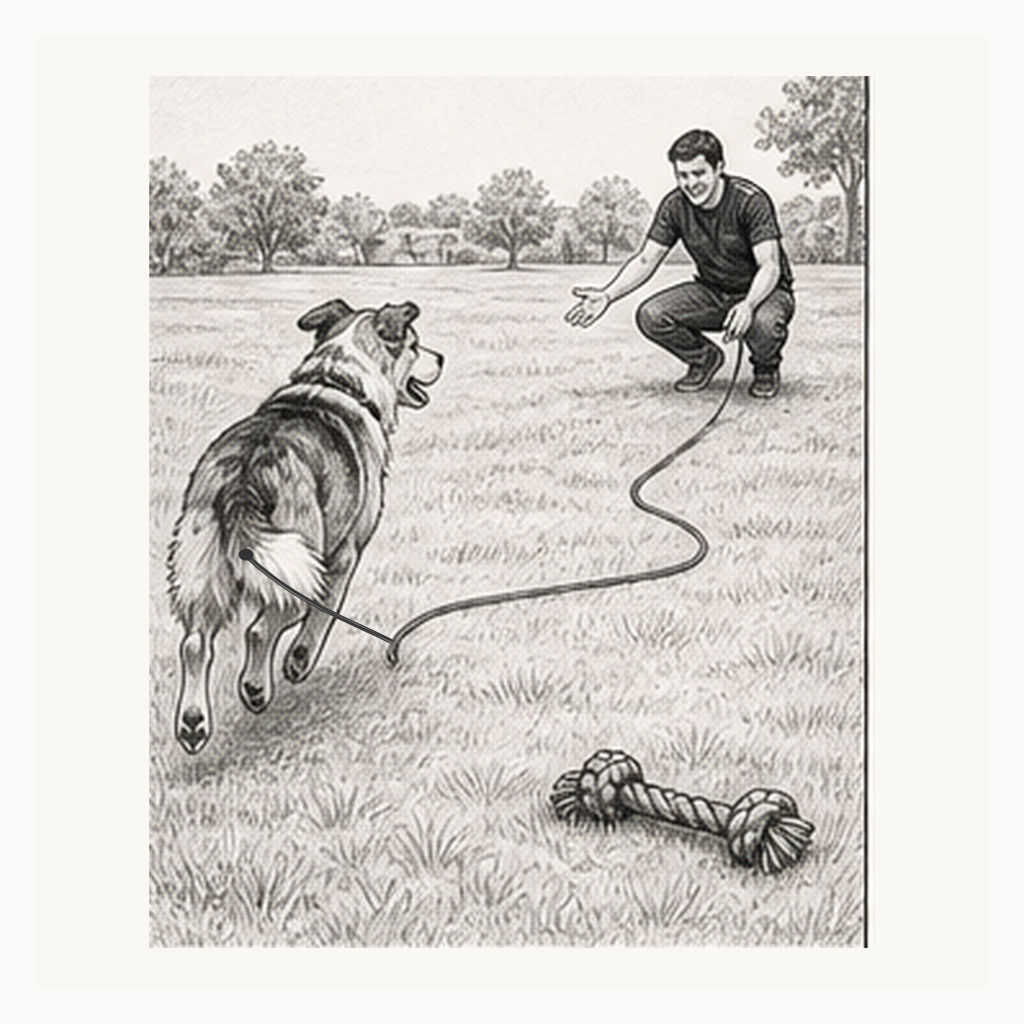
Day 8Advanced
Long-Line Check-In Recall
Tiny Win
Your dog returns from safe outdoor distance while sniffing is available.
Do This - 10 Minutes
- Let your dog explore with the line loose.
- Wait for a natural pause or head lift.
- Call once in a cheerful voice.
- Back up as your dog turns.
- Reward at your feet, then release to sniff.
Watch For
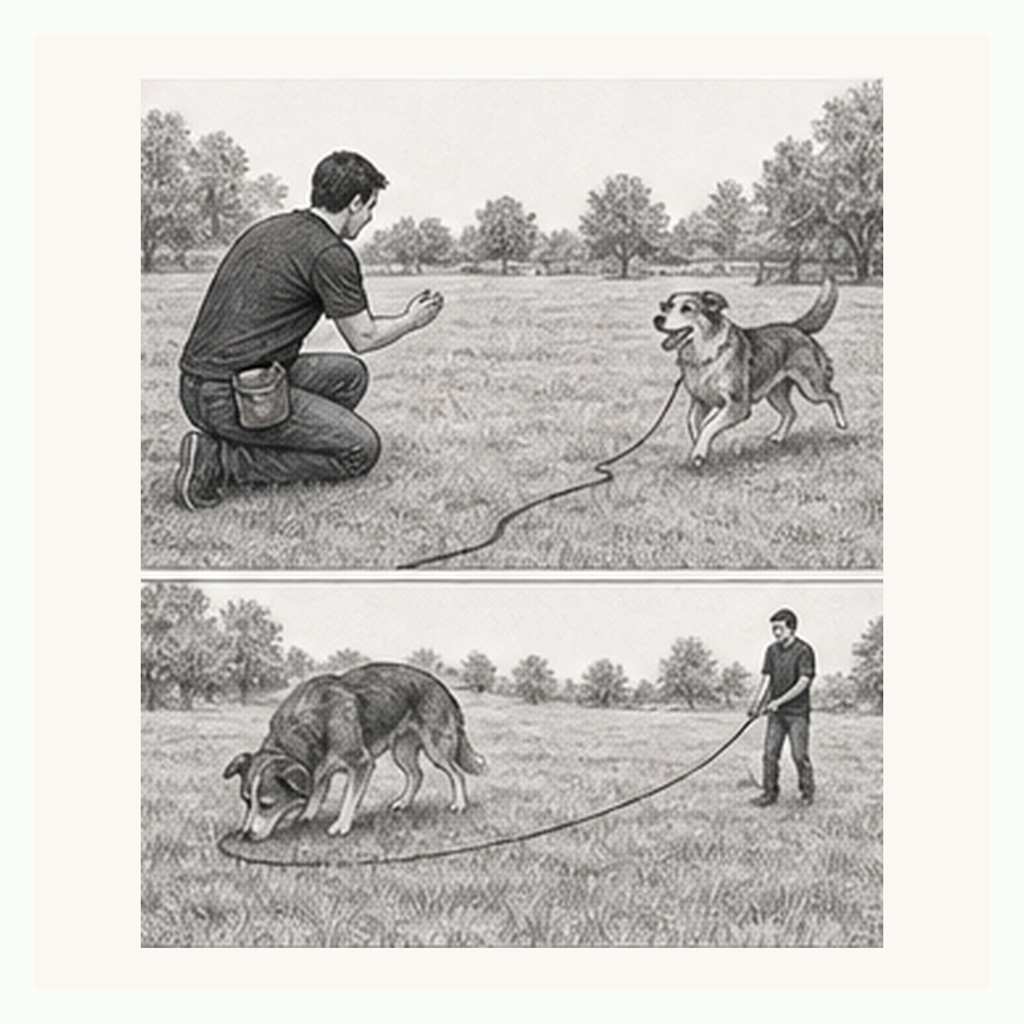
- Your dog is sniffing 20 feet away, returns when called, and earns “go sniff.”
- 7 of 10 recalls from 15–20 feet.
- Your dog can reset before the session gets noisy or frustrated.
If It Gets Messy: Returning should not always end the fun.
Track One Thing: 7 of 10 recalls from 15–20 feet.
Need More Help?
- Setup: 15–30 foot long line, harness, treats.
- Why it works: This reinforces returning from safe outdoor distance while sniffing is available.
- Common mistake: Making the setup too hard before the easy version is fluent.
- Level up: Repeat with one small increase in distance, duration, or distraction.
Day 9Advanced
Calm Collar Touch
Tiny Win
Accept collar handling for safer everyday routines.
Do This - 10 Minutes
- Reward calm standing beside you.
- Touch the collar for one second and treat.
- Slide one finger under the collar and release.
- Add gentle pressure like clipping a leash.
- Practice from both sides.
Watch For
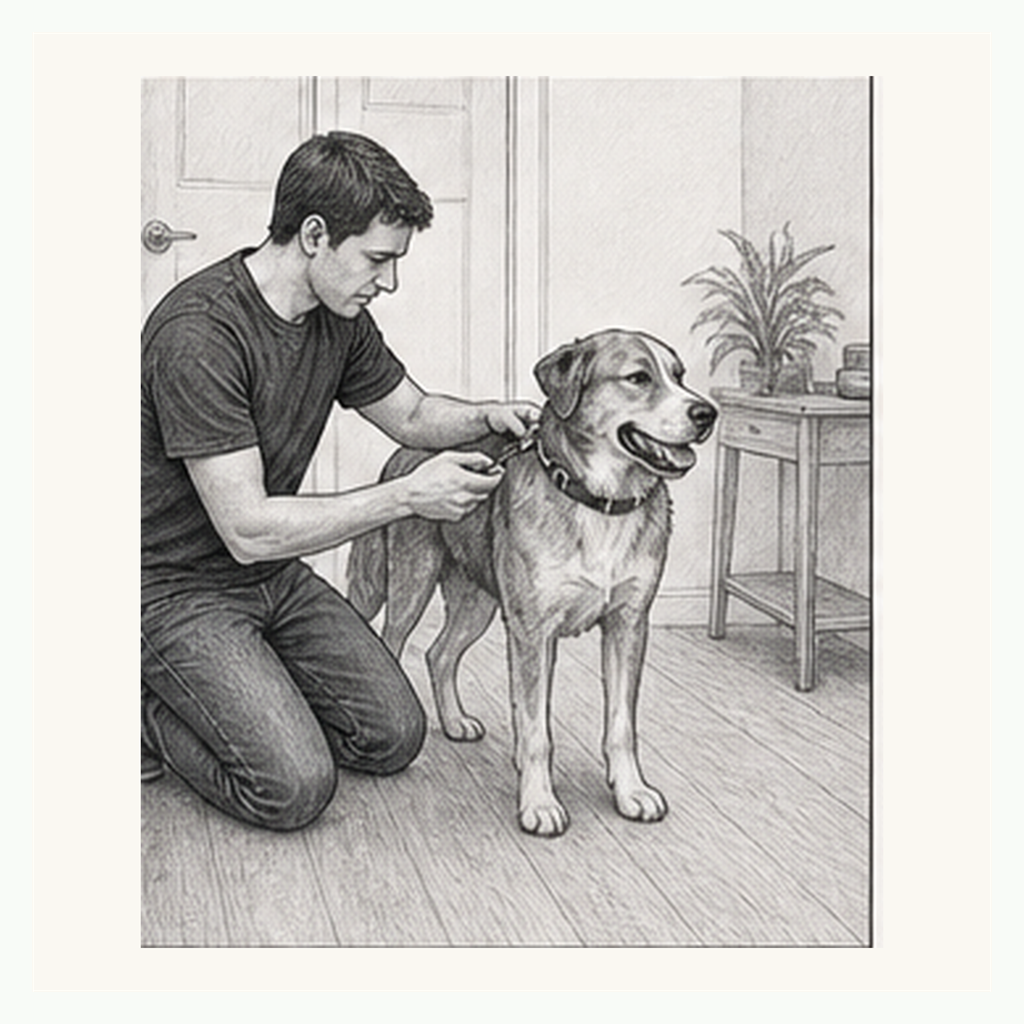
- You touch the collar, clip the leash, reward, and walk to the door calmly.
- 10 gentle touches with relaxed body.
- Your dog can reset before the session gets noisy or frustrated.
If It Gets Messy: Collar comfort is a safety skill.
Track One Thing: 10 gentle touches with relaxed body.
Need More Help?
- Setup: Treats, collar or harness, quiet room.
- Why it works: Accept collar handling for safer everyday routines.
- Common mistake: Making the setup too hard before the easy version is fluent.
- Level up: Repeat with one small increase in distance, duration, or distraction.
Day 10Advanced
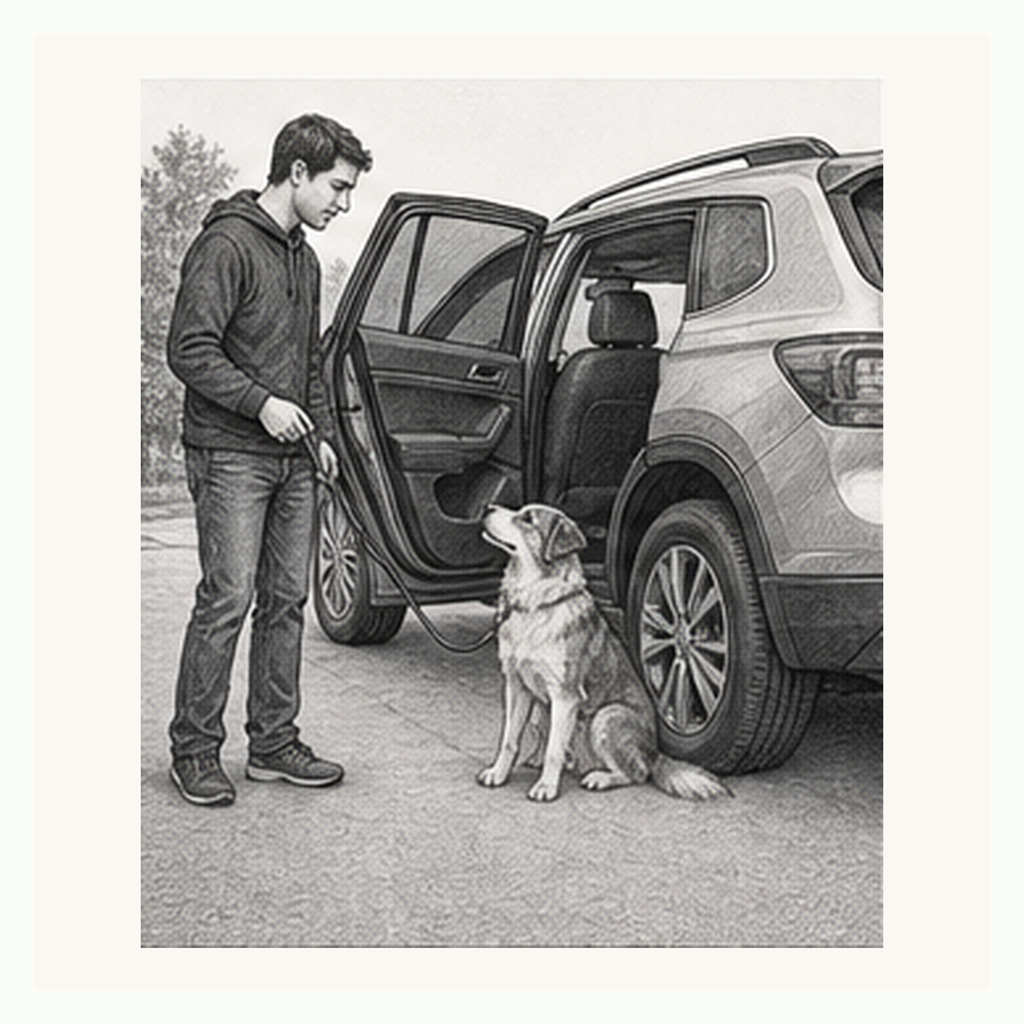
Car Door Calm
Tiny Win
Wait before entering or exiting the car.
Do This - 10 Minutes
- Approach the parked car slowly.
- Pause beside the open door and reward stillness.
- Invite your dog in with a cue.
- Ask for a brief wait before exiting.
- Practice when no trip is starting.
Watch For
- Your dog enters on “up” and waits for “okay” before stepping out.
- 5-second wait before entry and exit.
- Your dog can reset before the session gets noisy or frustrated.
If It Gets Messy: Practice when you are not rushing.
Track One Thing: 5-second wait before entry and exit.
Need More Help?
- Setup: Leash, treats, parked car.
- Why it works: Wait before entering or exiting the car.
- Common mistake: Making the setup too hard before the easy version is fluent.
- Level up: Repeat with one small increase in distance, duration, or distraction.
Day 11Advanced
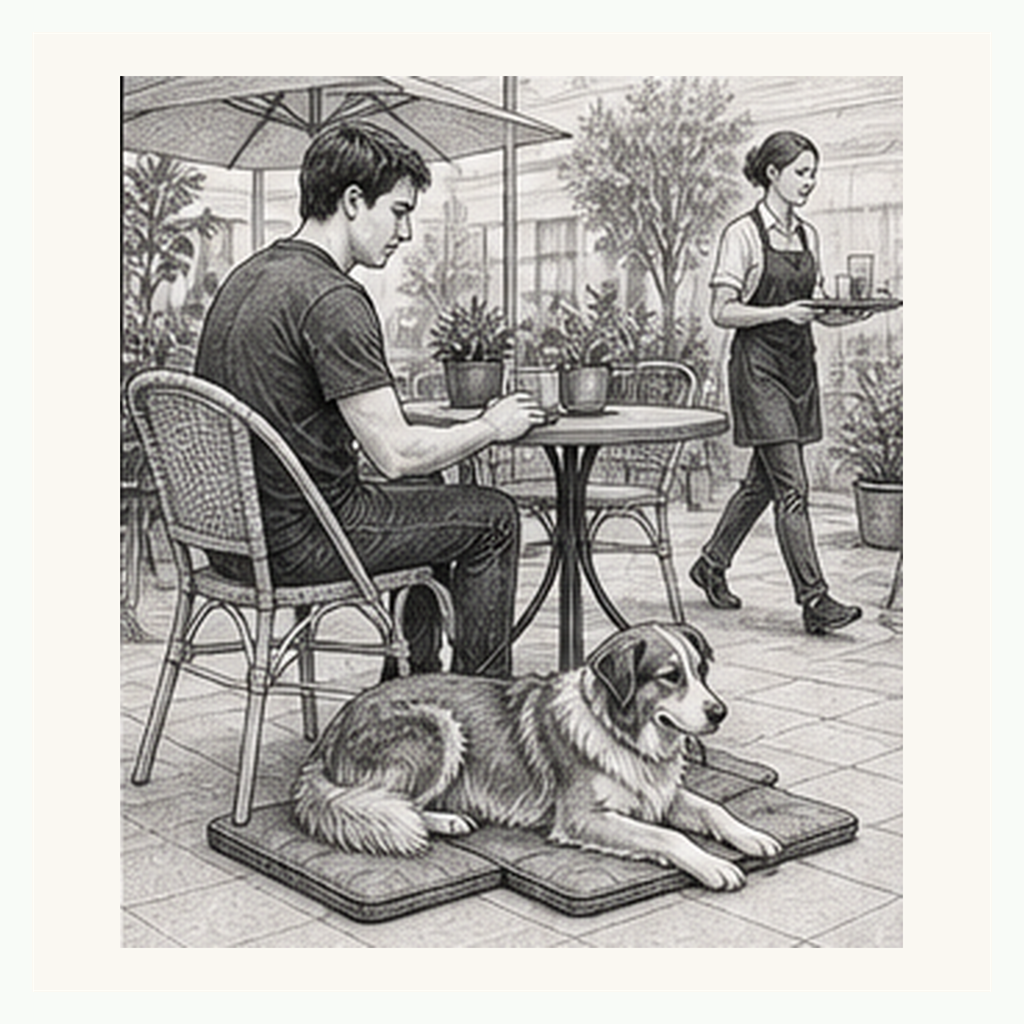
Cafe Chair Settle
Tiny Win
Settle near your chair in a quiet public setting.
Do This - 10 Minutes
- Choose an edge table away from traffic.
- Place the mat beside your chair.
- Reward stepping onto the mat and soft posture.
- Feed calmly as people pass at distance.
- Stand up, sit down, and reward staying settled.
Watch For
- At a patio table, your dog lies on a towel while a server walks by.
- 5 continuous settled minutes.
- Your dog can reset before the session gets noisy or frustrated.
If It Gets Messy: Short successful visits beat long stressful ones.
Track One Thing: 5 continuous settled minutes.
Need More Help?
- Setup: Leash, portable mat, treats, quiet dog-friendly patio.
- Why it works: Settle near your chair in a quiet public setting.
- Common mistake: Making the setup too hard before the easy version is fluent.
- Level up: Repeat with one small increase in distance, duration, or distraction.
Day 12Advanced
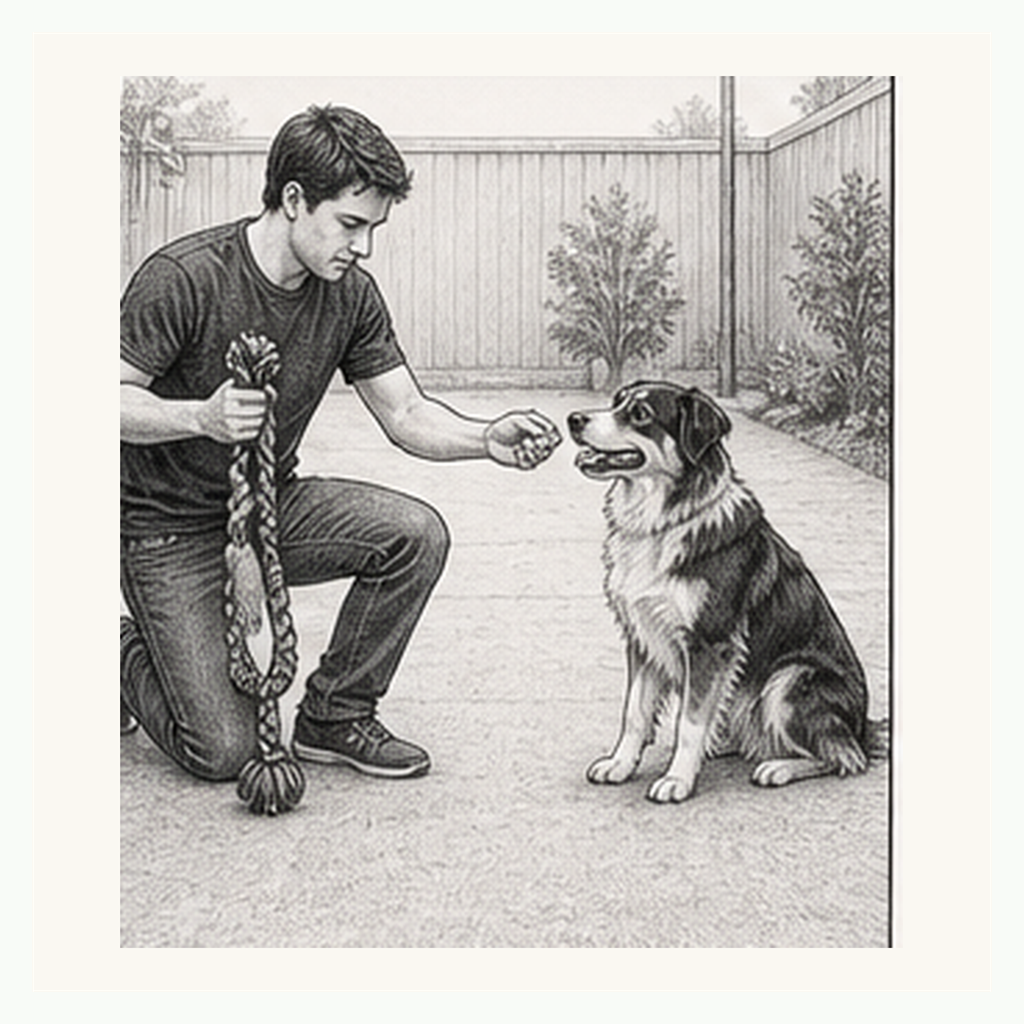
Toy Arousal Cooldown
Tiny Win
Switch from excited play to calm focus.
Do This - 10 Minutes
- Play tug or fetch for 20–30 seconds.
- Pause the toy against your body.
- Ask for sit, down, or touch.
- Reward the calm response with food or renewed play.
- Repeat play-calm-play cycles.
Watch For
- After tugging, your dog sits, takes a treat, and earns another round.
- Responds within 5 seconds after play.
- Your dog can reset before the session gets noisy or frustrated.
If It Gets Messy: Calm includes recovery from excitement.
Track One Thing: Responds within 5 seconds after play.
Need More Help?
- Setup: Favorite toy, treats, open room or fenced yard.
- Why it works: Switch from excited play to calm focus.
- Common mistake: Making the setup too hard before the easy version is fluent.
- Level up: Repeat with one small increase in distance, duration, or distraction.
Day 13Advanced
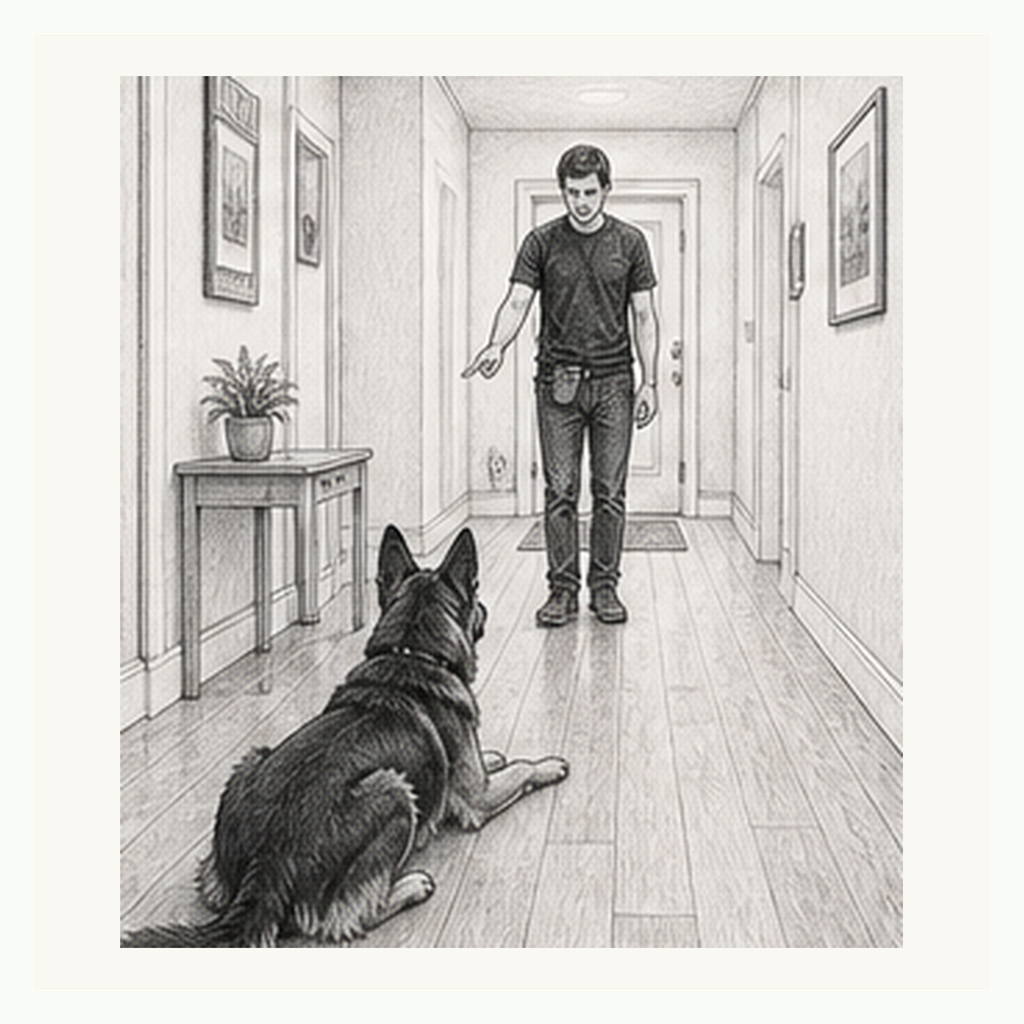
Distance Down at Home
Tiny Win
Respond to a known cue from several feet away.
Do This - 10 Minutes
- Warm up with two close downs.
- Step back one pace and cue down once.
- Mark elbows touching the floor.
- Walk in to reward instead of calling the dog up.
- Add 1–2 feet only after success.
Watch For
- From 6 feet away, your dog lies down and waits for the reward.
- 4 of 5 downs from 6–8 feet.
- Your dog can reset before the session gets noisy or frustrated.
If It Gets Messy: Do not shout; distance should not change your tone.
Track One Thing: 4 of 5 downs from 6–8 feet.
Need More Help?
- Setup: Treats, quiet hallway.
- Why it works: Respond to a known cue from several feet away.
- Common mistake: Making the setup too hard before the easy version is fluent.
- Level up: Repeat with one small increase in distance, duration, or distraction.
Day 14Advanced
Moderate Distraction Touch
Tiny Win
Use hand targeting to move past real-world distractions.
Do This - 10 Minutes
- Refresh touch at home.
- Move to a mildly distracting area.
- Present your palm before your dog fixates.
- Reward the nose touch close to your body.
- Use two touches to pass the distraction.
Watch For
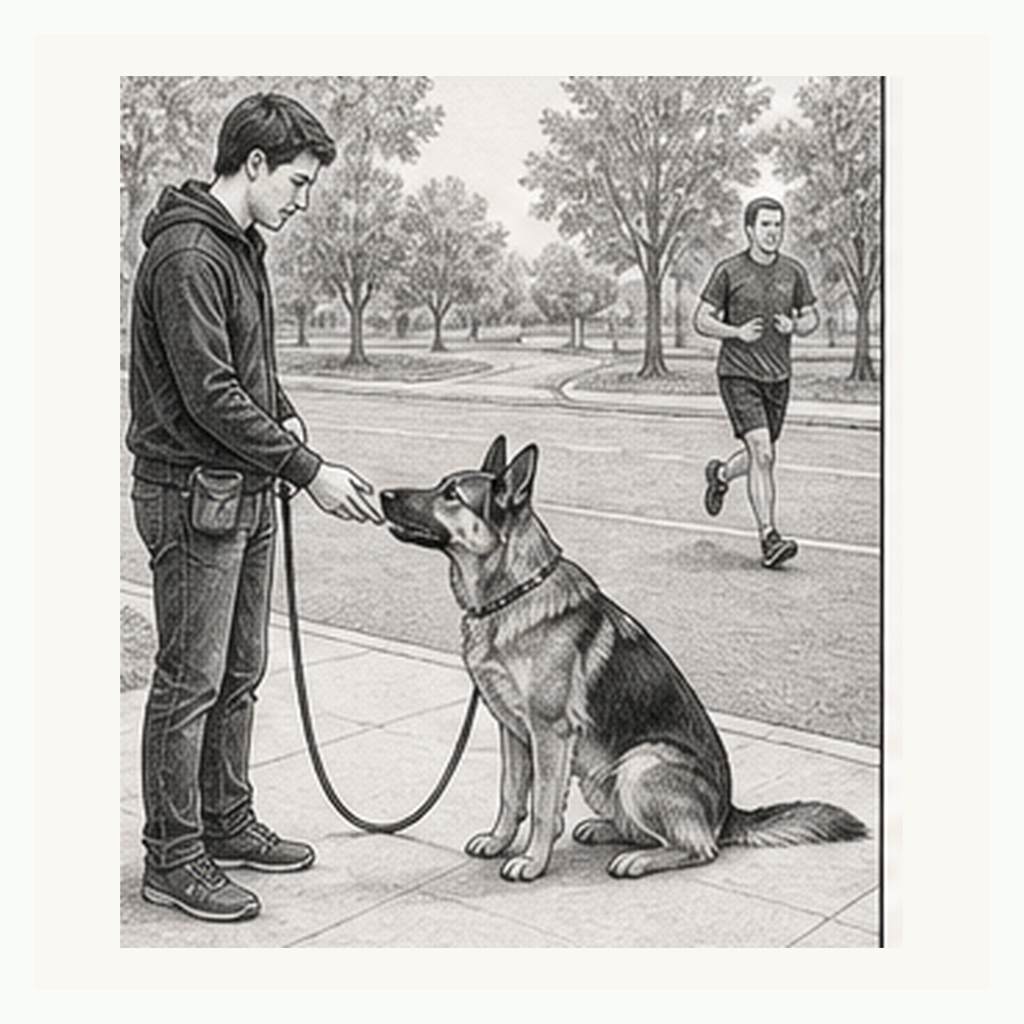
- Your dog sees a jogger across the street, touches your hand twice, and walks on.
- 5 touches around outdoor distractions.
- Your dog can reset before the session gets noisy or frustrated.
If It Gets Messy: A target gives your dog a job.
Track One Thing: 5 touches around outdoor distractions.
Need More Help?
- Setup: Treats, leash, driveway or park edge.
- Why it works: Use hand targeting to move past real-world distractions.
- Common mistake: Making the setup too hard before the easy version is fluent.
- Level up: Repeat with one small increase in distance, duration, or distraction.
Day 15Advanced
Hallway Wait
Tiny Win
Wait calmly in tight shared spaces.
Do This - 10 Minutes
- Stand to the side of the space.
- Cue sit or close stand.
- Reward check-ins and loose leash.
- Let a person pass at comfortable distance if possible.
- Leave before restlessness builds.
Watch For
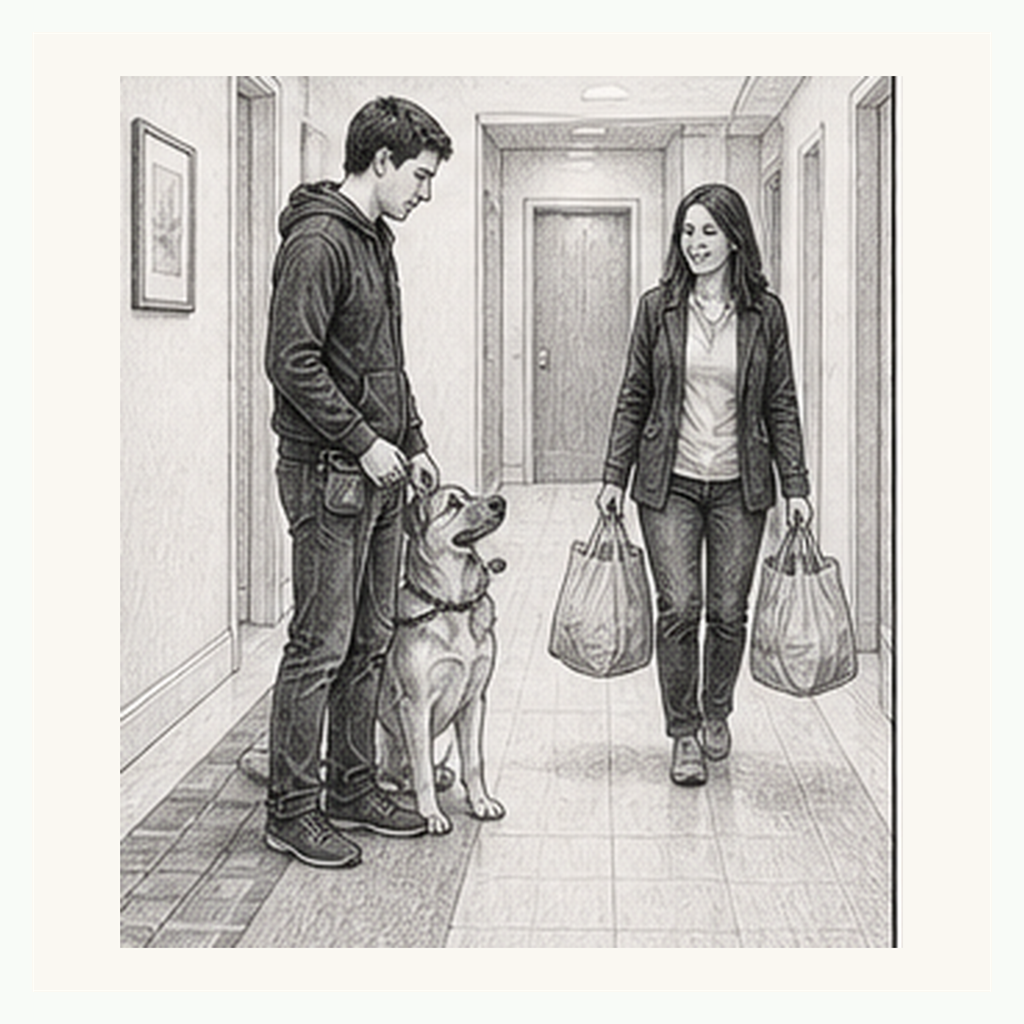
- In a lobby, your dog stands beside you while a neighbor passes with groceries.
- 30 seconds with no pulling toward people.
- Your dog can reset before the session gets noisy or frustrated.
If It Gets Messy: Tight spaces are hard; use exits generously.
Track One Thing: 30 seconds with no pulling toward people.
Need More Help?
- Setup: Leash, treats, hallway, lobby, or elevator area.
- Why it works: Wait calmly in tight shared spaces.
- Common mistake: Making the setup too hard before the easy version is fluent.
- Level up: Repeat with one small increase in distance, duration, or distraction.
Day 16Advanced
Food Bowl Permission
Tiny Win
Your dog practices meal-time patience without teasing or guarding pressure.
Do This - 10 Minutes
- Hold the bowl at waist height and wait for stillness.
- Lower a few inches, lifting if your dog jumps.
- Pause when the bowl reaches the floor.
- Release with one consistent word.
- Later, walk by and drop in an extra treat.
Watch For
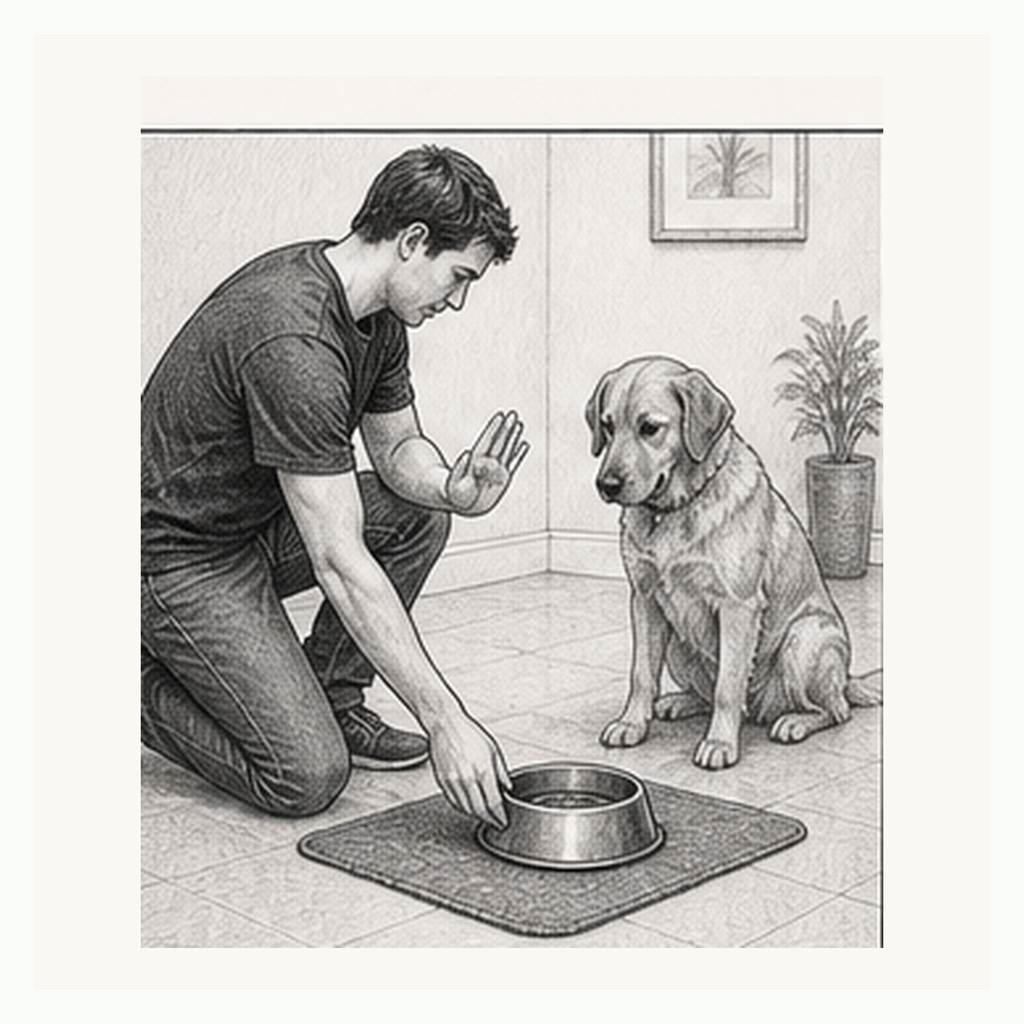
- Your dog waits while the bowl touches the floor and eats after “okay.”
- 5 meals in a row with release.
- Your dog can reset before the session gets noisy or frustrated.
If It Gets Messy: Keep the routine gentle and short.
Track One Thing: 5 meals in a row with release.
Need More Help?
- Setup: Regular meal, bowl, quiet feeding area.
- Why it works: This gives your dog practice meal-time patience without teasing or guarding pressure.
- Common mistake: Making the setup too hard before the easy version is fluent.
- Level up: Repeat with one small increase in distance, duration, or distraction.
Day 17Advanced
Two-Step U-Turn
Tiny Win
Your dog turns away smoothly from dogs, bikes, or crowded spots.
Do This - 10 Minutes
- Say “this way” in a bright tone.
- Turn your body 180 degrees immediately.
- Move away with purpose and soft leash.
- Reward as your dog follows your leg line.
- Practice with mild triggers far away.
Watch For
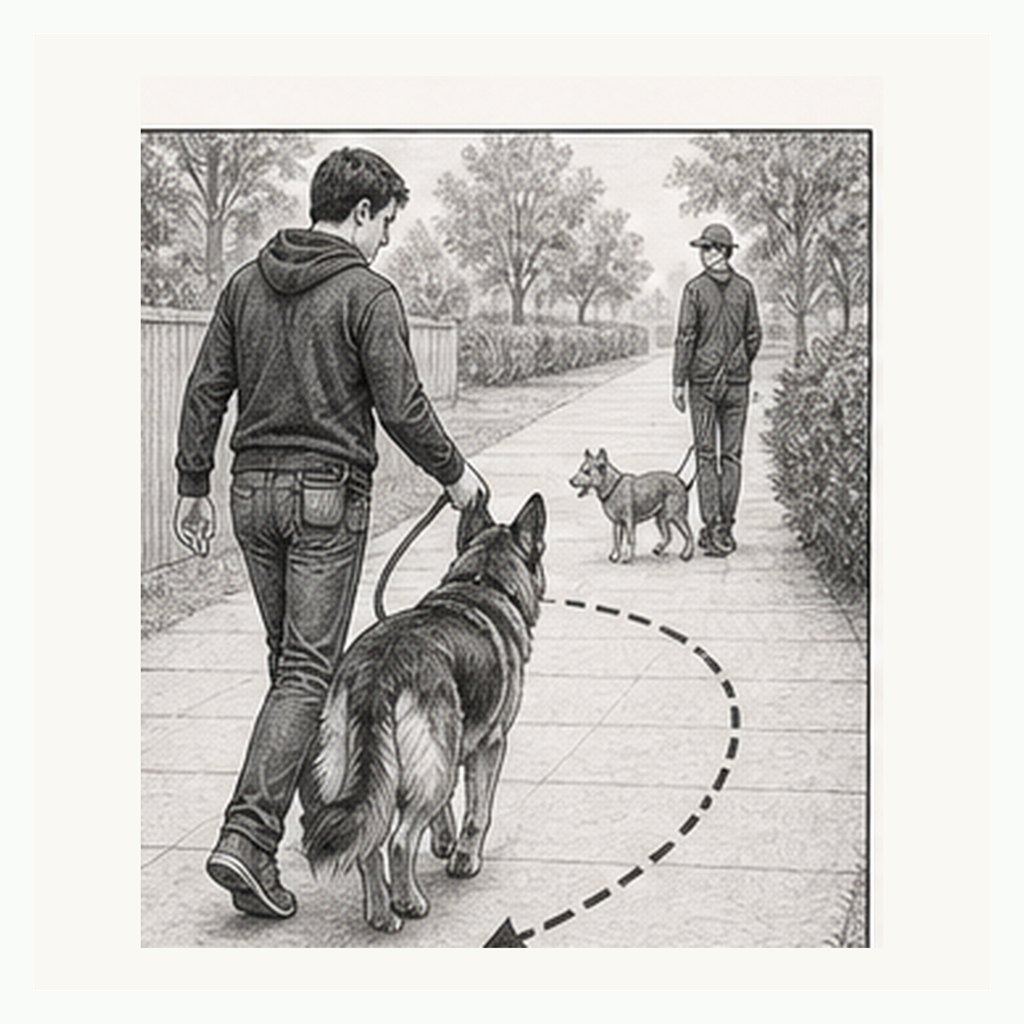
- You see another dog ahead, cue “this way,” and your dog follows for a treat.
- 8 of 10 U-turns within two steps.
- Your dog can reset before the session gets noisy or frustrated.
If It Gets Messy: Practice before you need it.
Track One Thing: 8 of 10 U-turns within two steps.
Need More Help?
- Setup: Leash, high-value treats, sidewalk.
- Why it works: Smooth U-turns create space before a trigger becomes too difficult.
- Common mistake: Making the setup too hard before the easy version is fluent.
- Level up: Repeat with one small increase in distance, duration, or distraction.
Day 18Advanced
Doorbell Sound Recovery
Tiny Win
Your dog recovers from doorbell or knock sounds faster.
Do This - 10 Minutes
- Play the sound at low volume.
- Scatter 3–5 treats on the mat.
- Wait for eating and breathing to slow.
- Repeat at the same volume before increasing.
- End with an easy mat cue.
Watch For
- A quiet doorbell plays and your dog sniffs treats instead of racing to the door.
- Recovery within 5 seconds.
- Your dog can reset before the session gets noisy or frustrated.
If It Gets Messy: Start softer than you think.
Track One Thing: Recovery within 5 seconds.
Need More Help?
- Setup: Recorded sound or helper, treats, mat.
- Why it works: This reinforces recovery from doorbell or knock sounds faster.
- Common mistake: Making the setup too hard before the easy version is fluent.
- Level up: Repeat with one small increase in distance, duration, or distraction.
Day 19Advanced
Stranger Neutrality Pass
Tiny Win
Pass people without pulling to greet.
Do This - 10 Minutes
- Start where your dog can see people and still eat.
- Walk parallel rather than straight at them.
- Reward look-at-person then check-in.
- Pass at a comfortable distance.
- Keep moving after the pass.
Watch For
- Your dog sees a person with a backpack, checks in, and continues loose-leash walking.
- 5 people passed with no pulling.
- Your dog can reset before the session gets noisy or frustrated.
If It Gets Messy: Neutral is a valuable skill.
Track One Thing: 5 people passed with no pulling.
Need More Help?
- Setup: Leash, treats, sidewalk or park path.
- Why it works: Pass people without pulling to greet.
- Common mistake: Making the setup too hard before the easy version is fluent.
- Level up: Repeat with one small increase in distance, duration, or distraction.
Day 20Advanced
Settle After the Walk
Tiny Win
Transition from outdoor stimulation to indoor calm.
Do This - 10 Minutes
- Enter quietly after the walk.
- Guide your dog to the mat before removing gear.
- Offer water, then reward calm posture.
- Wait 30–60 seconds between treats.
- Release after 5 minutes or visible softening.
Watch For
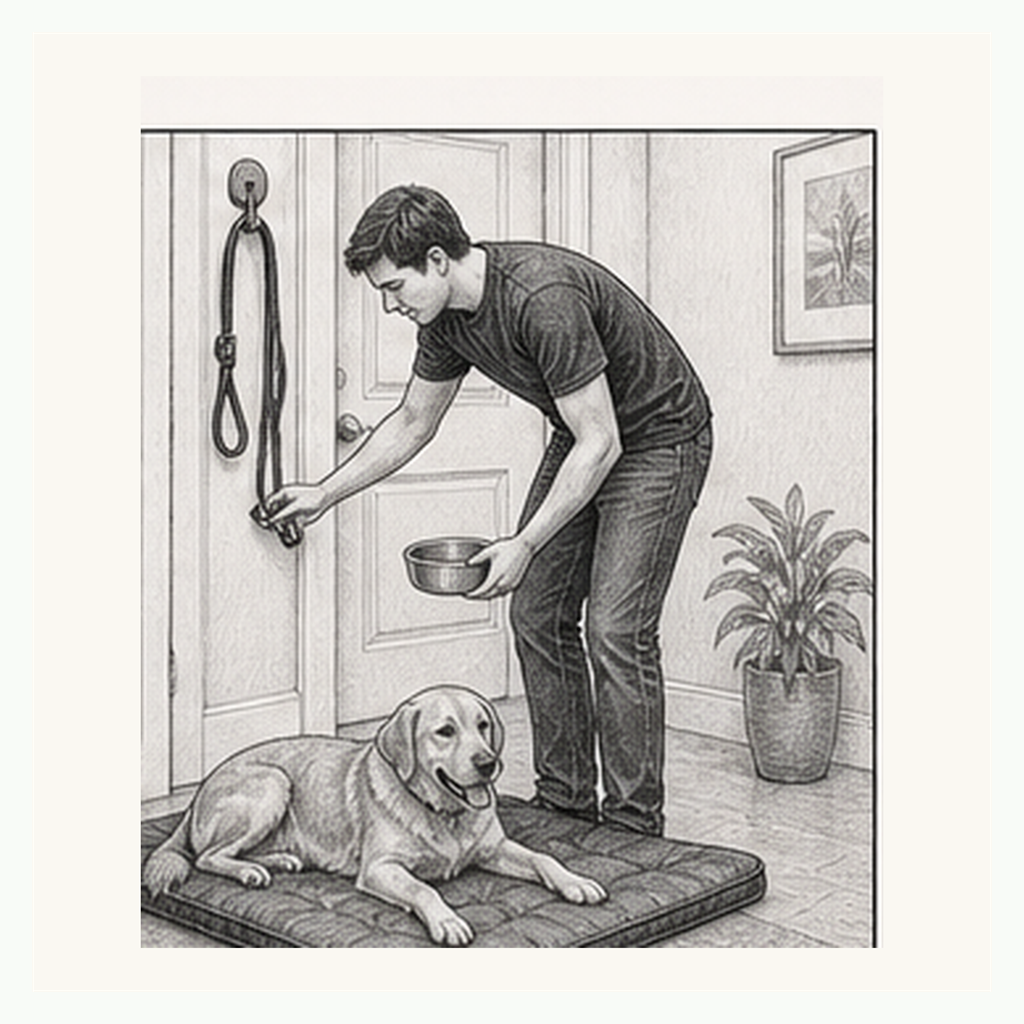
- After a walk, your dog lies on the mat while you hang up the leash.
- Settles indoors within 3 minutes.
- Your dog can reset before the session gets noisy or frustrated.
If It Gets Messy: Many dogs need help landing after activity.
Track One Thing: Settles indoors within 3 minutes.
Need More Help?
- Setup: Mat, water, small treats.
- Why it works: Transition from outdoor stimulation to indoor calm.
- Common mistake: Making the setup too hard before the easy version is fluent.
- Level up: Repeat with one small increase in distance, duration, or distraction.
Day 21Advanced
Dropped Snack Leave-It
Tiny Win
Ignore dropped food in home or sidewalk contexts.
Do This - 10 Minutes
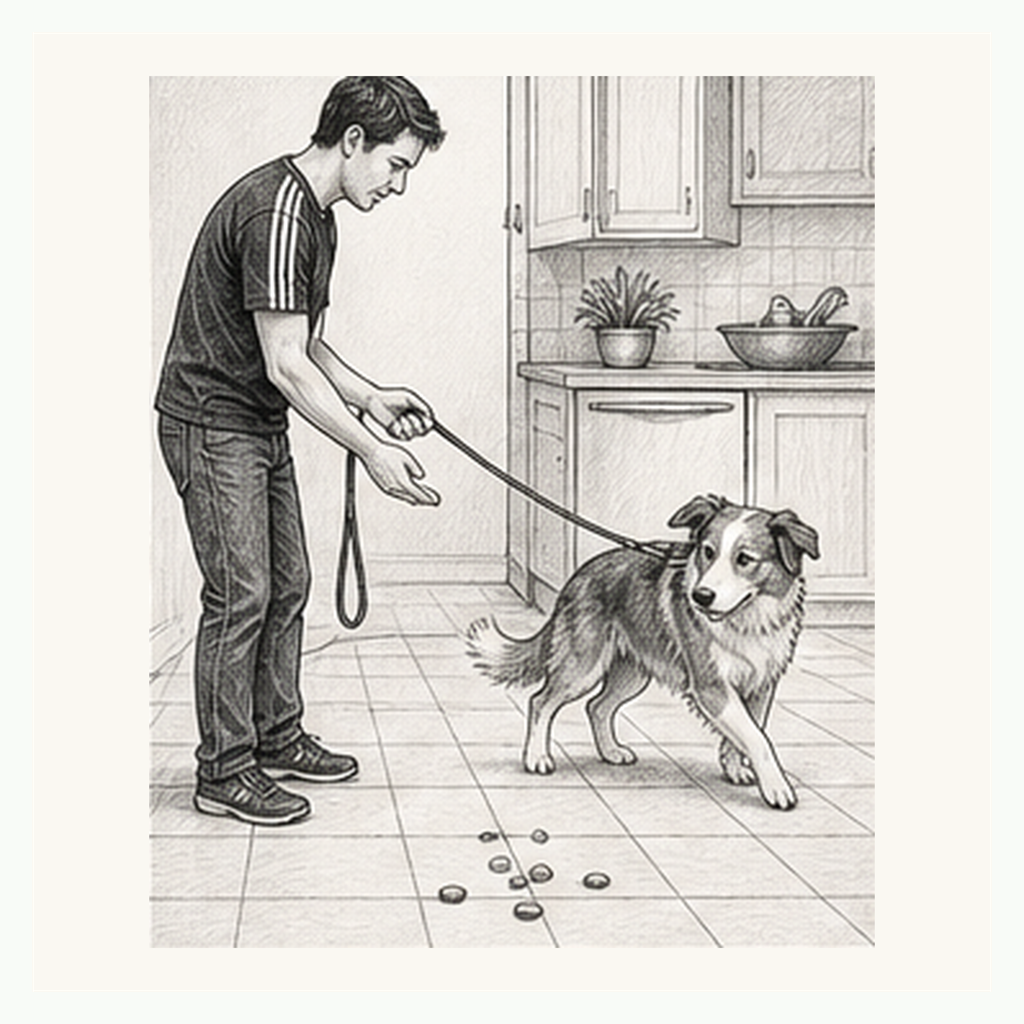
- Place low-value food with your foot ready to cover it.
- Say “leave it” once.
- Reward from your hand for looking away.
- Pick up the floor food yourself.
- Repeat with the item farther from your foot.
Watch For
- A kibble piece drops; your dog backs off and earns chicken from your hand.
- 6 reps with a 5-second ignore.
- Your dog can reset before the session gets noisy or frustrated.
If It Gets Messy: The forbidden item is never the reward.
Track One Thing: 6 reps with a 5-second ignore.
Need More Help?
- Setup: Kibble, better treats, leash if outdoors.
- Why it works: Ignore dropped food in home or sidewalk contexts.
- Common mistake: Making the setup too hard before the easy version is fluent.
- Level up: Repeat with one small increase in distance, duration, or distraction.
Day 22Advanced
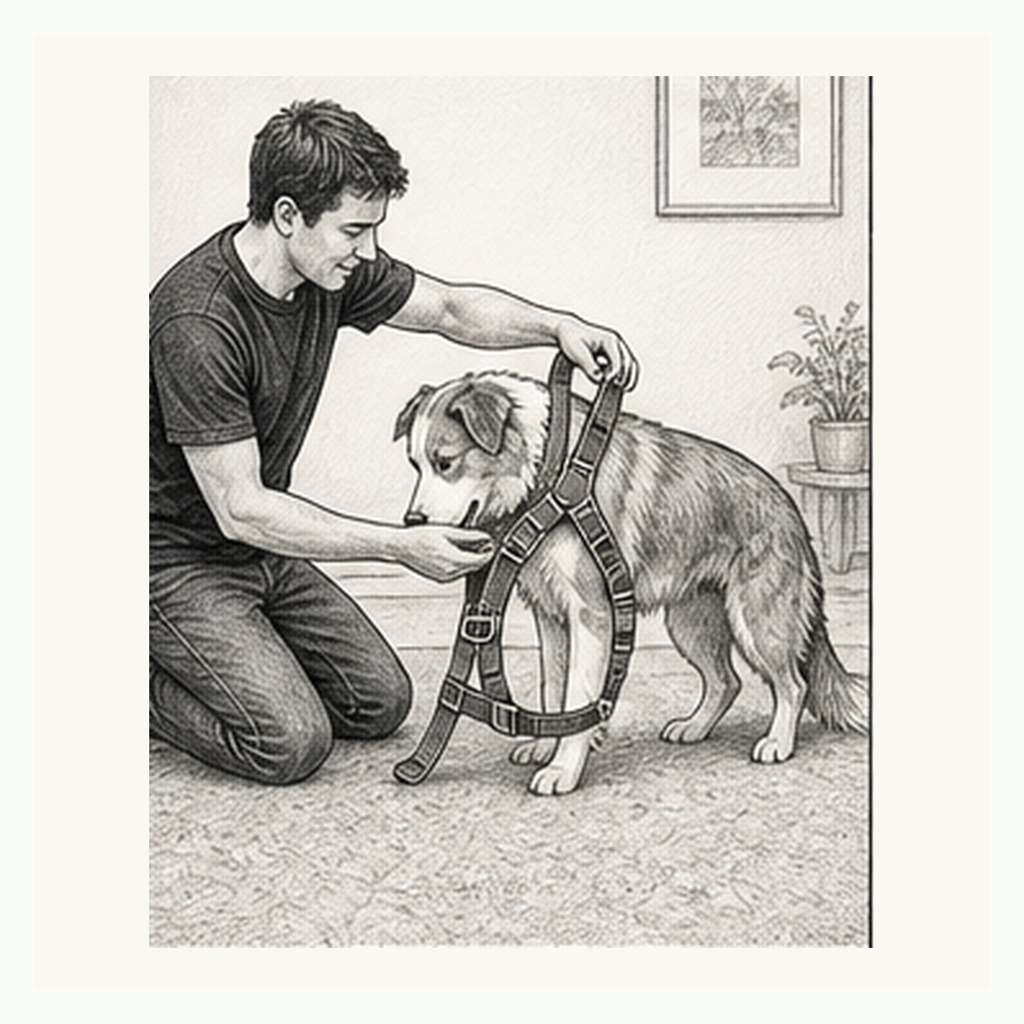
Harness Handling Sequence
Tiny Win
Put on gear with less wiggling and avoidance.
Do This - 10 Minutes
- Show the harness and reward calm looking.
- Hold the opening and reward voluntary approach.
- Guide the head through and treat.
- Touch one buckle, reward, then fasten.
- Ask for a simple cue after the harness is on.
Watch For
- Your dog puts their head through, waits for buckles, then sits.
- Harness on with no backing away.
- Your dog can reset before the session gets noisy or frustrated.
If It Gets Messy: A calm gear routine makes walks start calmer.
Track One Thing: Harness on with no backing away.
Need More Help?
- Setup: Harness, treats, quiet space.
- Why it works: Put on gear with less wiggling and avoidance.
- Common mistake: Making the setup too hard before the easy version is fluent.
- Level up: Repeat with one small increase in distance, duration, or distraction.
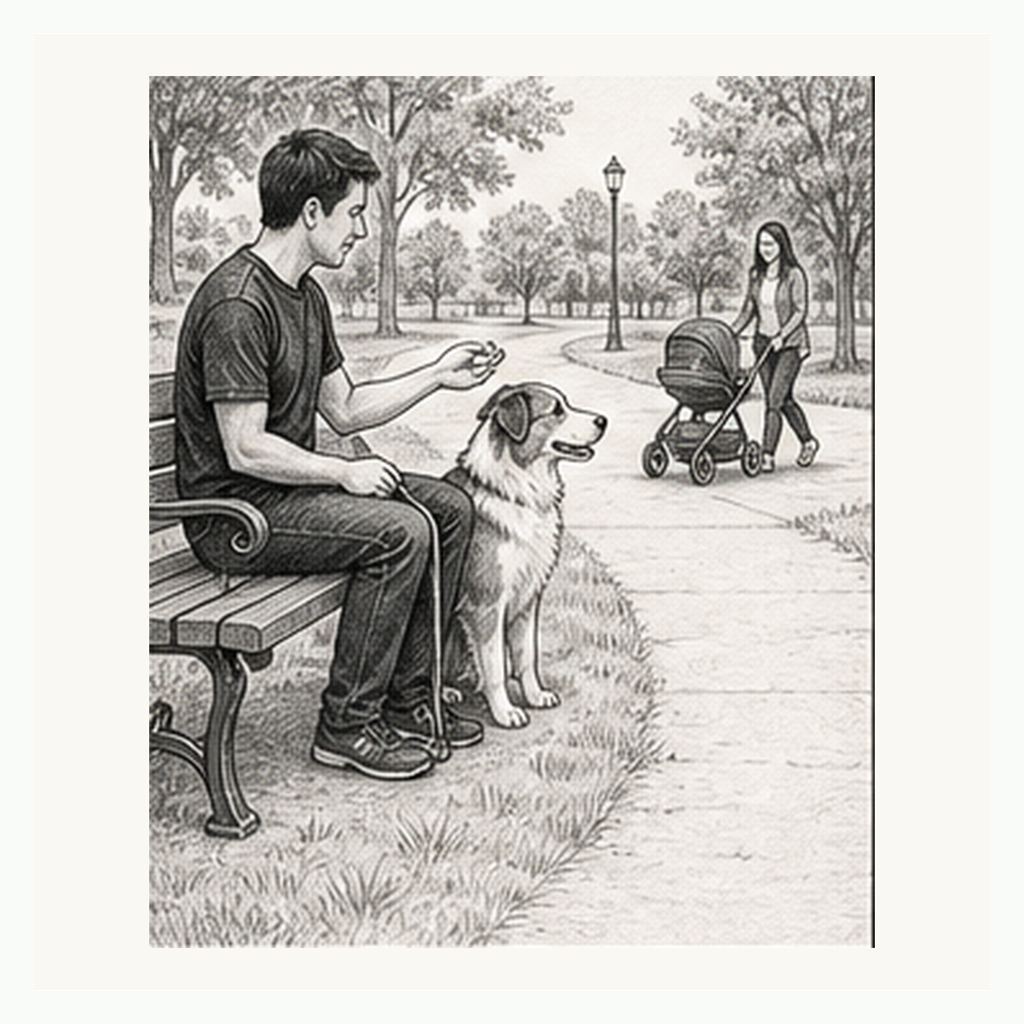
Day 23Advanced
Park Bench Observation
Tiny Win
Observe the world without constant movement.
Do This - 10 Minutes
- Sit away from the center of activity.
- Keep the leash safe but loose.
- Reward quiet standing, sitting, or lying.
- Feed after noticing movement without reacting.
- Leave while your dog is still successful.
Watch For
- Your dog watches a stroller pass 20 feet away and turns back for a treat.
- 10 minutes with no sustained barking.
- Your dog can reset before the session gets noisy or frustrated.
If It Gets Messy: Calm observation is active training.
Track One Thing: 10 minutes with no sustained barking.
Need More Help?
- Setup: Leash, treats, bench or quiet sitting spot.
- Why it works: Observe the world without constant movement.
- Common mistake: Making the setup too hard before the easy version is fluent.
- Level up: Repeat with one small increase in distance, duration, or distraction.
Day 24Advanced
Recall Past a Mild Temptation
Tiny Win
Your dog turns away from an interesting toy or helper when called.
Do This - 10 Minutes
- Place the temptation 15–20 feet away.
- Let your dog notice while safely on line.
- Call once before excitement peaks.
- Back up and praise the turn.
- Reward heavily and walk away together.
Watch For
- Your dog spots a toy on the grass and returns before reaching it.
- 4 of 5 recalls away from temptation.
- Your dog can reset before the session gets noisy or frustrated.
If It Gets Messy: Set the distance so your dog can win.
Track One Thing: 4 of 5 recalls away from temptation.
Need More Help?
- Setup: Long line, treats, toy or helper.
- Why it works: Coming away from something fun teaches your dog that recall does not end good things.
- Common mistake: Making the setup too hard before the easy version is fluent.
- Level up: Repeat with one small increase in distance, duration, or distraction.
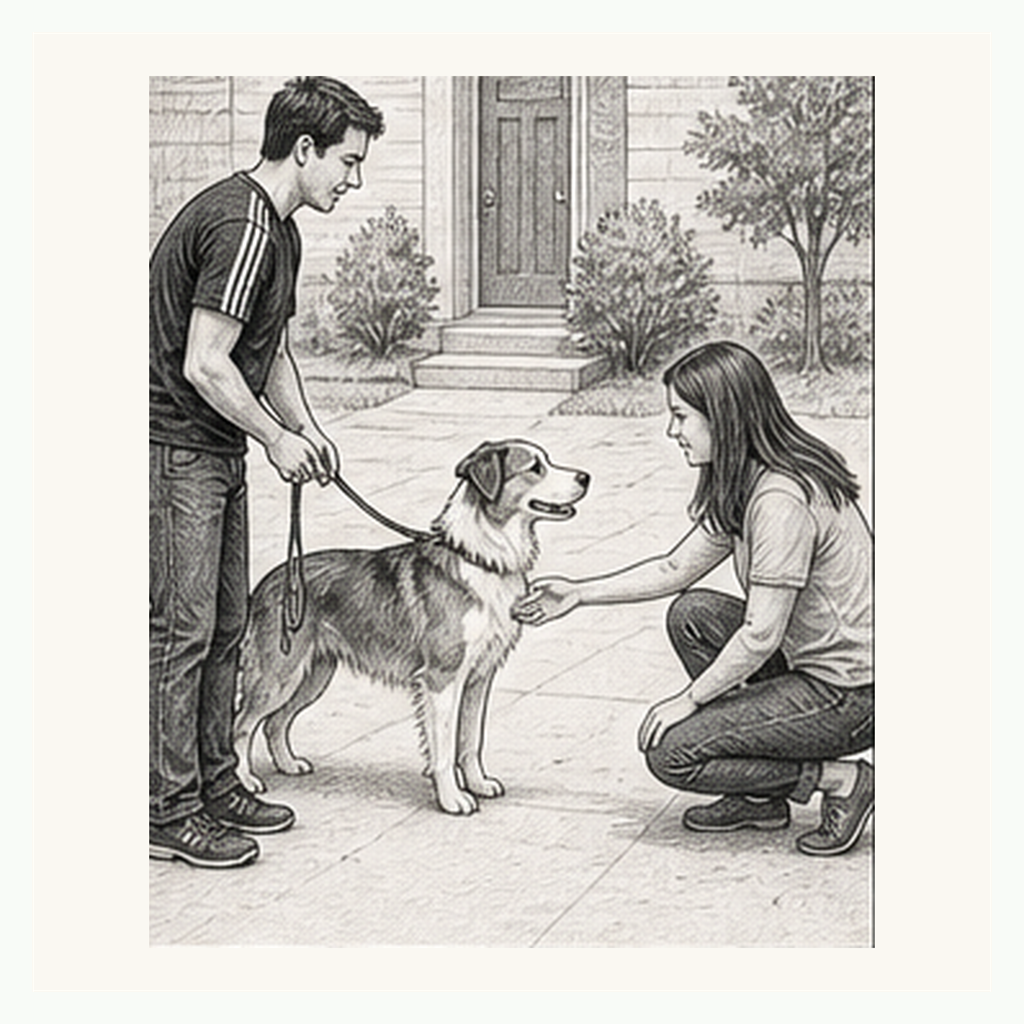
Day 25Advanced
Four-Paws Greeting
Tiny Win
Greet without jumping.
Do This - 10 Minutes
- Have the helper approach slowly.
- Reward before jumping while paws are down.
- Ask the helper to pause if your dog launches.
- Resume when your dog settles.
- Allow a brief greeting only while grounded.
Watch For
- Your neighbor approaches and your dog earns a short chest scratch with four paws down.
- 10-second greeting with no jumping.
- Your dog can reset before the session gets noisy or frustrated.
If It Gets Messy: The helper’s movement is part of the reward.
Track One Thing: 10-second greeting with no jumping.
Need More Help?
- Setup: Helper, treats, leash if needed.
- Why it works: Greet without jumping.
- Common mistake: Making the setup too hard before the easy version is fluent.
- Level up: Repeat with one small increase in distance, duration, or distraction.
Day 26Advanced
Kitchen Boundary Line
Tiny Win
Stay outside a cooking or prep area.
Do This - 10 Minutes
- Choose a clear rug edge or doorway line.
- Reward your dog on the correct side.
- Step into the kitchen and return to reward.
- Add cabinet or plate movement.
- Release away from the boundary when finished.
Watch For
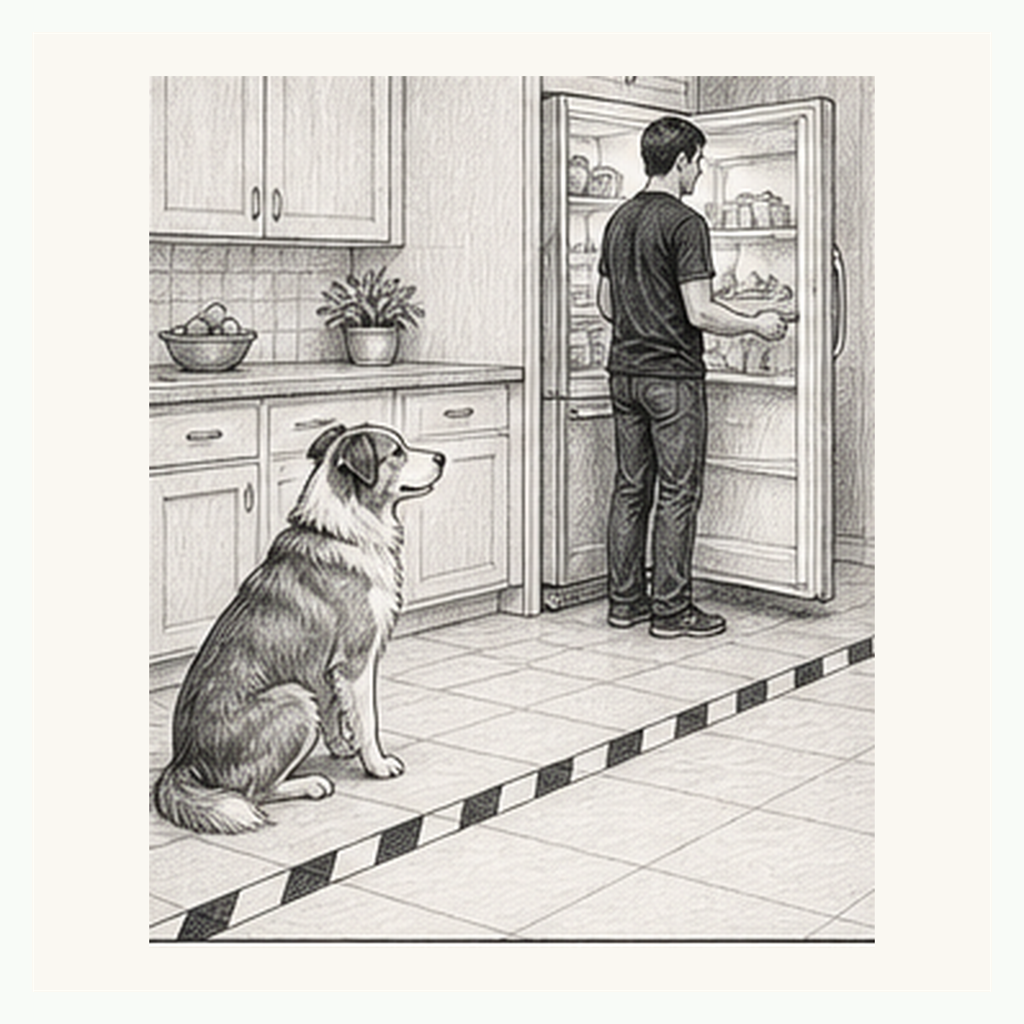
- Your dog waits outside the kitchen while you open the fridge.
- 3 minutes outside boundary during light prep.
- Your dog can reset before the session gets noisy or frustrated.
If It Gets Messy: A visible line is clearer than “move.”
Track One Thing: 3 minutes outside boundary during light prep.
Need More Help?
- Setup: Visible boundary, treats, light meal-prep activity.
- Why it works: Stay outside a cooking or prep area.
- Common mistake: Making the setup too hard before the easy version is fluent.
- Level up: Repeat with one small increase in distance, duration, or distraction.
Day 27Advanced
Find-It Reset Pattern
Tiny Win
Use sniffing to downshift arousal.
Do This - 10 Minutes
- Say “find it” and toss one treat near your dog.
- Toss the next treat slightly to the other side.
- Build a slow left-right rhythm.
- Use it when a moderate distraction appears.
- End with hand touch or check-in.
Watch For
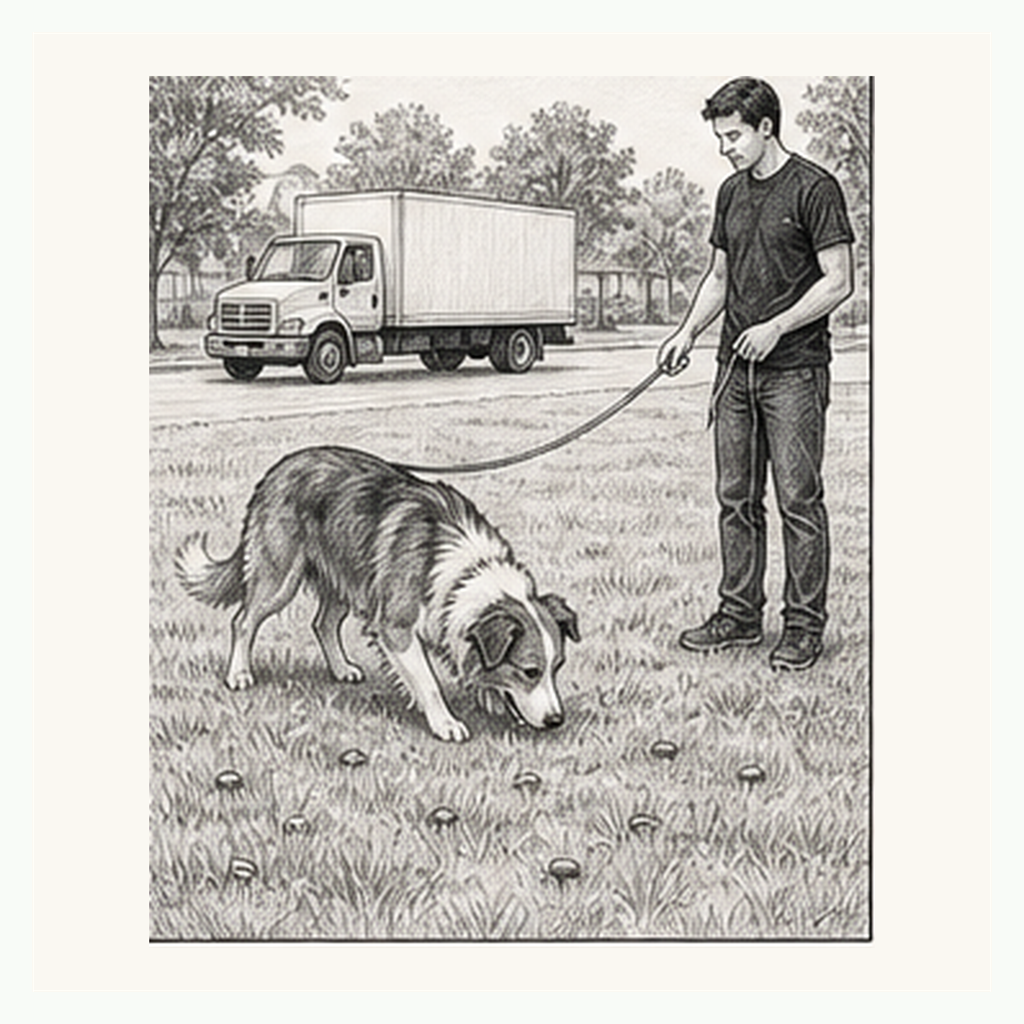
- A delivery truck passes and your dog searches the grass instead of staring.
- Reorients to search within 3 seconds.
- Your dog can reset before the session gets noisy or frustrated.
If It Gets Messy: Sniffing helps the body downshift.
Track One Thing: Reorients to search within 3 seconds.
Need More Help?
- Setup: Small treats, leash, entryway or outdoor patch.
- Why it works: Use sniffing to downshift arousal.
- Common mistake: Making the setup too hard before the easy version is fluent.
- Level up: Repeat with one small increase in distance, duration, or distraction.
Day 28Advanced
Stay While You Disappear
Tiny Win
Your dog holds position during short out-of-sight moments.
Do This - 10 Minutes
- Cue stay on the mat.
- Step behind a wall for one second.
- Return and reward on the mat.
- Increase to 3, 5, then 10 seconds.
- Release clearly before your dog gets up.
Watch For
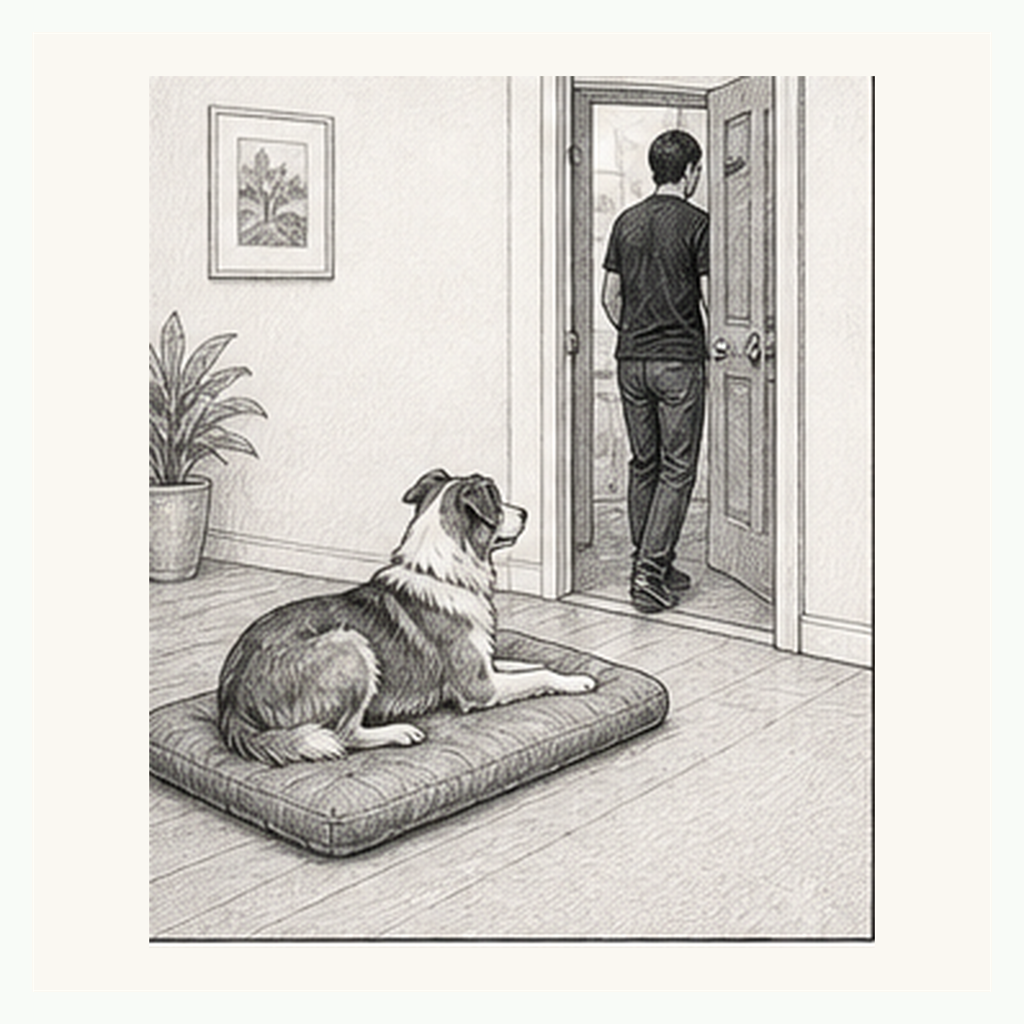
- Your dog stays on the bed while you step into the hallway for 5 seconds.
- 10-second out-of-sight stay.
- Your dog can reset before the session gets noisy or frustrated.
If It Gets Messy: Return before failure; success builds duration.
Track One Thing: 10-second out-of-sight stay.
Need More Help?
- Setup: Mat or bed, treats, doorway.
- Why it works: This helps your dog hold position during short out-of-sight moments.
- Common mistake: Making the setup too hard before the easy version is fluent.
- Level up: Repeat with one small increase in distance, duration, or distraction.
Day 29Advanced
Sniff Permission Switch
Tiny Win
Alternate focused walking with approved sniff breaks.
Do This - 10 Minutes
- Walk 10–15 loose-leash steps.
- Reward by your leg.
- Say “go sniff” for a 20–30 second break.
- Use “let’s go” to leave the spot.
- Repeat along the route.
Watch For
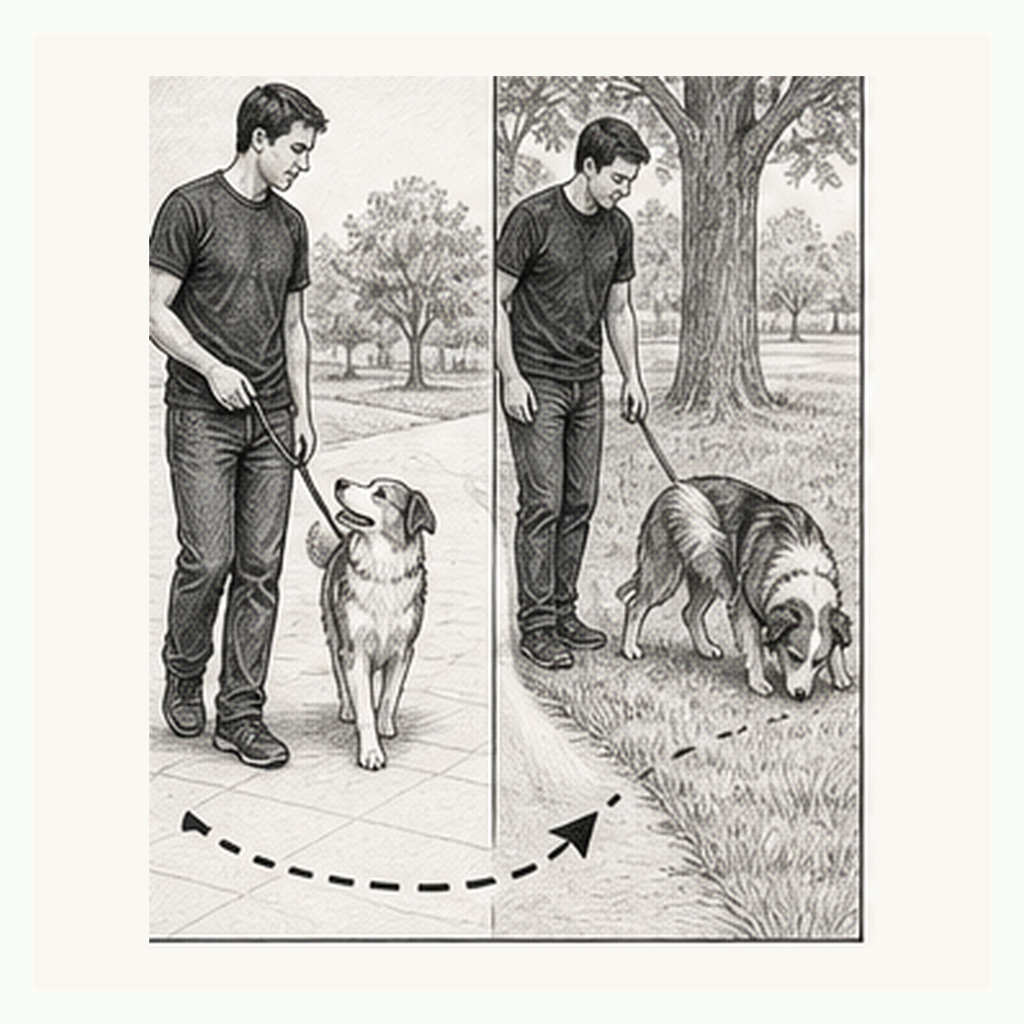
- Your dog walks past two driveways, then earns a sniff break at a tree.
- Leaves 3 sniff spots on cue.
- Your dog can reset before the session gets noisy or frustrated.
If It Gets Messy: Structured sniffing makes walks feel fair.
Track One Thing: Leaves 3 sniff spots on cue.
Need More Help?
- Setup: Leash, treats, sidewalk or quiet trail.
- Why it works: Alternate focused walking with approved sniff breaks.
- Common mistake: Making the setup too hard before the easy version is fluent.
- Level up: Repeat with one small increase in distance, duration, or distraction.
Day 30Advanced
Distant Dog Calm
Tiny Win
Notice another dog without barking, pulling, or freezing.
Do This - 10 Minutes
- Start far enough that your dog can eat.
- Mark the moment your dog sees the dog.
- Feed near your leg before escalation.
- Arc sideways or away to preserve space.
- Repeat with short looks and movement breaks.
Watch For
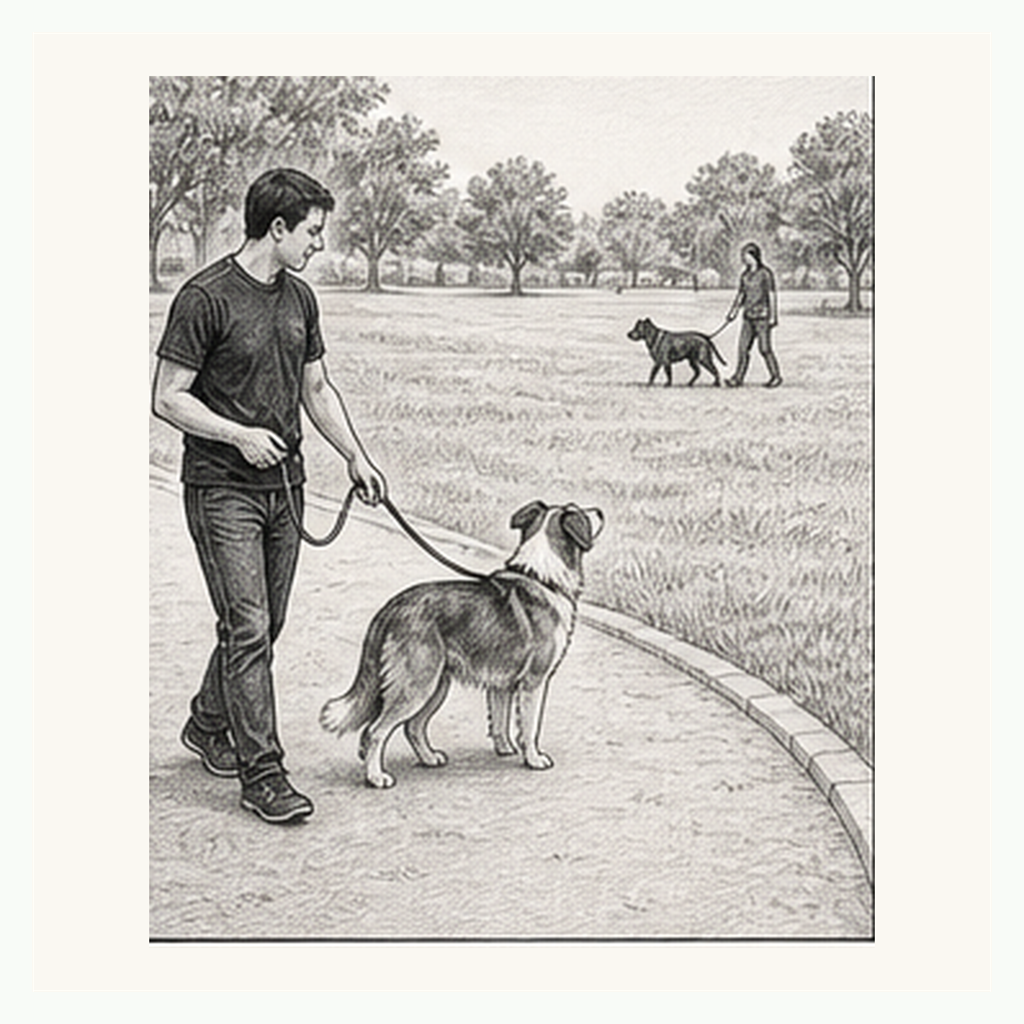
- Your dog sees another dog across the park, eats, and walks with you in an arc.
- 5 brief dog observations with no lunging.
- Your dog can reset before the session gets noisy or frustrated.
If It Gets Messy: Distance is the training tool.
Track One Thing: 5 brief dog observations with no lunging.
Need More Help?
- Setup: Leash, high-value treats, open area with distant dogs.
- Why it works: Notice another dog without barking, pulling, or freezing.
- Common mistake: Making the setup too hard before the easy version is fluent.
- Level up: Repeat with one small increase in distance, duration, or distraction.