← Back to Blueprint Hub

Premium progression • Level 3

Calm control in complex real life.

Use this only after Foundation and Advanced feel stable. Expert focuses on busy environments, competing reinforcers, public settle work, and safety-first precision handling.

Premium30-day progressionPublic reliability
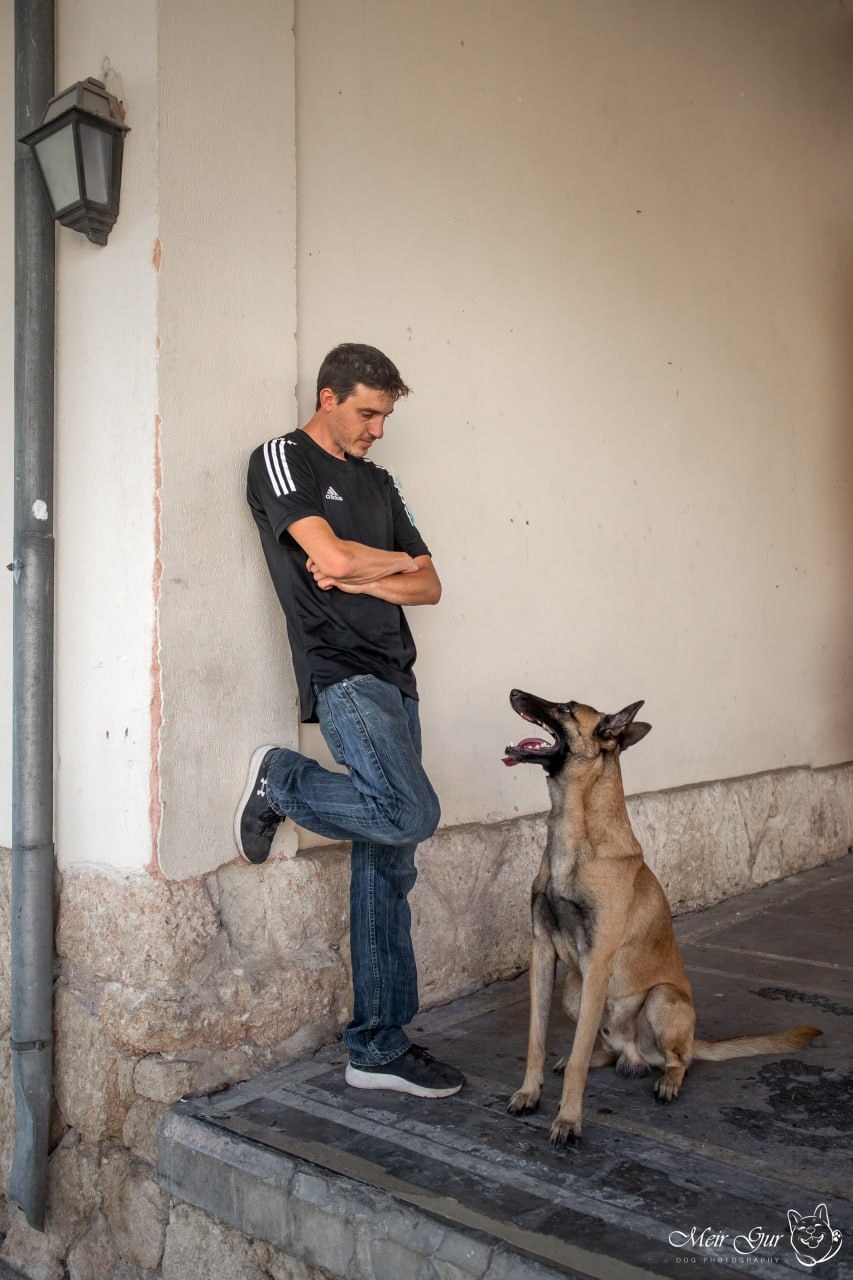
Focused dog training portrait

Expert Progression: High-Difficulty Proofing and Recovery

Workload: 15–20 minutes/day. Context: busy environments, competing reinforcers, longer duration, multi-step chains, and safety-first handling. Practice only at a distance where your dog can still think.

Expert gate: These drills are not for active bite risk, severe aggression, panic, or uncontrolled public reactivity without an in-person professional. Choose distance, management, and safety over proving the exercise.

Expert readiness gate
  • Foundation and Advanced are stable in normal daily setups.
  • Your dog can pass mild triggers at a safe distance and recover without leash conflict.
  • You can turn away, create space, and end the session before the dog escalates.
  • Do not use Expert as a public test for dogs with bite history, severe aggression, panic, or uncontrolled reactivity.
Day 1Expert

Emergency U-Turn Under Pressure
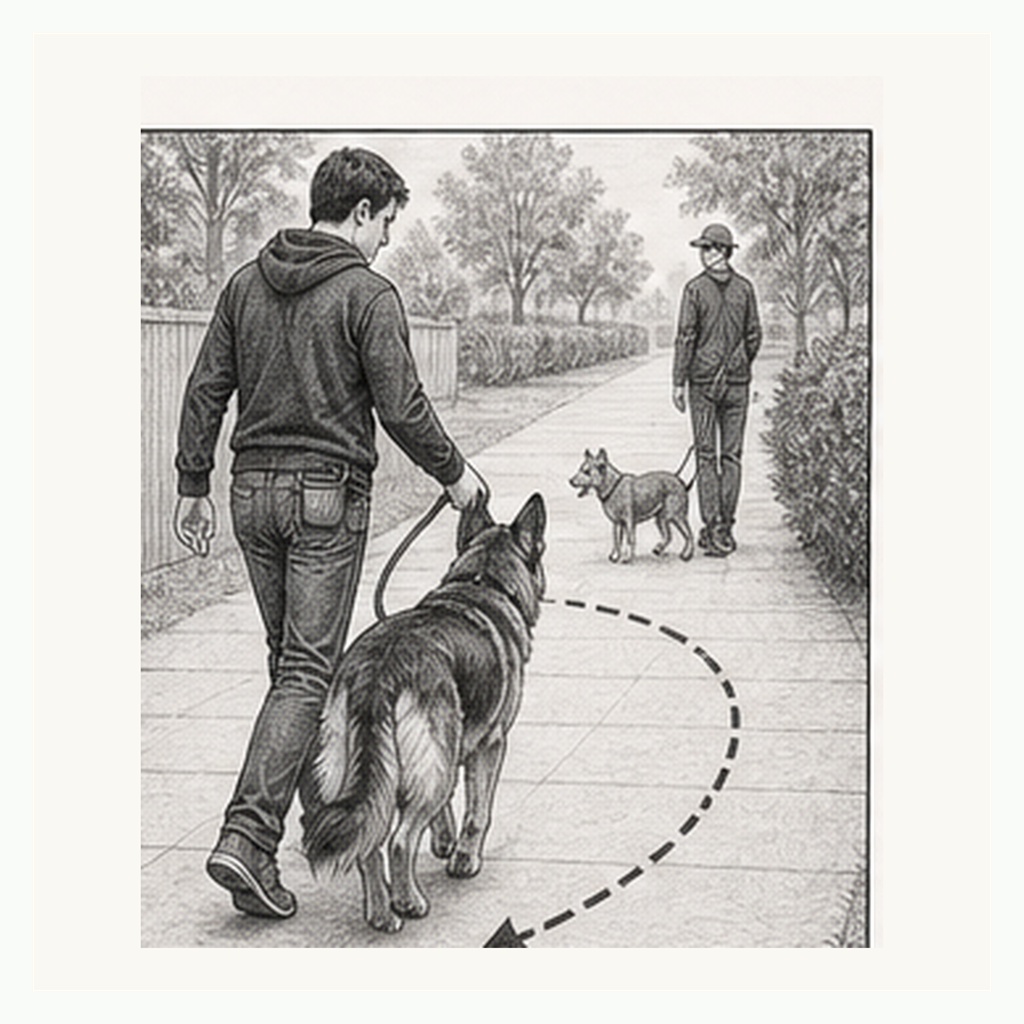
Sketch of dog making U-turn

Tiny Win

Your dog turns away from surprise triggers while staying connected and safe.

Do This - 10 Minutes

  1. Start far enough from the trigger to keep a loose leash.
  2. Cue the movement pattern once in a calm voice.
  3. Turn, arc, or position your body to create space.
  4. Reward as your dog follows your line instead of the trigger.
  5. Add a decompression sniff break after the pass.

Watch For

  • A skateboard appears half a block away; you turn and reward before barking starts.
  • 4 of 5 surprise U-turns within 2 seconds.
  • Your dog can reset before the session gets noisy or frustrated.

If It Gets Messy: Do not yank; the turn should predict safety, not panic.

Track One Thing: 4 of 5 surprise U-turns within 2 seconds.

Need More Help?
  • Setup: 6-foot leash, high-value treats, quiet sidewalk, planned mild trigger.
  • Why it works: A rehearsed U-turn gives your dog a safe pattern before pressure peaks.
  • Common mistake: Making the setup too hard before the easy version is fluent.
  • Level up: Repeat with one small increase in distance, duration, or distraction.
Day 2Expert

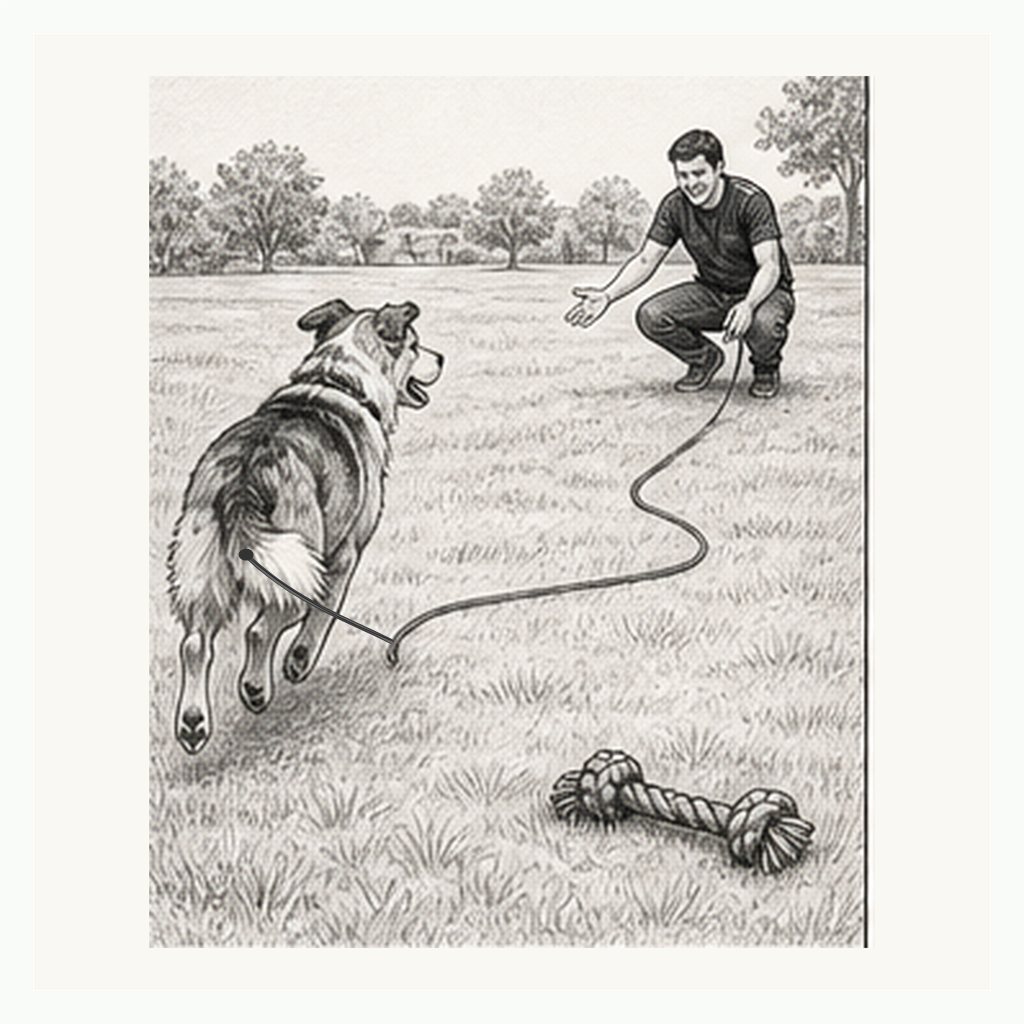
Recall Away From Food Scent

Sketch of dog ignoring food container and recalling

Tiny Win

Your dog returns when food smell competes for attention.

Do This - 10 Minutes

  1. Set the distraction safely while your dog stays on a long line.
  2. Let your dog notice it without reaching it.
  3. Call once and move backward to invite the turn.
  4. Reward at your feet with several small treats.
  5. Release to sniff, greet, or move away only after reconnection.

Watch For

  • Your dog sniffs toward sealed chicken, hears “come,” and returns for a jackpot.
  • 4 of 5 recalls from 10 feet away.
  • Your dog can reset before the session gets noisy or frustrated.

If It Gets Messy: Never practice with unsafe trash or loose food.

Track One Thing: 4 of 5 recalls from 10 feet away.

Need More Help?
  • Setup: Long line, sealed food container, better treats, quiet open area.
  • Why it works: This reinforces returning when food smell competes for attention.
  • Common mistake: Making the setup too hard before the easy version is fluent.
  • Level up: Repeat with one small increase in distance, duration, or distraction.
Day 3Expert

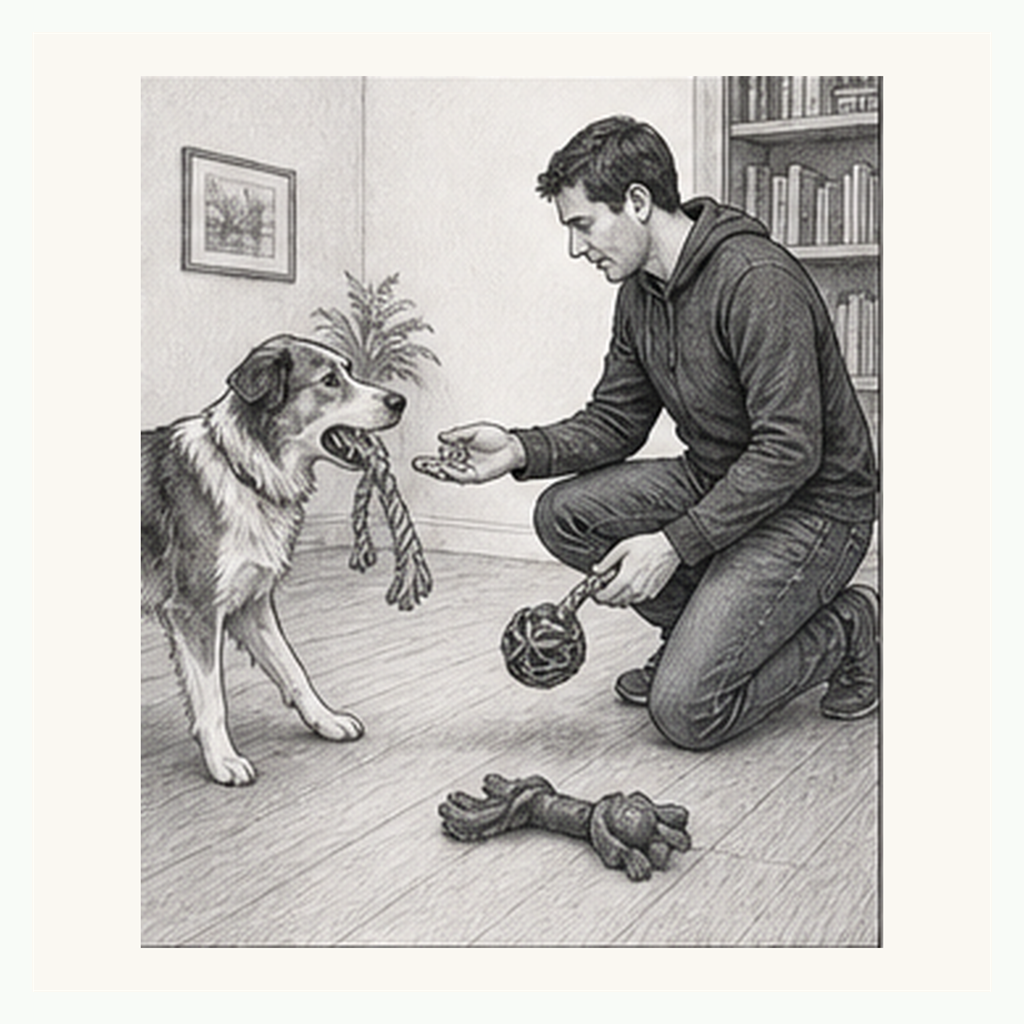
Toy Drop and Reorient Chain

Sketch of dog dropping toy and looking at handler

Tiny Win

Release a toy, reconnect, then restart play calmly.

Do This - 10 Minutes

  1. Initiate a low-intensity game of tug or fetch.
  2. Give one clear "Drop" cue without adding body pressure.
  3. Mark "Yes" the moment the toy leaves their mouth.
  4. Wait for eye contact (reorient) before rewarding with a treat.
  5. Restart the game immediately as the ultimate reward.

Watch For

  • During tug, your dog drops, taps your hand, then earns another 10 seconds of tug.
  • 5 consecutive drop-plus-next-cue rounds.
  • Your dog can reset before the session gets noisy or frustrated.

If It Gets Messy: The game returning makes self-control valuable.

Track One Thing: 5 consecutive drop-plus-next-cue rounds.

Need More Help?
  • Setup: Two toys, treats, low-distraction room.
  • Why it works: Release a toy, reconnect, then restart play calmly.
  • Common mistake: Making the setup too hard before the easy version is fluent.
  • Level up: Repeat with one small increase in distance, duration, or distraction.
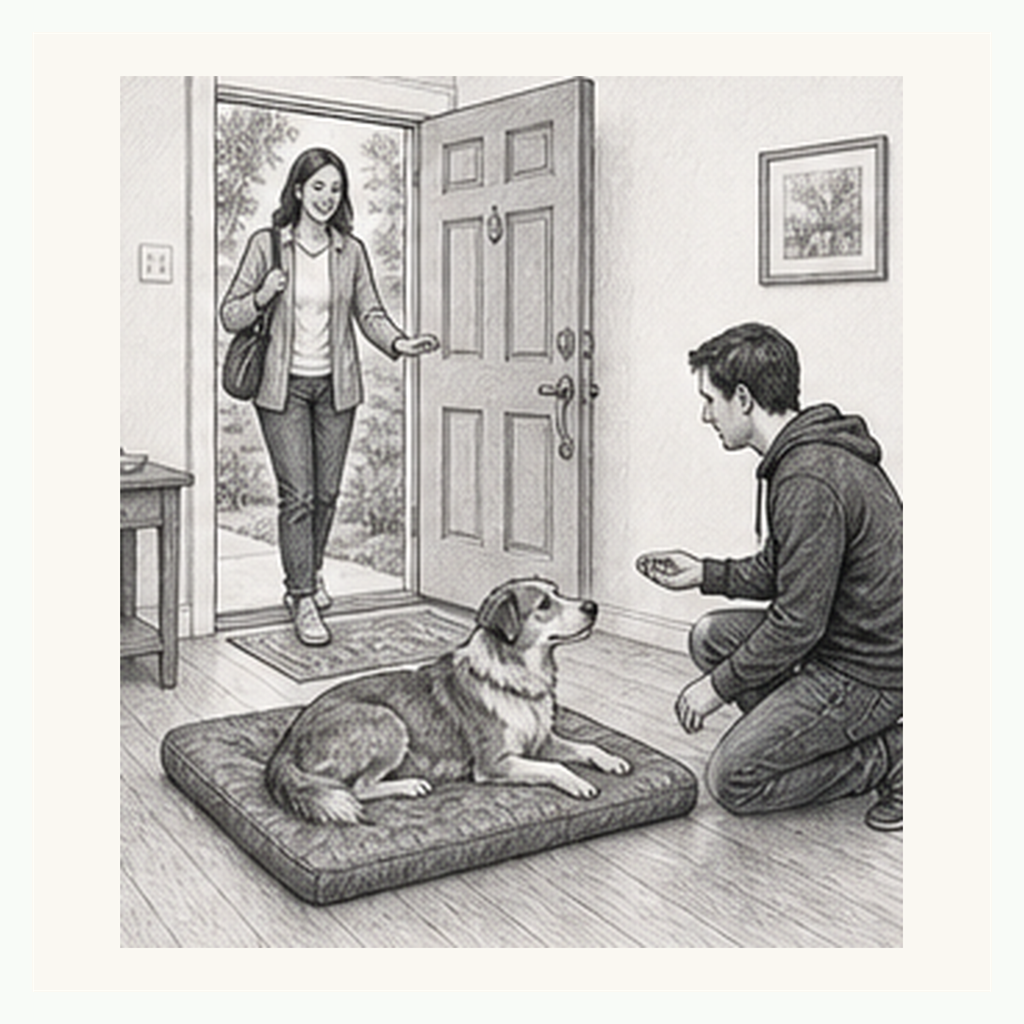
Day 4Expert

Guest Entry Calm Sequence

Detailed sketch demonstrating Guest Entry Calm Sequence

Tiny Win

Complete station, settle, greet, and return-to-station.

Do This - 10 Minutes

  1. Place your dog on their 'Place' mat as the guest approaches the door.
  2. Reward for staying on the mat as the doorbell rings or guest knocks.
  3. Have the guest enter and stand still; reward the dog for staying.
  4. Release the dog to greet politely for 3 seconds.
  5. Call the dog back to the mat and reward for settling again.

Watch For

  • A friend enters, your dog stays on place, greets briefly, then returns to place.
  • 2 full mat-greet-return sequences.
  • Your dog can reset before the session gets noisy or frustrated.

If It Gets Messy: Short greetings prevent excitement from boiling over.

Track One Thing: 2 full mat-greet-return sequences.

Need More Help?
  • Setup: Leash, mat, treats, calm helper guest.
  • Why it works: Complete station, settle, greet, and return-to-station.
  • Common mistake: Making the setup too hard before the easy version is fluent.
  • Level up: Repeat with one small increase in distance, duration, or distraction.
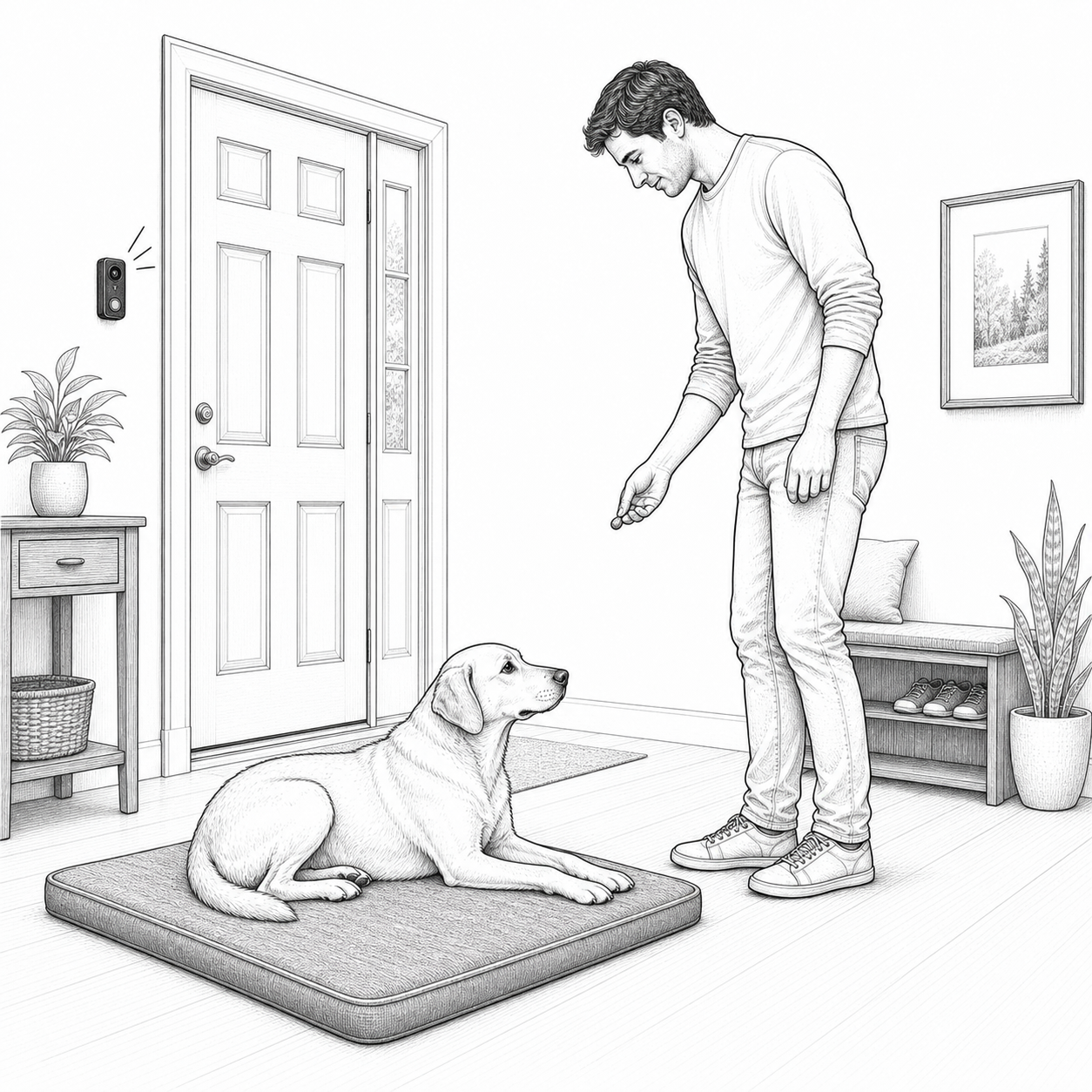
Day 5Expert

Doorbell to Mat Recovery

Detailed sketch of a dog recovering from the doorbell by settling on a mat away from the front door

Tiny Win

Your dog recovers after the doorbell instead of prolonged barking.

Do This - 10 Minutes

  1. Trigger a low-volume doorbell sound while the dog is relaxed.
  2. Mark and reward if the dog looks at you or moves toward their mat.
  3. If the dog barks, wait for a pause, then lure to the mat.
  4. Gradually increase sound volume and door activity.
  5. The goal is for the bell to become a 'Go to Mat' cue.

Watch For

  • The bell rings, your dog barks once, then runs to bed for treats.
  • Reaches mat within 5 seconds in 4 of 5 reps.
  • Your dog can reset before the session gets noisy or frustrated.

If It Gets Messy: Recovery is the goal, not instant silence.

Track One Thing: Reaches mat within 5 seconds in 4 of 5 reps.

Need More Help?
  • Setup: Doorbell sound, mat, leash if needed, treats.
  • Why it works: This reinforces recovery after the doorbell instead of prolonged barking.
  • Common mistake: Making the setup too hard before the easy version is fluent.
  • Level up: Repeat with one small increase in distance, duration, or distraction.
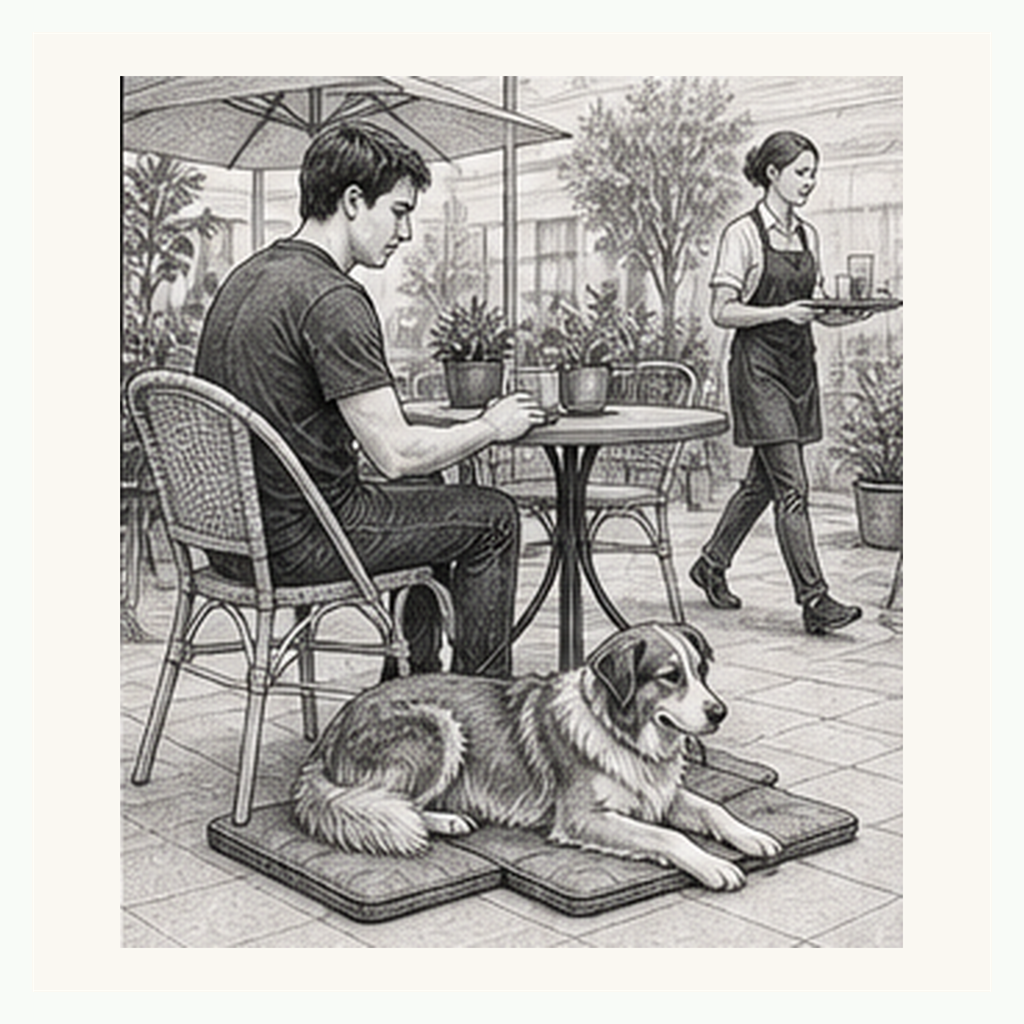
Day 6Expert

Public Patio Settle With Movement

Detailed sketch demonstrating Public Patio Settle With Movement

Tiny Win

Your dog holds a long settle while people and food move nearby.

Do This - 10 Minutes

  1. Set the mat in a quiet corner or under your table at a patio.
  2. Settle the dog and provide a high-value chew or enrichment toy.
  3. Reward 'four-on-the-floor' and chin-down postures as people walk past.
  4. If the dog gets restless, decrease distraction or increase reward frequency.
  5. Stay for only 5-10 minutes initially to ensure success.

Watch For

  • A server walks by with food and your dog lies back down after looking.
  • 10 settled minutes with 3 passing distractions.
  • Your dog can reset before the session gets noisy or frustrated.

If It Gets Messy: Choose the easiest corner first.

Track One Thing: 10 settled minutes with 3 passing distractions.

Need More Help?
  • Setup: Mat, leash, chew or treats, quiet dog-friendly patio.
  • Why it works: This helps your dog hold a long settle while people and food move nearby.
  • Common mistake: Making the setup too hard before the easy version is fluent.
  • Level up: Repeat with one small increase in distance, duration, or distraction.
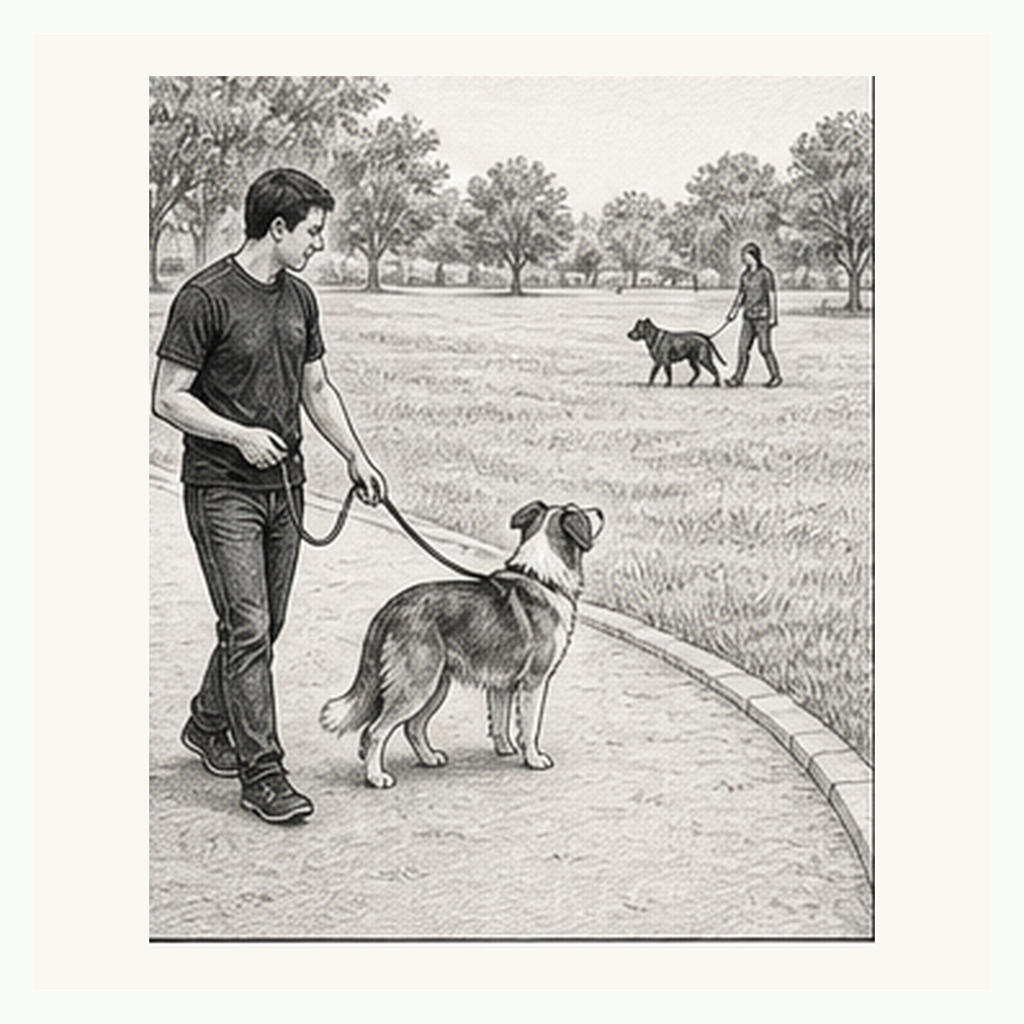
Day 7Expert

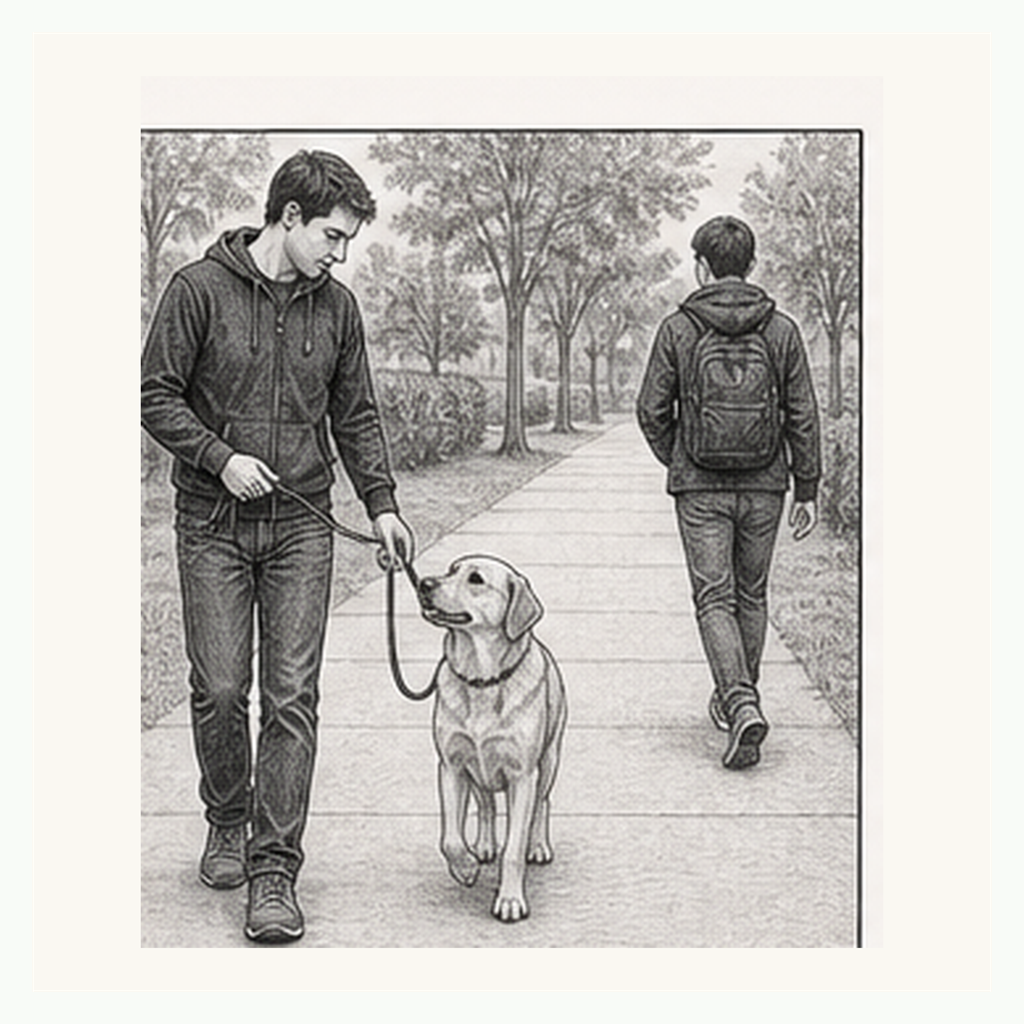
Parallel Walk With Another Dog

Detailed sketch demonstrating Parallel Walk With Another Dog

Tiny Win

Walk near another dog without greeting or fixating.

Do This - 10 Minutes

  1. Walk with a friend and their dog in the same direction, 20 feet apart.
  2. Focus on your dog’s check-ins and loose leash, not the other dog.
  3. Reward heavily for 'dismissing' the other dog (looking away).
  4. Slowly decrease the distance between handlers as both dogs remain calm.
  5. If fixating starts, increase distance and reset the focus.

Watch For

  • Your dog notices the other dog across the path, checks in, and keeps walking.
  • 5 minutes parallel within 12 feet.
  • Your dog can reset before the session gets noisy or frustrated.

If It Gets Messy: Coexistence is the win; greeting is optional. If either dog stiffens, lunges, growls, cannot eat, or has bite history, increase distance or stop and use professional support.

Track One Thing: 5 minutes parallel within 12 feet.

Need More Help?
  • Setup: Two handlers, two leashed dogs, wide path, treats.
  • Why it works: Walk near another dog without greeting or fixating.
  • Common mistake: Making the setup too hard before the easy version is fluent.
  • Level up: Repeat with one small increase in distance, duration, or distraction.
Day 8Expert

Multi-Dog Pass-By Pattern

Detailed sketch demonstrating Multi-Dog Pass-By Pattern

Tiny Win

Move past multiple dogs at a safe distance.

Do This - 10 Minutes

  1. Find a busy park perimeter where dogs are visible but at a distance.
  2. Identify a 'safe arc' that allows your dog to pass without reacting.
  3. Walk the arc, marking and rewarding every glance at you.
  4. Keep the leash loose; any tension is a cue to move further away.
  5. Allow a long, decompression sniff break after every successful pass.

Watch For

  • Two dogs pass opposite you; your dog looks, eats, and follows your curved path.
  • 3 dog pass-bys without lunging.
  • Your dog can reset before the session gets noisy or frustrated.

If It Gets Messy: Distance keeps the brain able to learn. Skip this drill for dogs with active dog-directed aggression or a bite history unless a qualified professional is present.

Track One Thing: 3 dog pass-bys without lunging.

Need More Help?
  • Setup: Leash, treats, park perimeter or wide trail.
  • Why it works: Move past multiple dogs at a safe distance.
  • Common mistake: Making the setup too hard before the easy version is fluent.
  • Level up: Repeat with one small increase in distance, duration, or distraction.
Day 9Expert

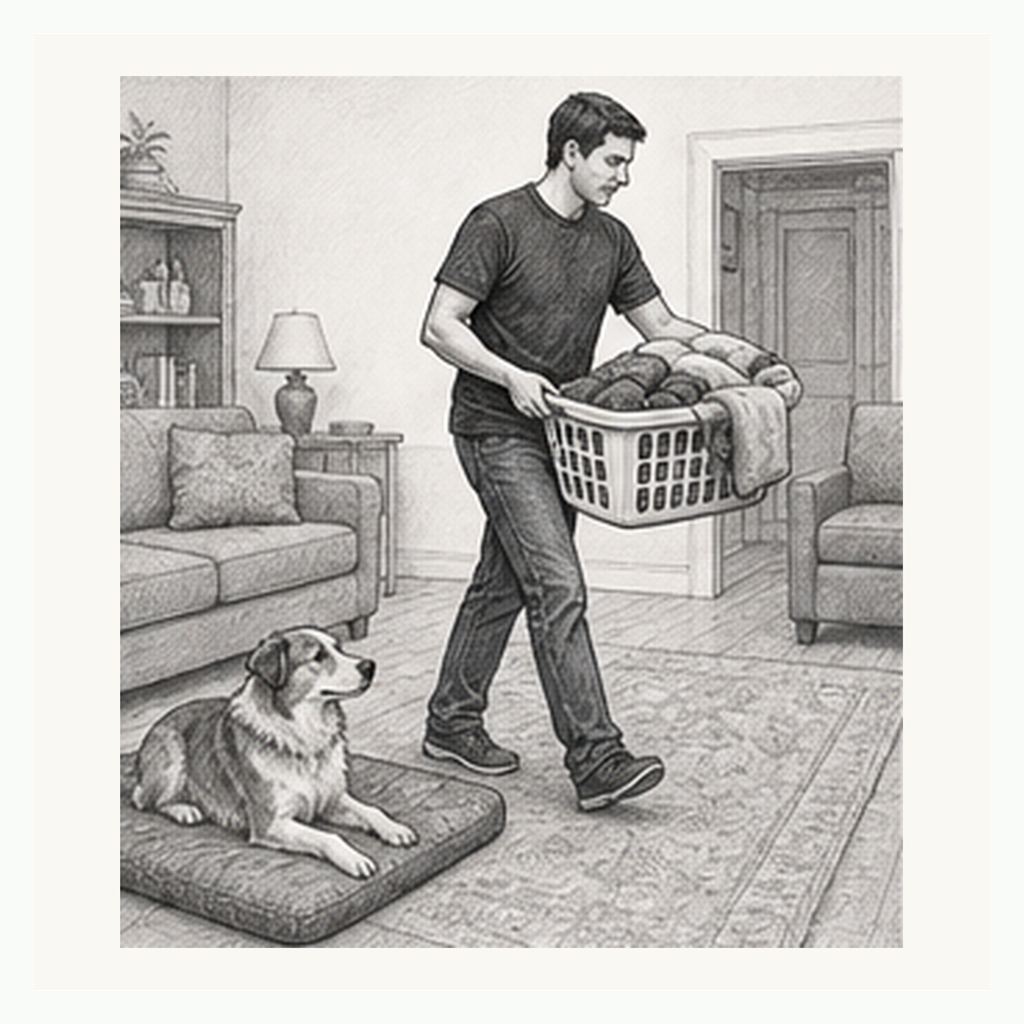
Advanced Place With Delayed Release

Detailed sketch demonstrating Advanced Place With Delayed Release

Tiny Win

Your dog holds place through distance, duration, and household distractions.

Do This - 10 Minutes

  1. Cue the 'Place' command and wait for a relaxed down.
  2. Move 5 steps away, then 10 steps, returning to reward frequently.
  3. Introduce mild household noise (opening a drawer, moving a chair).
  4. Stretch the duration between rewards while the dog stays soft.
  5. Give a clear 'Free' release before the dog decides to get up.

Watch For

  • You send your dog to place, pick up a mug, return, reward, then say “free.”
  • 3 minutes on place while you do 2 tasks.
  • Your dog can reset before the session gets noisy or frustrated.

If It Gets Messy: Reward on place and release off place.

Track One Thing: 3 minutes on place while you do 2 tasks.

Need More Help?
  • Setup: Raised bed or mat, treats, household items.
  • Why it works: This helps your dog hold place through distance, duration, and household distractions.
  • Common mistake: Making the setup too hard before the easy version is fluent.
  • Level up: Repeat with one small increase in distance, duration, or distraction.
Day 10Expert

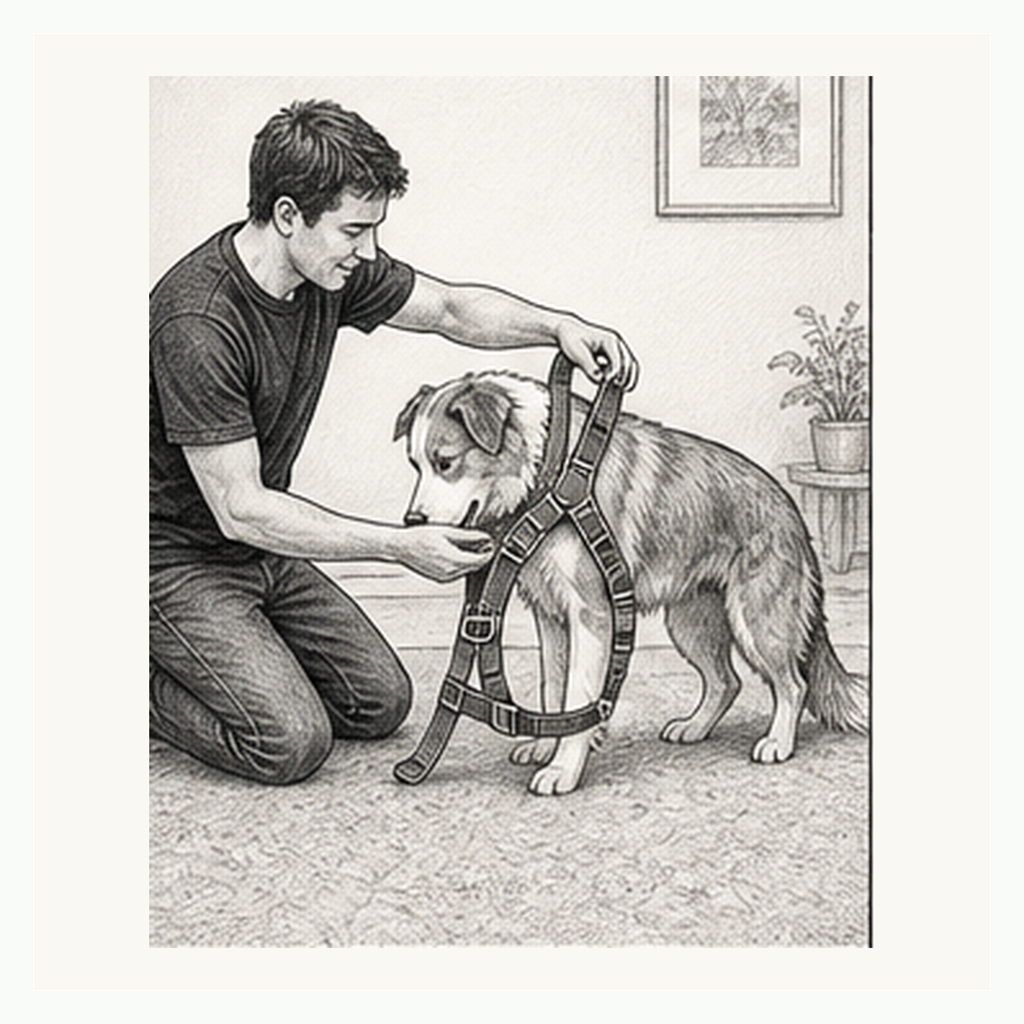
Vet Handling Consent Circuit

Detailed sketch demonstrating Vet Handling Consent Circuit

Tiny Win

Prepare for exam-style handling cooperatively.

Do This - 10 Minutes

  1. Invite your dog onto a non-slip station.
  2. Show the tool or touch point and reward calm noticing.
  3. Add one brief contact or voluntary nose-in.
  4. Stop and feed before your dog pulls away.
  5. Finish with an easy cue and release.

Watch For

  • You touch an ear, feed, then touch a paw and feed.
  • 5 handling points with relaxed body.
  • Your dog can reset before the session gets noisy or frustrated.

If It Gets Messy: Cooperation matters more than endurance.

Track One Thing: 5 handling points with relaxed body.

Need More Help?
  • Setup: Treats, non-slip mat, optional helper.
  • Why it works: Prepare for exam-style handling cooperatively.
  • Common mistake: Making the setup too hard before the easy version is fluent.
  • Level up: Repeat with one small increase in distance, duration, or distraction.
Day 11Expert

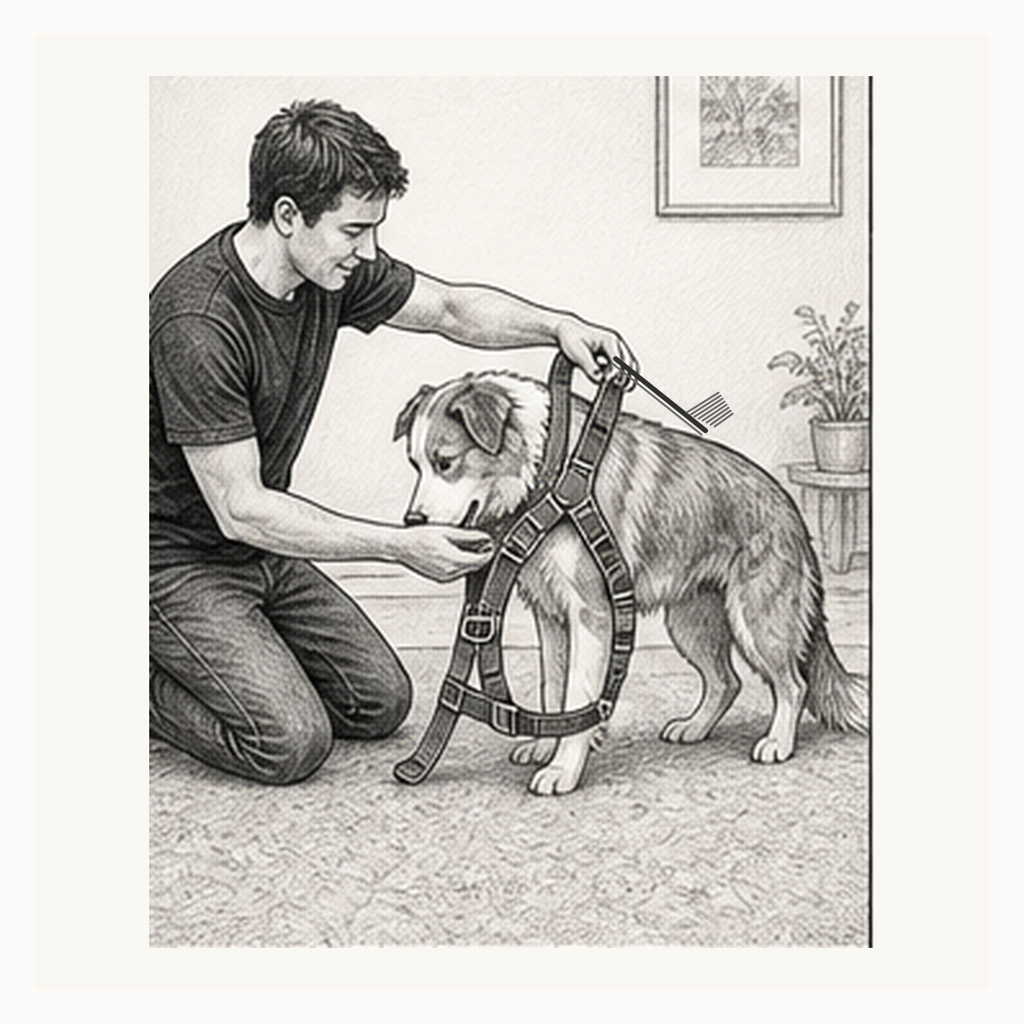
Grooming Tool Preview

Detailed sketch demonstrating Grooming Tool Preview

Tiny Win

Stay steady around grooming tools before full grooming.

Do This - 10 Minutes

  1. Show the grooming tool (brush/clippers) at a distance.
  2. Mark and reward for calm observation without sniffing or pawing.
  3. Touch the tool to the dog's shoulder briefly and reward.
  4. Simulate the tool's sound (if any) and reward the lack of reaction.
  5. Repeat in short bursts, ending while the dog is still comfortable.

Watch For

  • You show the brush, make one gentle stroke, reward, and put it away.
  • 10 tool presentations and 3 contacts.
  • Your dog can reset before the session gets noisy or frustrated.

If It Gets Messy: Tiny previews beat forced full sessions.

Track One Thing: 10 tool presentations and 3 contacts.

Need More Help?
  • Setup: Brush, nail tool turned off, treats, mat.
  • Why it works: Stay steady around grooming tools before full grooming.
  • Common mistake: Making the setup too hard before the easy version is fluent.
  • Level up: Repeat with one small increase in distance, duration, or distraction.
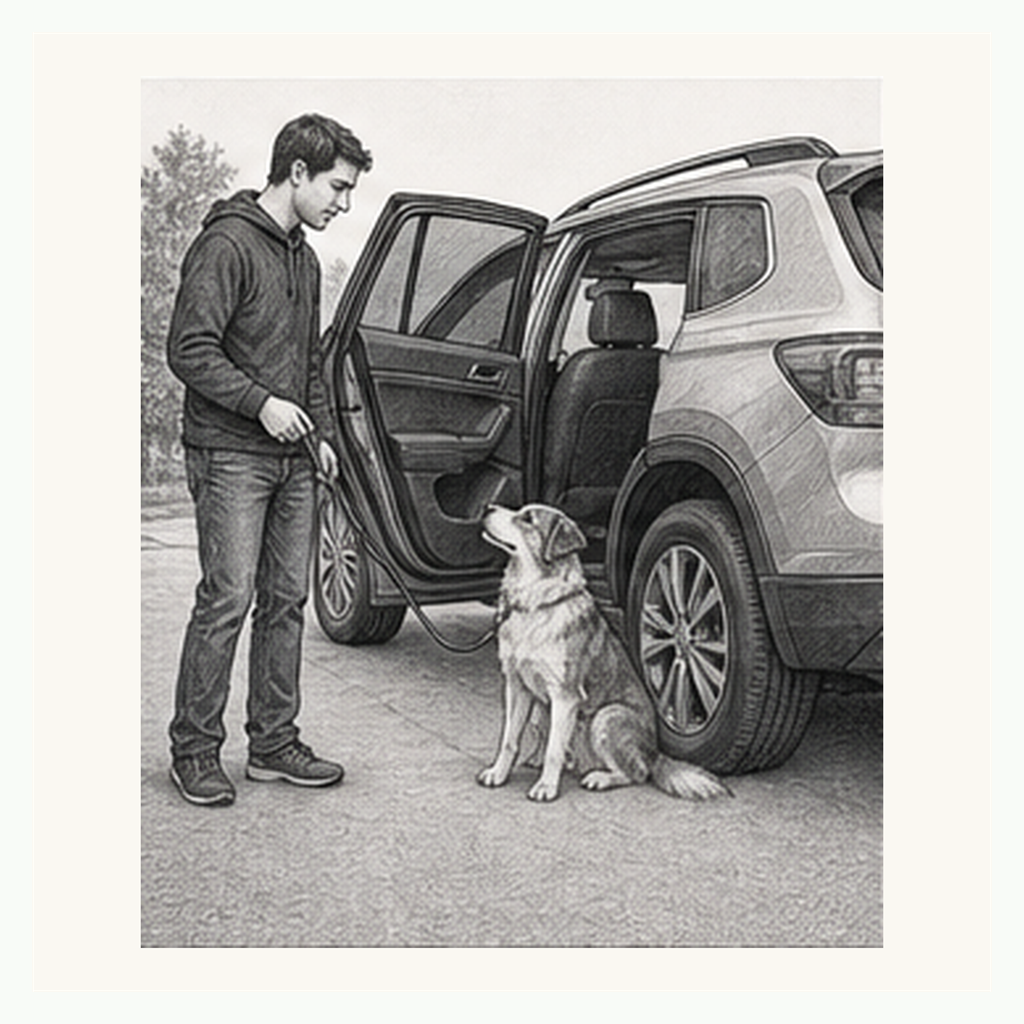
Day 12Expert

Car Exit Check-In

Detailed sketch demonstrating Car Exit Check-In

Tiny Win

Prevent explosive car exits with wait and focus.

Do This - 10 Minutes

  1. Stop the car and wait 10 seconds before reaching for the door.
  2. Open the door slightly; if the dog moves to exit, close it gently.
  3. Wait for the dog to sit or offer eye contact.
  4. Attach the leash while the dog is still inside the vehicle.
  5. Give a clear 'Okay' release for the dog to exit calmly.

Watch For

  • At the trailhead, your dog waits, looks at you, then exits after “okay.”
  • 5-second wait in 4 of 5 trials.
  • Your dog can reset before the session gets noisy or frustrated.

If It Gets Messy: Always use the leash; this is a safety behavior.

Track One Thing: 5-second wait in 4 of 5 trials.

Need More Help?
  • Setup: Car, leash attached before door opens, treats.
  • Why it works: Prevent explosive car exits with wait and focus.
  • Common mistake: Making the setup too hard before the easy version is fluent.
  • Level up: Repeat with one small increase in distance, duration, or distraction.
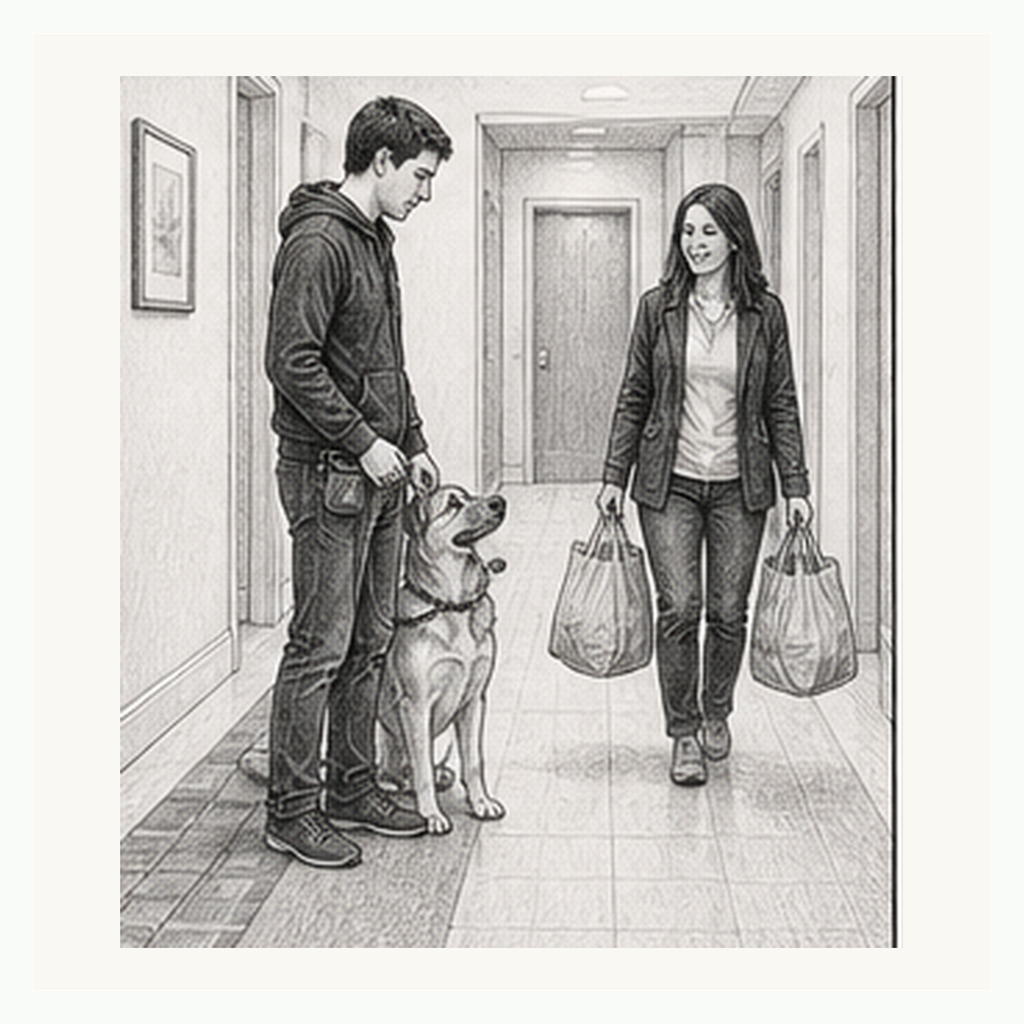
Day 13Expert

Storefront Transition Focus

Detailed sketch demonstrating Storefront Transition Focus

Tiny Win

Move calmly through busy thresholds and surface changes.

Do This - 10 Minutes

  1. Approach a dog-friendly store entrance slowly.
  2. Pause 10 feet away and reward for focus on you amidst the noise.
  3. Wait for automatic doors to cycle; reward the dog for staying steady.
  4. Enter the threshold with a loose leash and immediate check-in.
  5. Reward heavily once inside and move to a quiet aisle.

Watch For

  • At a pet-friendly entrance, your dog checks in before automatic doors.
  • 3 calm entrance-exit reps.
  • Your dog can reset before the session gets noisy or frustrated.

If It Gets Messy: Thresholds raise arousal; train them directly.

Track One Thing: 3 calm entrance-exit reps.

Need More Help?
  • Setup: Leash, treats, dog-friendly store exterior.
  • Why it works: Move calmly through busy thresholds and surface changes.
  • Common mistake: Making the setup too hard before the easy version is fluent.
  • Level up: Repeat with one small increase in distance, duration, or distraction.
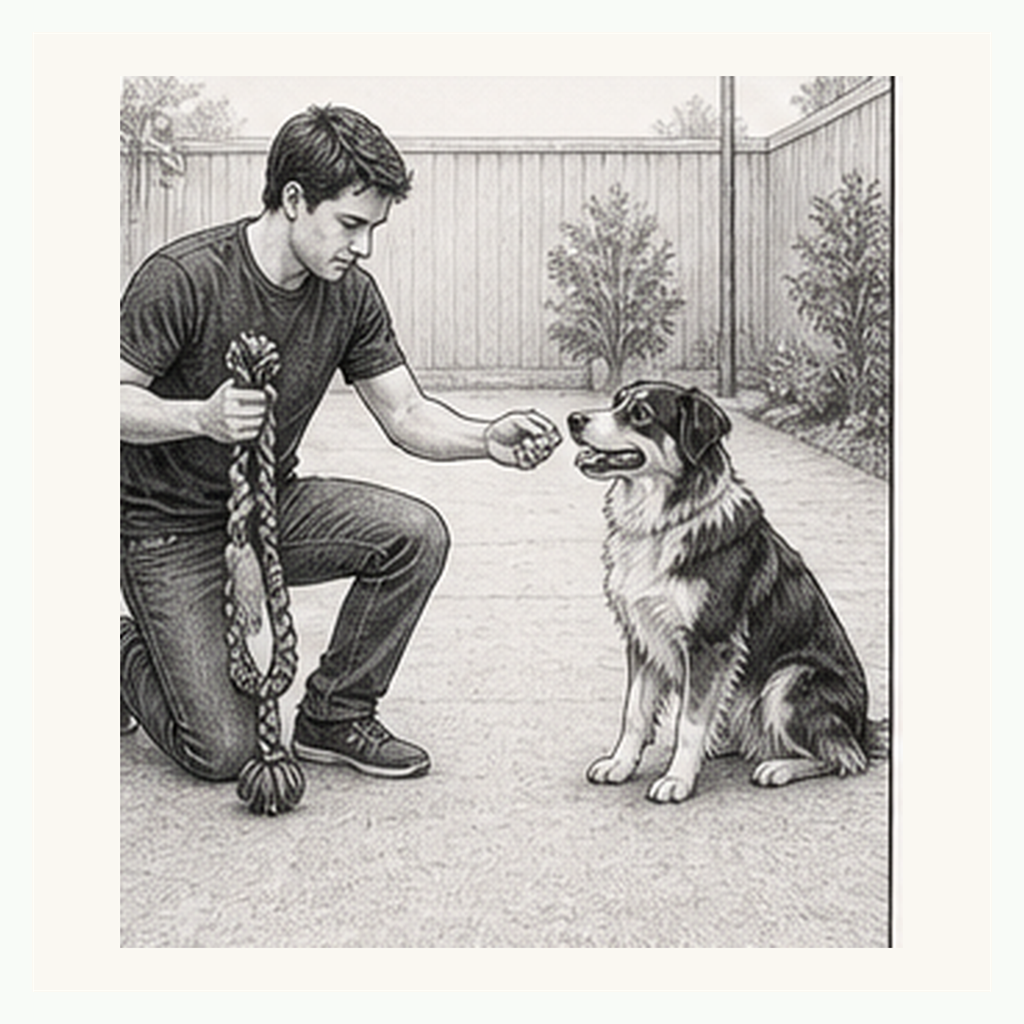
Day 14Expert

High-Arousal Reset After Play

Detailed sketch demonstrating High-Arousal Reset After Play

Tiny Win

Downshift after exciting activity instead of staying frantic.

Do This - 10 Minutes

  1. Engage in 20 seconds of high-intensity play (fetch or tug).
  2. Abruptly freeze your body and hide the toy behind your back.
  3. Wait for the dog to offer a 'downshift' behavior (sit, down, or step back).
  4. Immediately mark "Yes" and re-engage in play as the reward.
  5. Repeat 3 times, ending with a calm treat-scatter on the floor.

Watch For

  • After tug, your dog drops, goes to the mat, then plays again after settling.
  • 4 play-to-mat resets within 30 seconds.
  • Your dog can reset before the session gets noisy or frustrated.

If It Gets Messy: This teaches emotional flexibility.

Track One Thing: 4 play-to-mat resets within 30 seconds.

Need More Help?
  • Setup: Toy, leash if needed, mat, treats.
  • Why it works: Downshift after exciting activity instead of staying frantic.
  • Common mistake: Making the setup too hard before the easy version is fluent.
  • Level up: Repeat with one small increase in distance, duration, or distraction.
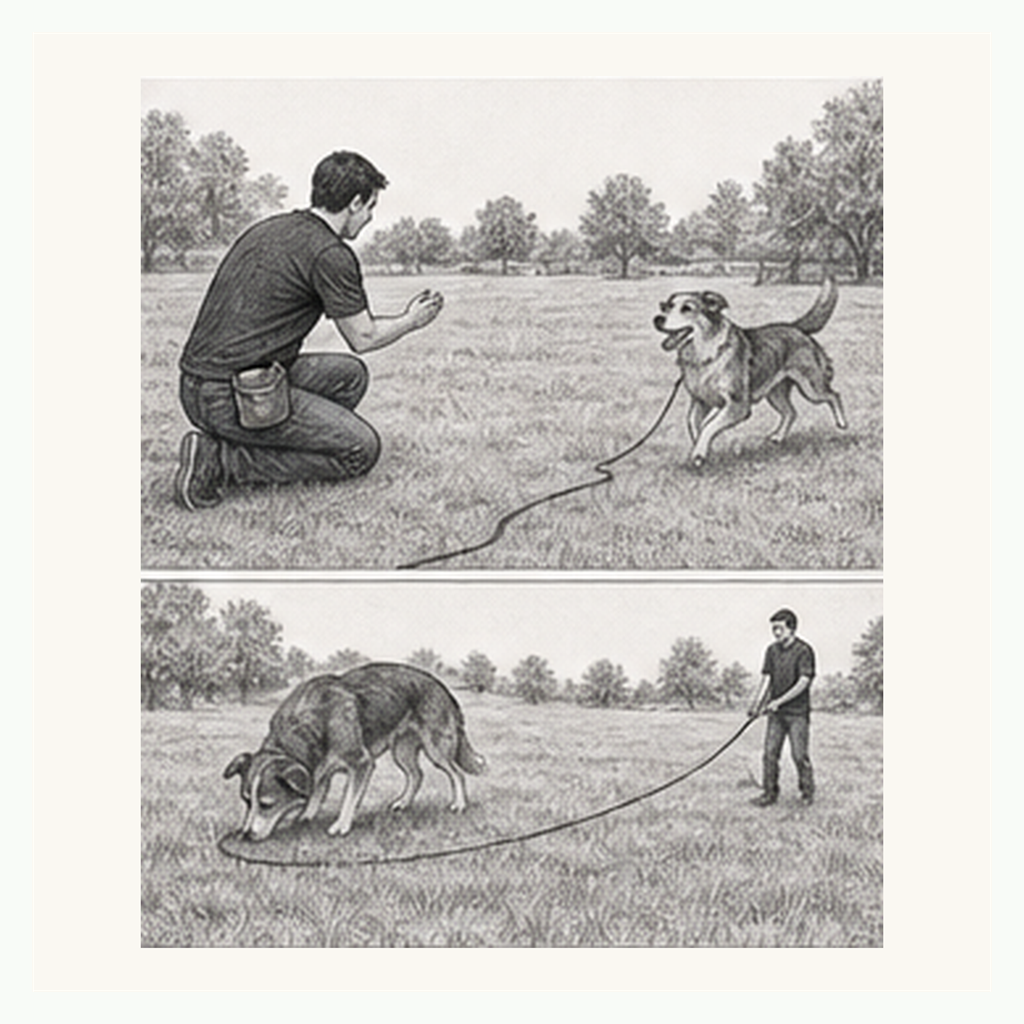
Day 15Expert

Long-Line Recall From Wildlife Scent

Detailed sketch demonstrating Long-Line Recall From Wildlife Scent

Tiny Win

Recall around strong outdoor smells safely.

Do This - 10 Minutes

  1. Spot a strong scent patch or wildlife track on a long line.
  2. Allow the dog to sniff for 5 seconds to build engagement.
  3. Give your recall cue and move backward rapidly.
  4. Reward with a high-value 'jackpot' (3-5 treats) at your feet.
  5. Immediately release the dog back to the scent as a functional reward.

Watch For

  • Your dog follows rabbit scent, returns when called, then earns sniffing elsewhere.
  • 3 of 5 returns within 5 seconds.
  • Your dog can reset before the session gets noisy or frustrated.

If It Gets Messy: Sniffing can be the reward for recall.

Track One Thing: 3 of 5 returns within 5 seconds.

Need More Help?
  • Setup: 15–30 foot long line, harness, treats, field edge.
  • Why it works: Recall around strong outdoor smells safely.
  • Common mistake: Making the setup too hard before the easy version is fluent.
  • Level up: Repeat with one small increase in distance, duration, or distraction.
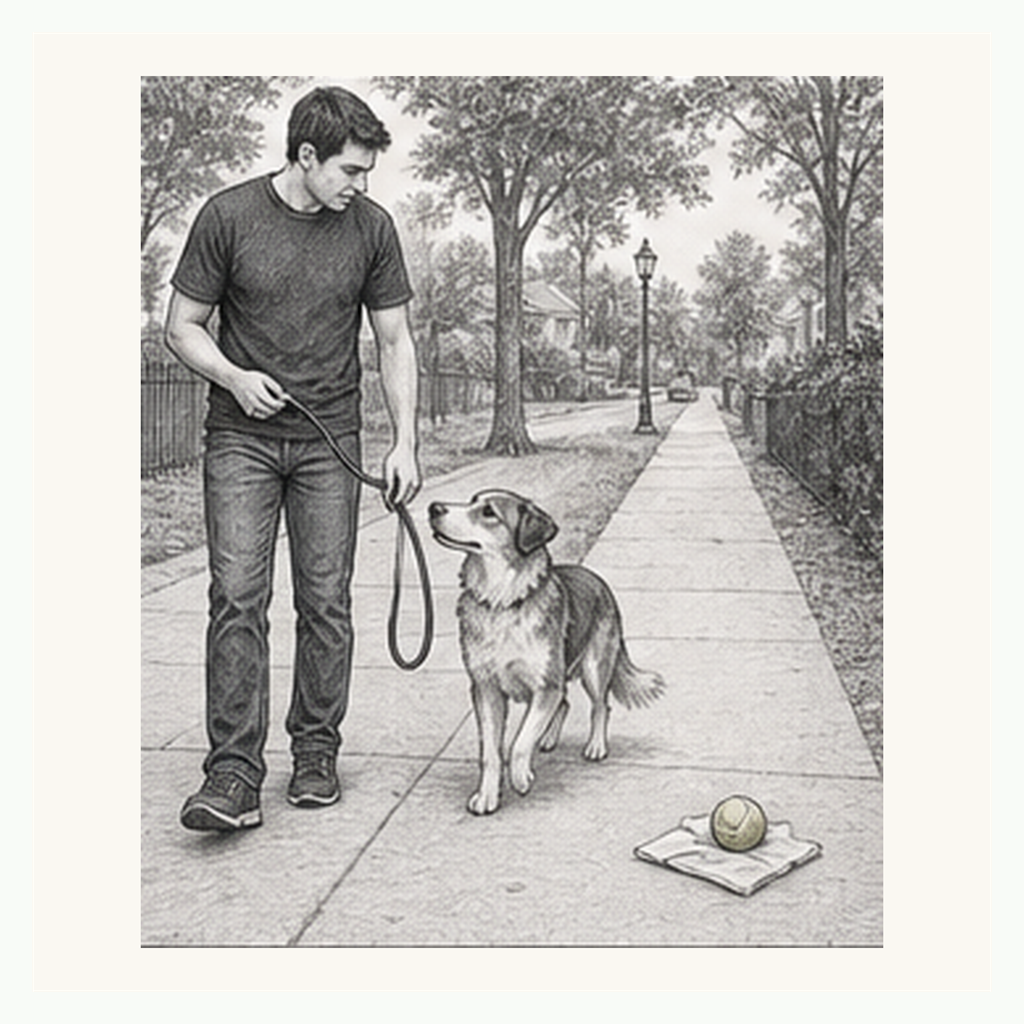
Day 16Expert

Leave-It to Walk-On Chain

Detailed sketch demonstrating Leave-It to Walk-On Chain

Tiny Win

Disengage, move on, and reconnect after “leave it.”.

Do This - 10 Minutes

  1. Approach the distraction at a distance where your dog is alert but not pulling.
  2. Give a clear 'Leave it' cue as your dog notices the item.
  3. The moment the dog looks away, mark and move 5 steps past the item.
  4. Reward only after the dog has successfully moved away from the distraction.
  5. Repeat, gradually decreasing the distance to the distraction.

Watch For

  • Your dog sees a dropped napkin, turns away, and walks on calmly.
  • 4 of 5 passes with no circling back.
  • Your dog can reset before the session gets noisy or frustrated.

If It Gets Messy: The second reward completes the chain.

Track One Thing: 4 of 5 passes with no circling back.

Need More Help?
  • Setup: Leash, treats, planted low-value item.
  • Why it works: Disengage, move on, and reconnect after “leave it.”.
  • Common mistake: Making the setup too hard before the easy version is fluent.
  • Level up: Repeat with one small increase in distance, duration, or distraction.
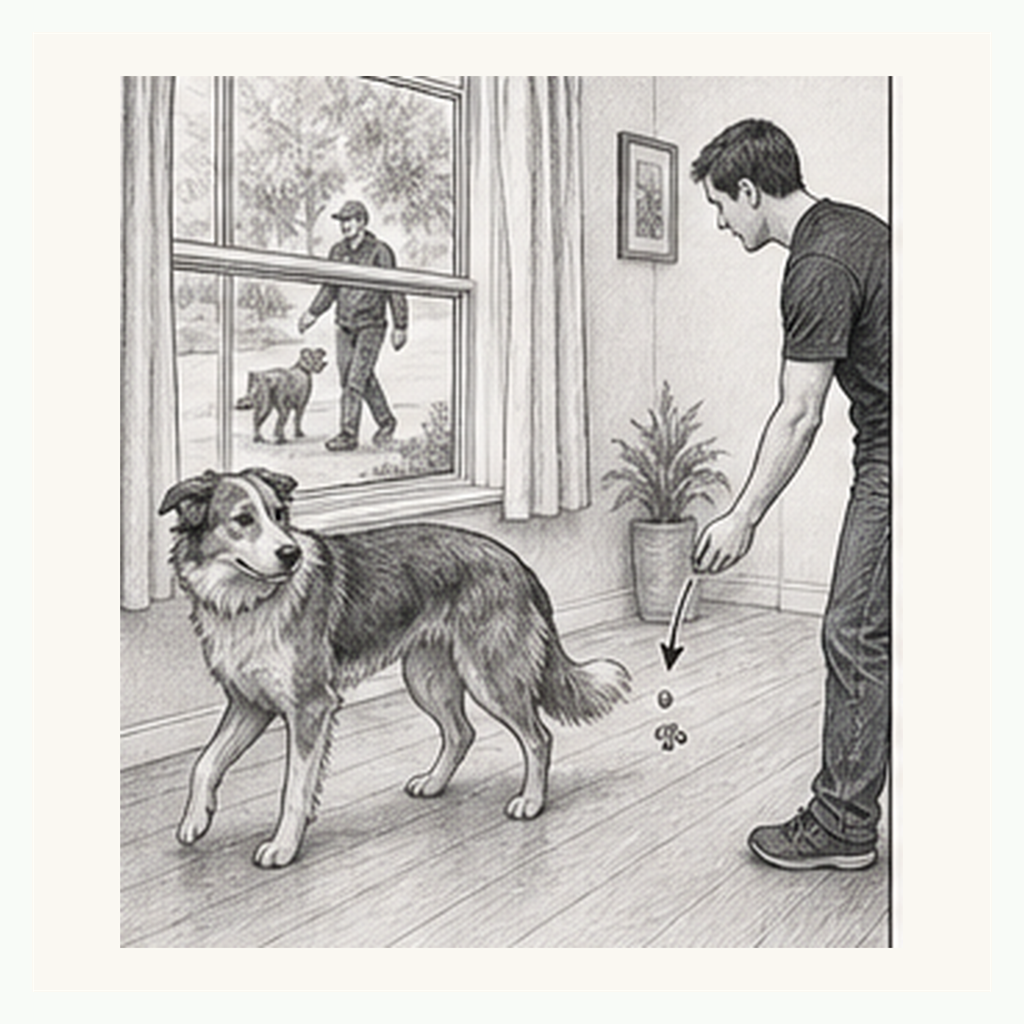
Day 17Expert

Quiet Window Watch

Detailed sketch demonstrating Quiet Window Watch

Tiny Win

Observe outdoor movement without rehearsing barking.

Do This - 10 Minutes

  1. Set up a mat near a window where your dog usually barks at passersby.
  2. Reward the dog for staying on the mat while the window is closed.
  3. As a person passes, mark "Yes" before the dog barks and deliver a treat.
  4. If the dog barks, call them away from the window to their mat immediately.
  5. Gradually increase the time spent watching without needing a treat.

Watch For

  • A neighbor walks by; your dog watches, turns back, and settles on the mat.
  • 3 outdoor movements with recovery under 5 seconds.
  • Your dog can reset before the session gets noisy or frustrated.

If It Gets Messy: Reward calm observation and recovery.

Track One Thing: 3 outdoor movements with recovery under 5 seconds.

Need More Help?
  • Setup: Window view, mat, treats, leash or gate if needed.
  • Why it works: Observe outdoor movement without rehearsing barking.
  • Common mistake: Making the setup too hard before the easy version is fluent.
  • Level up: Repeat with one small increase in distance, duration, or distraction.
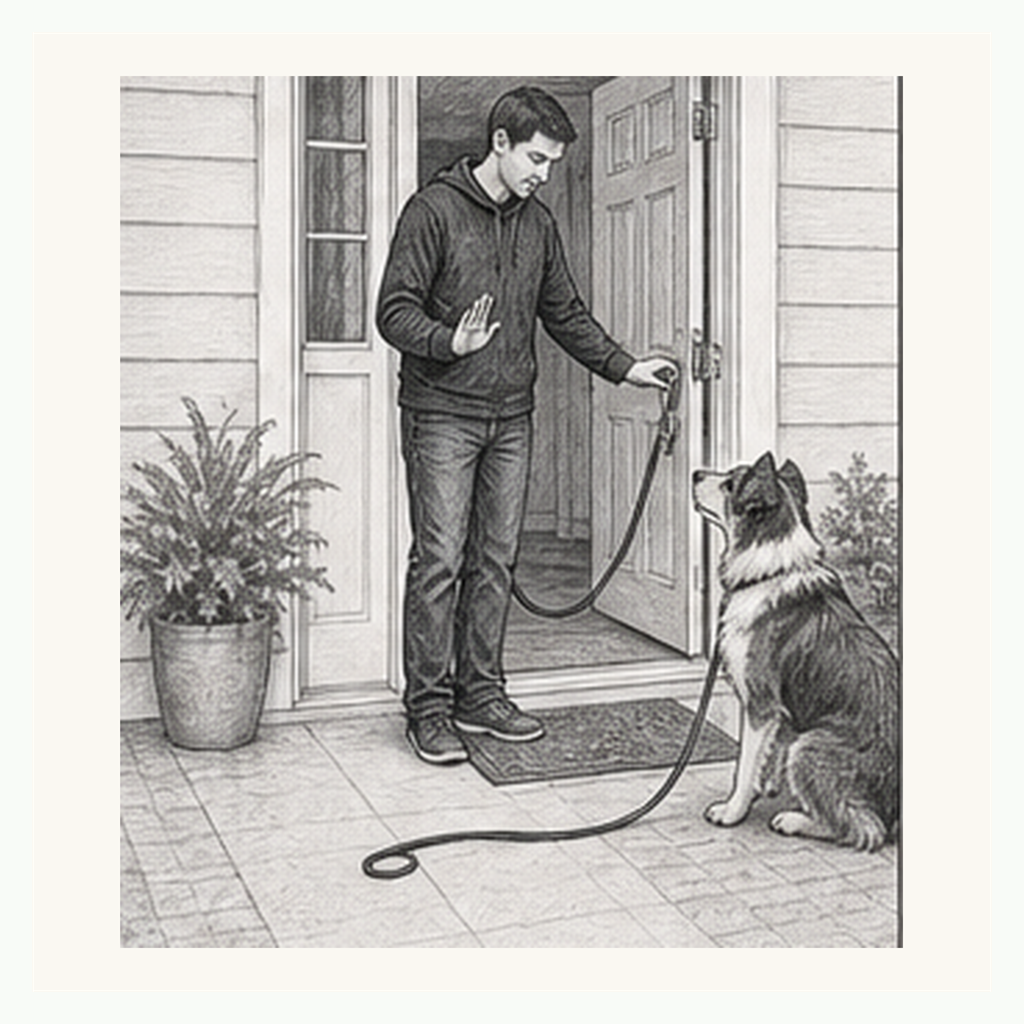
Day 18Expert

Delivery Drop-Off Protocol

Detailed sketch demonstrating Delivery Drop-Off Protocol

Tiny Win

Use a safety routine during package deliveries.

Do This - 10 Minutes

  1. Send your dog to 'Place' and reward for a settled down.
  2. Have a helper knock or ring the bell; reward the dog for staying on place.
  3. Walk to the door and open it slightly while the dog remains on the mat.
  4. Simulate taking a package, then close the door and return to reward.
  5. Repeat with the dog staying on place for the entire duration of the delivery.

Watch For

  • A package lands outside and your dog stays on place while you bring it in.
  • One full simulated delivery on mat/boundary.
  • Your dog can reset before the session gets noisy or frustrated.

If It Gets Messy: Management is part of expert handling.

Track One Thing: One full simulated delivery on mat/boundary.

Need More Help?
  • Setup: Mat, leash or gate, treats, helper or delivery sounds.
  • Why it works: Use a safety routine during package deliveries.
  • Common mistake: Making the setup too hard before the easy version is fluent.
  • Level up: Repeat with one small increase in distance, duration, or distraction.
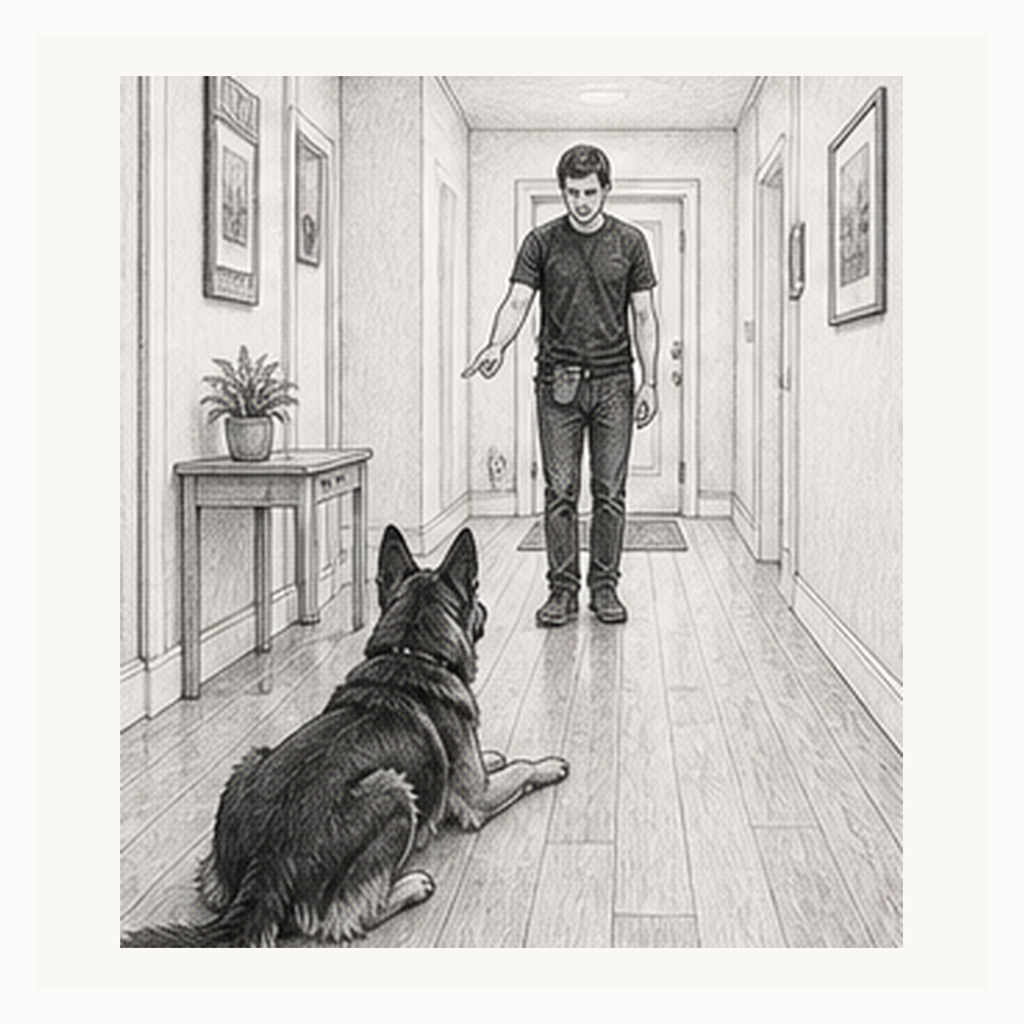
Day 19Expert

Distance Down Outdoors

Detailed sketch demonstrating Distance Down Outdoors

Tiny Win

Down from several feet away with mild distractions present.

Do This - 10 Minutes

  1. Start with the dog 2 feet away and cue a down. Reward.
  2. Move to 5 feet away, give the cue, and mark the moment the elbows hit.
  3. Walk back to the dog to deliver the reward (don't toss it).
  4. Gradually increase the distance to 10-15 feet in a quiet park.
  5. Reward for immediate response despite outdoor smells and sounds.

Watch For

  • From 8 feet on a long line, your dog downs while a jogger passes across the field.
  • 4 of 5 downs from 10 feet.
  • Your dog can reset before the session gets noisy or frustrated.

If It Gets Messy: Distance makes familiar cues feel new.

Track One Thing: 4 of 5 downs from 10 feet.

Need More Help?
  • Setup: Leash or long line, treats, quiet park or yard.
  • Why it works: Down from several feet away with mild distractions present.
  • Common mistake: Making the setup too hard before the easy version is fluent.
  • Level up: Repeat with one small increase in distance, duration, or distraction.
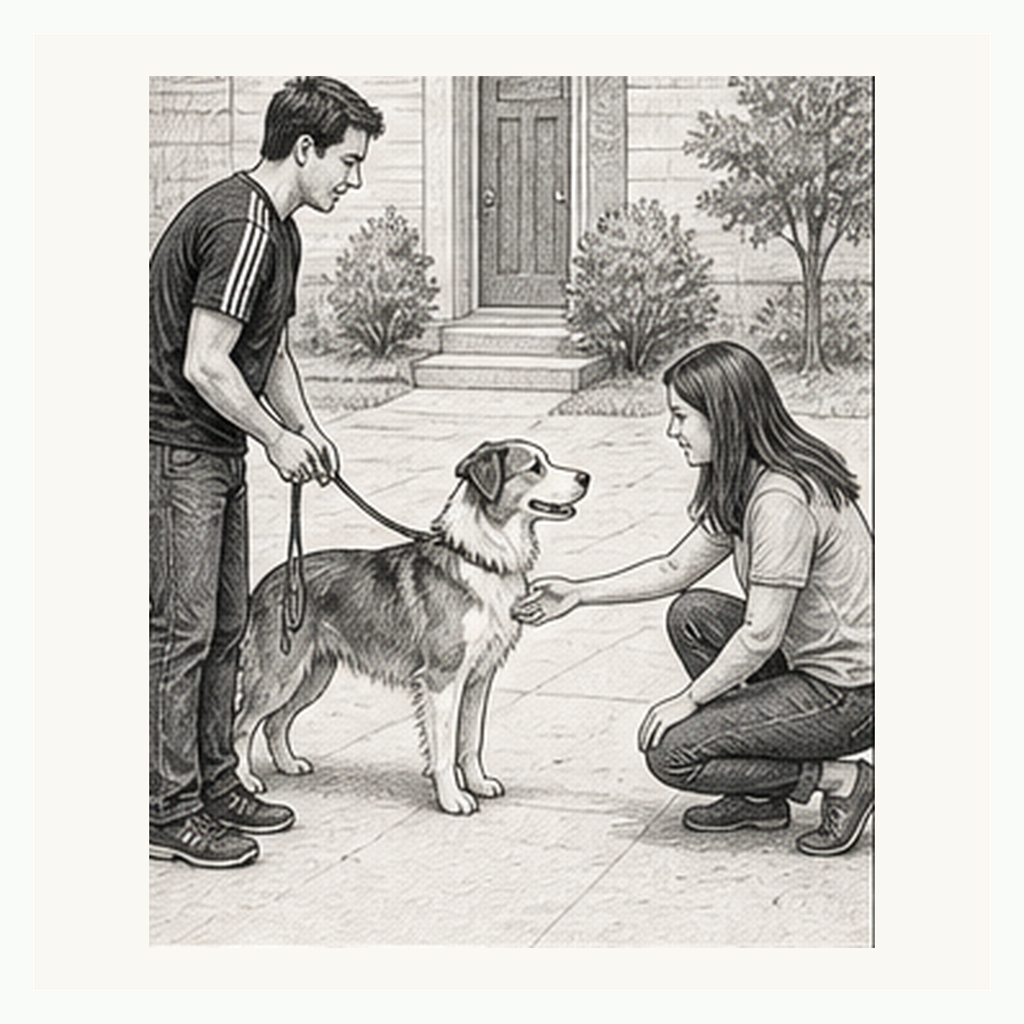
Day 20Expert

Polite Greeting Recall-Off

Detailed sketch demonstrating Polite Greeting Recall-Off

Tiny Win

Greet briefly, then return when called.

Do This - 10 Minutes

  1. Have a helper approach your dog at a distance.
  2. Allow the dog to sniff the helper's hand for exactly 3 seconds.
  3. Call your dog's name and move backward to encourage them to follow.
  4. Reward heavily once the dog turns away from the helper and reaches you.
  5. Release the dog to go back to the helper for a final greeting.

Watch For

  • Your dog sniffs the helper’s hand, keeps paws down, then returns to you.
  • 3 greetings with clean return.
  • Your dog can reset before the session gets noisy or frustrated.

If It Gets Messy: Brief greetings are easier to keep polite.

Track One Thing: 3 greetings with clean return.

Need More Help?
  • Setup: Leash, treats, calm helper, open space.
  • Why it works: Greet briefly, then return when called.
  • Common mistake: Making the setup too hard before the easy version is fluent.
  • Level up: Repeat with one small increase in distance, duration, or distraction.
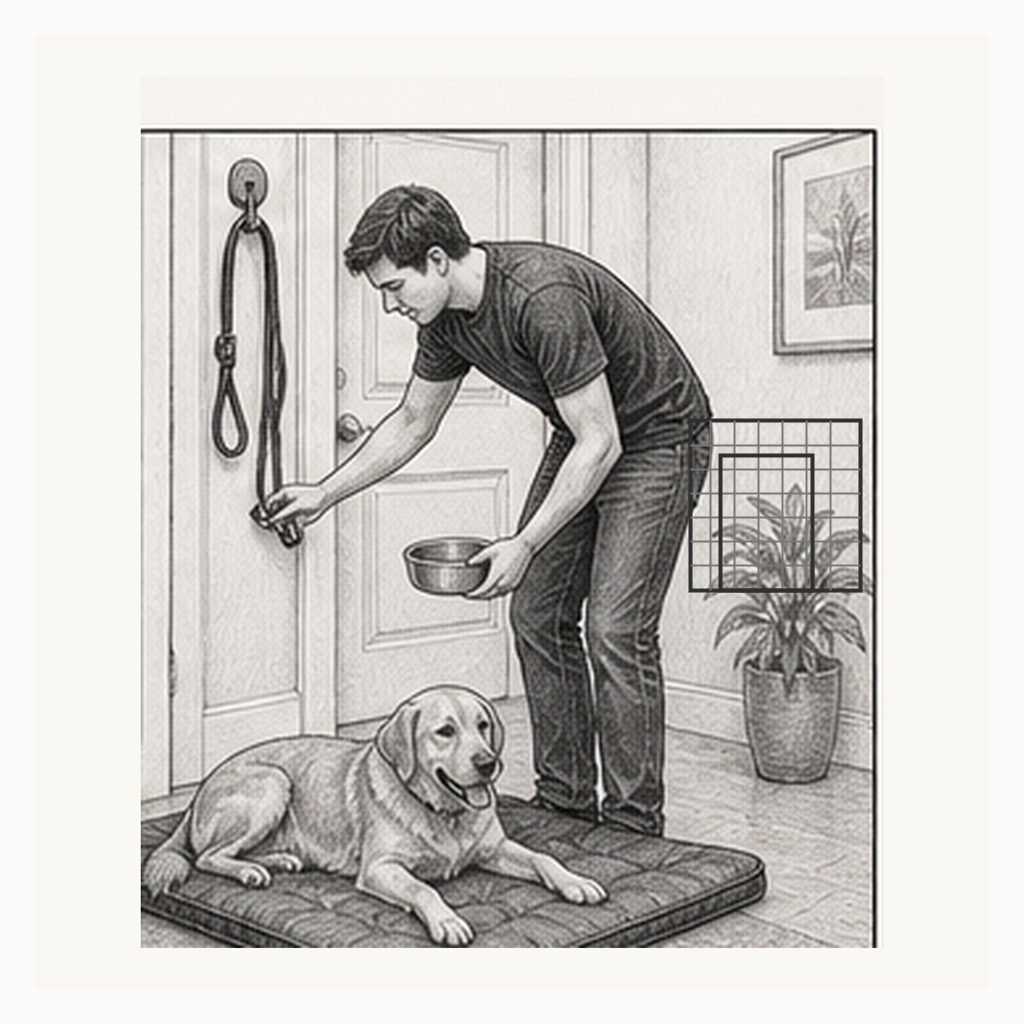
Day 21Expert

Mat-to-Crate Relaxation Chain

Detailed sketch demonstrating Mat-to-Crate Relaxation Chain

Tiny Win

Move smoothly between two resting locations.

Do This - 10 Minutes

  1. Cue your dog to their mat and reward for a settled posture.
  2. Walk to their crate and tap the entrance; cue 'Crate' or 'In'.
  3. Reward the dog for moving smoothly into the crate and lying down.
  4. Provide a long-lasting chew or enrichment toy inside the crate.
  5. Close the door briefly, then open and release once they are calm.

Watch For

  • Your dog rests on a mat during guest arrival, then moves to the crate for a chew.
  • Settles in second location within 1 minute.
  • Your dog can reset before the session gets noisy or frustrated.

If It Gets Messy: Give your dog a calm path away from overstimulation.

Track One Thing: Settles in second location within 1 minute.

Need More Help?
  • Setup: Mat, crate or second rest area, treats, chew.
  • Why it works: Move smoothly between two resting locations.
  • Common mistake: Making the setup too hard before the easy version is fluent.
  • Level up: Repeat with one small increase in distance, duration, or distraction.
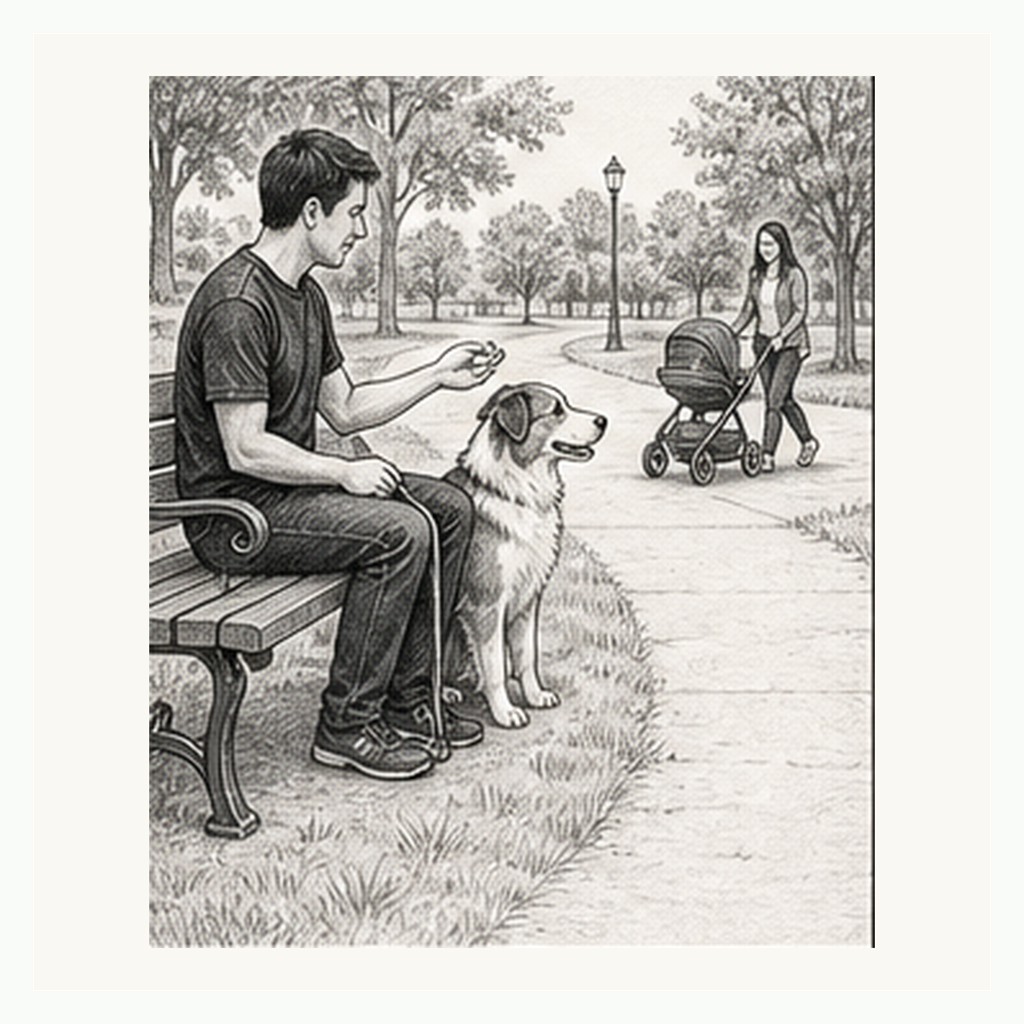
Day 22Expert

Crowded Sidewalk Positioning

Detailed sketch demonstrating Crowded Sidewalk Positioning

Tiny Win

Move to your side and pass tight pedestrian spaces.

Do This - 10 Minutes

  1. Identify a sidewalk with moderate pedestrian traffic.
  2. Move your dog to the side furthest from oncoming people.
  3. Reward every time the dog looks at you while passing someone.
  4. If the dog pulls toward a person, stop and wait for a check-in.
  5. Keep the leash short but loose to prevent building tension.

Watch For

  • On a narrow sidewalk, your dog moves right and passes a stroller without pulling.
  • 5 pedestrian passes with loose leash.
  • Your dog can reset before the session gets noisy or frustrated.

If It Gets Messy: Protect space instead of forcing closeness.

Track One Thing: 5 pedestrian passes with loose leash.

Need More Help?
  • Setup: Leash, treats, sidewalk progressing to busier areas.
  • Why it works: Move to your side and pass tight pedestrian spaces.
  • Common mistake: Making the setup too hard before the easy version is fluent.
  • Level up: Repeat with one small increase in distance, duration, or distraction.
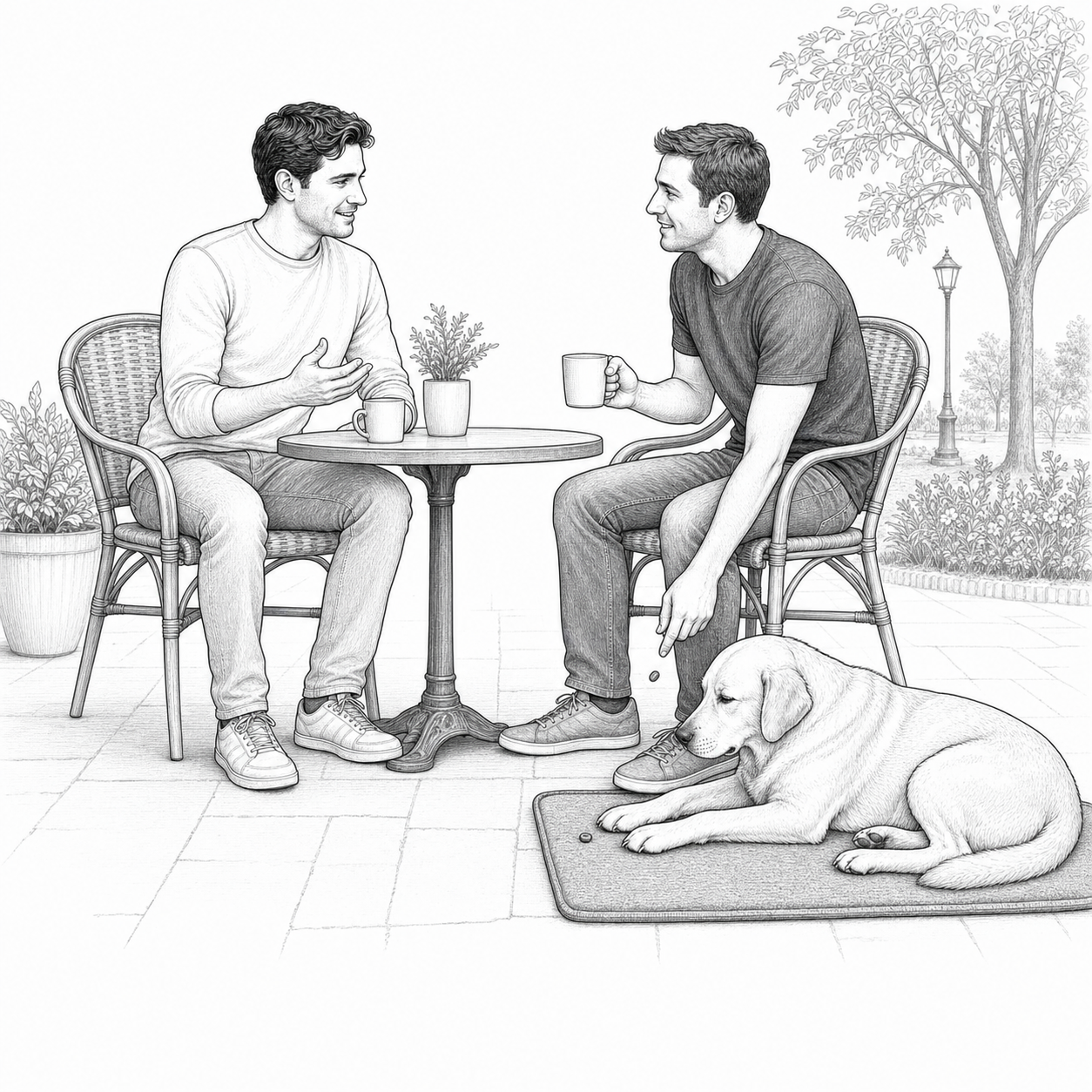
Day 23Expert

Settle During Conversation

Detailed sketch of a dog settled on a mat during a calm conversation in a public setting

Tiny Win

Remain calm while you stop and talk.

Do This - 10 Minutes

  1. Walk with your dog and stop to talk to a helper.
  2. Cue your dog to 'Sit' or 'Down' beside you.
  3. Begin a conversation and reward the dog for staying settled.
  4. Gradually increase the conversation length from 30 seconds to 2 minutes.
  5. Release the dog and continue the walk once the chat ends.

Watch For

  • You chat with a neighbor for 2 minutes while your dog lies beside you.
  • 3-minute conversation with no pulling.
  • Your dog can reset before the session gets noisy or frustrated.

If It Gets Messy: Human stillness is hard for many dogs.

Track One Thing: 3-minute conversation with no pulling.

Need More Help?
  • Setup: Leash, treats, helper, low-distraction area.
  • Why it works: Remain calm while you stop and talk.
  • Common mistake: Making the setup too hard before the easy version is fluent.
  • Level up: Repeat with one small increase in distance, duration, or distraction.
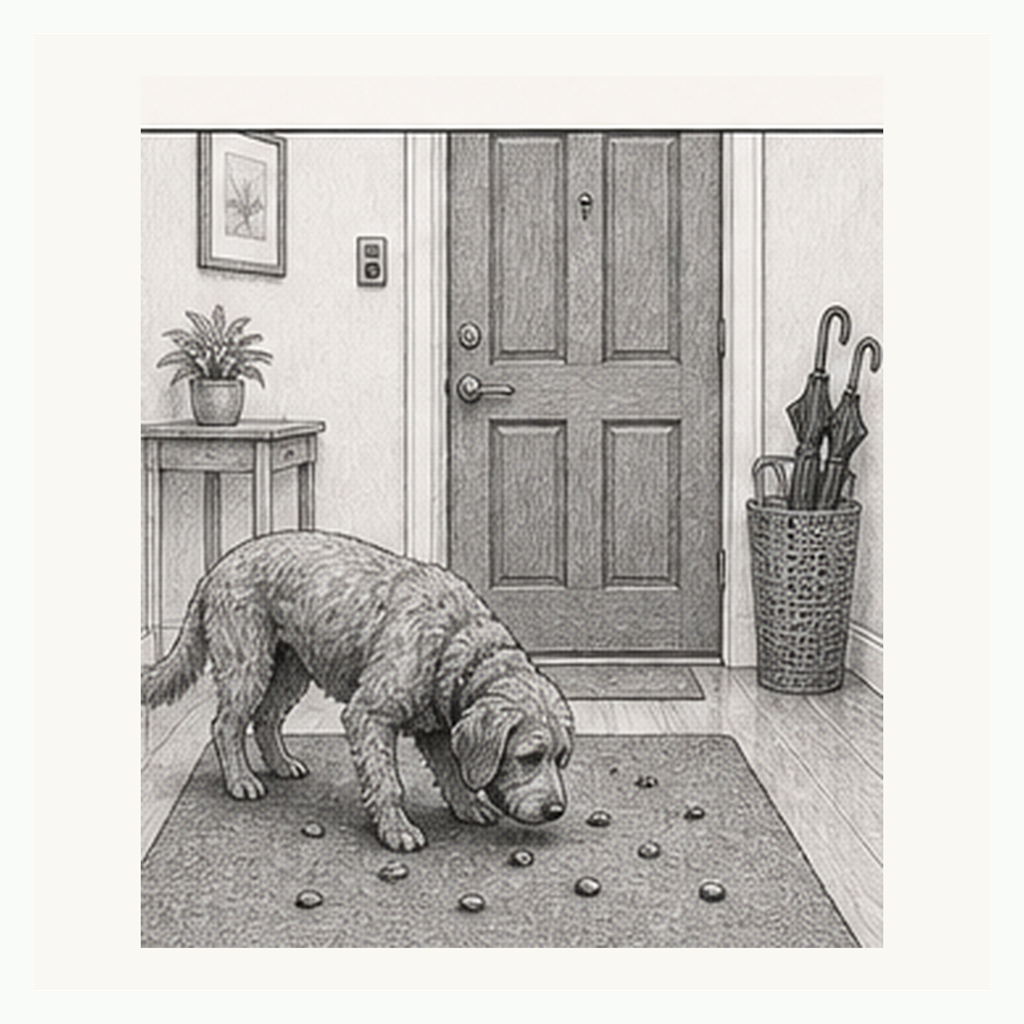
Day 24Expert

Recovery After Barking

Detailed sketch demonstrating Recovery After Barking

Tiny Win

Your dog comes down quickly after one bark or brief alert.

Do This - 10 Minutes

  1. If your dog barks at a trigger, move 20 feet away immediately.
  2. Wait for the dog to stop barking and look at you voluntarily.
  3. Cue a 'Touch' or 'Sit' to redirect their focus.
  4. Jackpot reward for the successful reset behavior.
  5. Wait for a relaxed body posture before continuing the walk.

Watch For

  • Your dog barks at a distant dog, follows you behind a car, sits, and takes treats.
  • 4 of 5 recoveries within 10 seconds.
  • Your dog can reset before the session gets noisy or frustrated.

If It Gets Messy: Help before your dog spirals.

Track One Thing: 4 of 5 recoveries within 10 seconds.

Need More Help?
  • Setup: Leash, treats, mild trigger, mat or escape route.
  • Why it works: This reinforces coming down quickly after one bark or brief alert.
  • Common mistake: Making the setup too hard before the easy version is fluent.
  • Level up: Repeat with one small increase in distance, duration, or distraction.
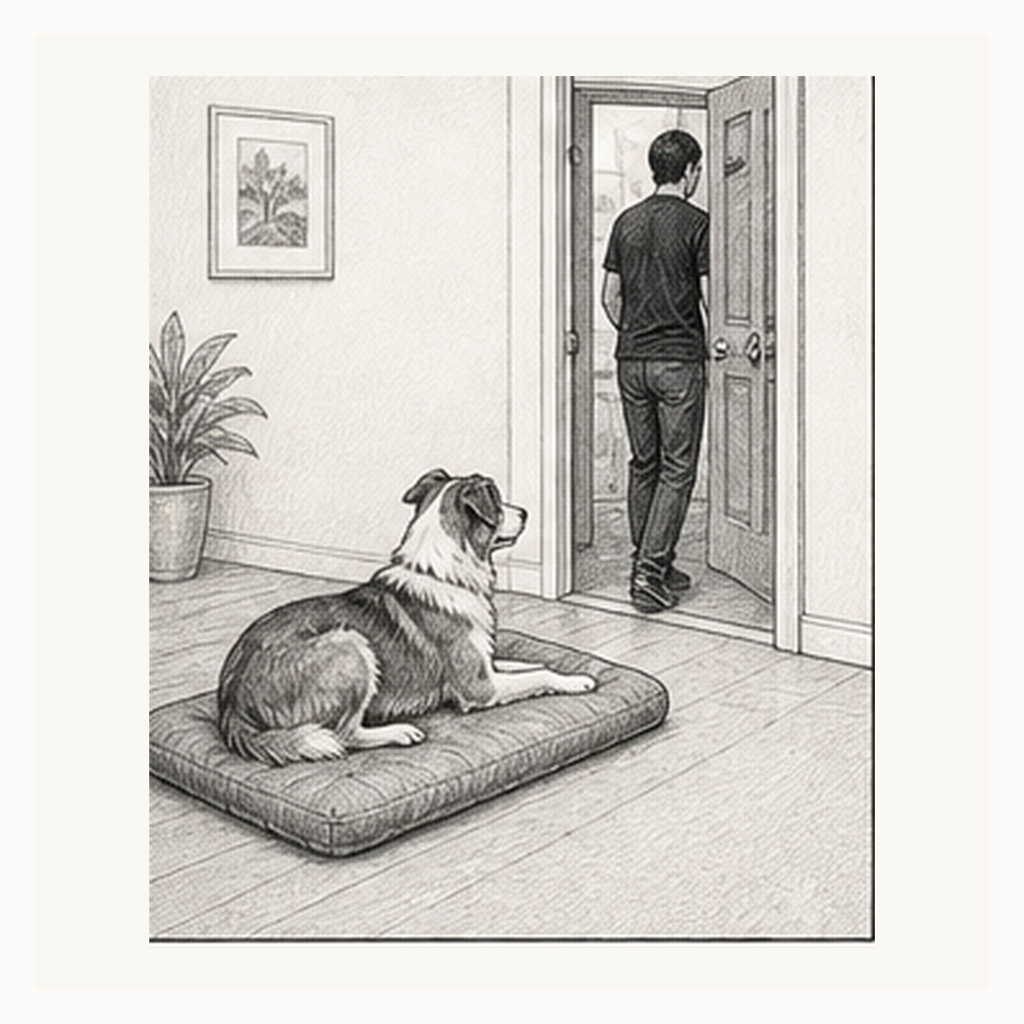
Day 25Expert

Long-Duration Stay With Movement

Detailed sketch demonstrating Long-Duration Stay With Movement

Tiny Win

Your dog holds a stay while you perform household actions.

Do This - 10 Minutes

  1. Cue your dog to 'Stay' on their mat in a quiet room.
  2. Perform a household task (like folding laundry or opening a cabinet).
  3. Return to the mat every 30 seconds to reward the stay.
  4. Increase the difficulty by walking into another room briefly.
  5. Always return to the dog to deliver the reward before releasing.

Watch For

  • Your dog stays while you open the closet, close it, and return.
  • 5 minutes through 3 household actions.
  • Your dog can reset before the session gets noisy or frustrated.

If It Gets Messy: Add one action at a time.

Track One Thing: 5 minutes through 3 household actions.

Need More Help?
  • Setup: Mat, treats, timer, quiet room.
  • Why it works: This helps your dog hold a stay while you perform household actions.
  • Common mistake: Making the setup too hard before the easy version is fluent.
  • Level up: Repeat with one small increase in distance, duration, or distraction.
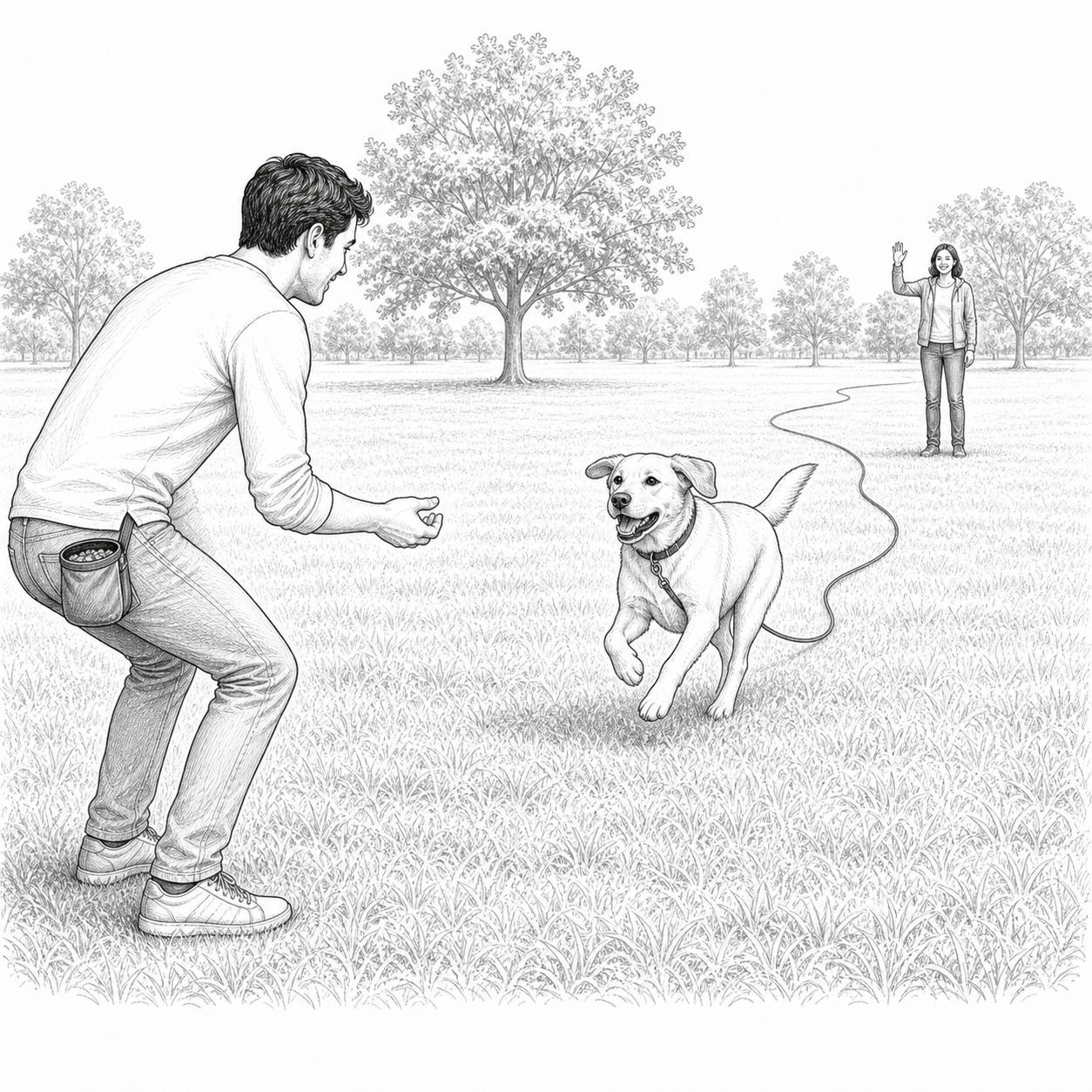
Day 26Expert

Recall Past Favorite Person

Detailed sketch of a dog recalling past a favorite person on a long line back to the handler

Tiny Win

Your dog comes to you even when a beloved person is nearby.

Do This - 10 Minutes

  1. Position a favorite person 30 feet away on a long line.
  2. Call your dog's name and move in the opposite direction.
  3. Reward heavily once the dog runs to you instead of the person.
  4. Release the dog to go play with the favorite person as a reward.
  5. Repeat, gradually moving the helper closer to the recall path.

Watch For

  • Your dog sees your spouse, comes to you, then earns permission to say hello.
  • 4 of 5 recalls from 15 feet.
  • Your dog can reset before the session gets noisy or frustrated.

If It Gets Messy: Access to the person can reward choosing you first.

Track One Thing: 4 of 5 recalls from 15 feet.

Need More Help?
  • Setup: Long line, liked helper, high-value rewards.
  • Why it works: This reinforces coming to you even when a beloved person is nearby.
  • Common mistake: Making the setup too hard before the easy version is fluent.
  • Level up: Repeat with one small increase in distance, duration, or distraction.
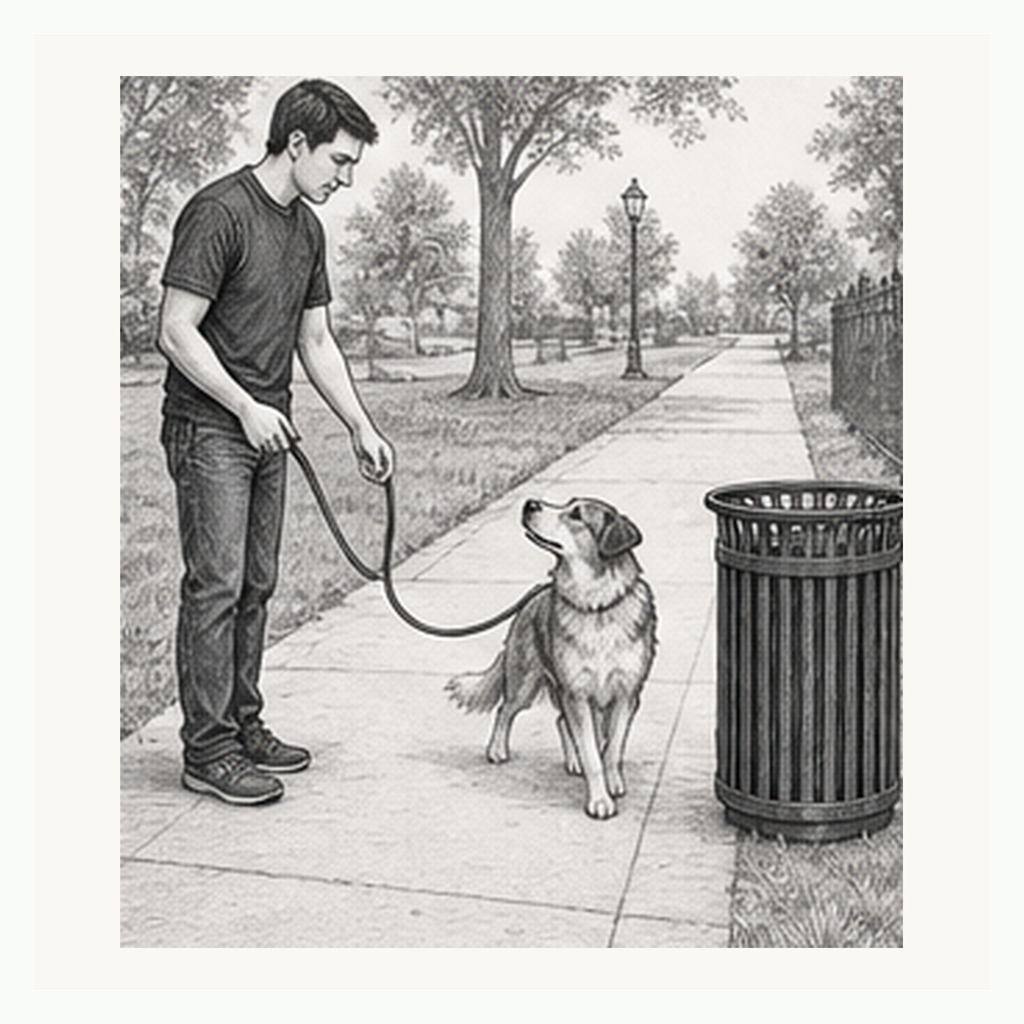
Day 27Expert

Leash Pressure Escape Skill

Detailed sketch demonstrating Leash Pressure Escape Skill

Tiny Win

Follow light leash guidance instead of bracing.

Do This - 10 Minutes

  1. Apply a very light sideways tension on the leash.
  2. Wait for the dog to take a single step toward the tension.
  3. Mark and reward the moment the leash goes slack.
  4. Repeat in different directions (left, right, and backward).
  5. The goal is for the dog to move *with* the leash, not against it.

Watch For

  • Your dog spots a squirrel; light side pressure cues a step with you and a reward.
  • Responds in 4 directions without bracing.
  • Your dog can reset before the session gets noisy or frustrated.

If It Gets Messy: This is direction teaching, not correction.

Track One Thing: Responds in 4 directions without bracing.

Need More Help?
  • Setup: Harness or flat collar, leash, treats.
  • Why it works: Follow light leash guidance instead of bracing.
  • Common mistake: Making the setup too hard before the easy version is fluent.
  • Level up: Repeat with one small increase in distance, duration, or distraction.
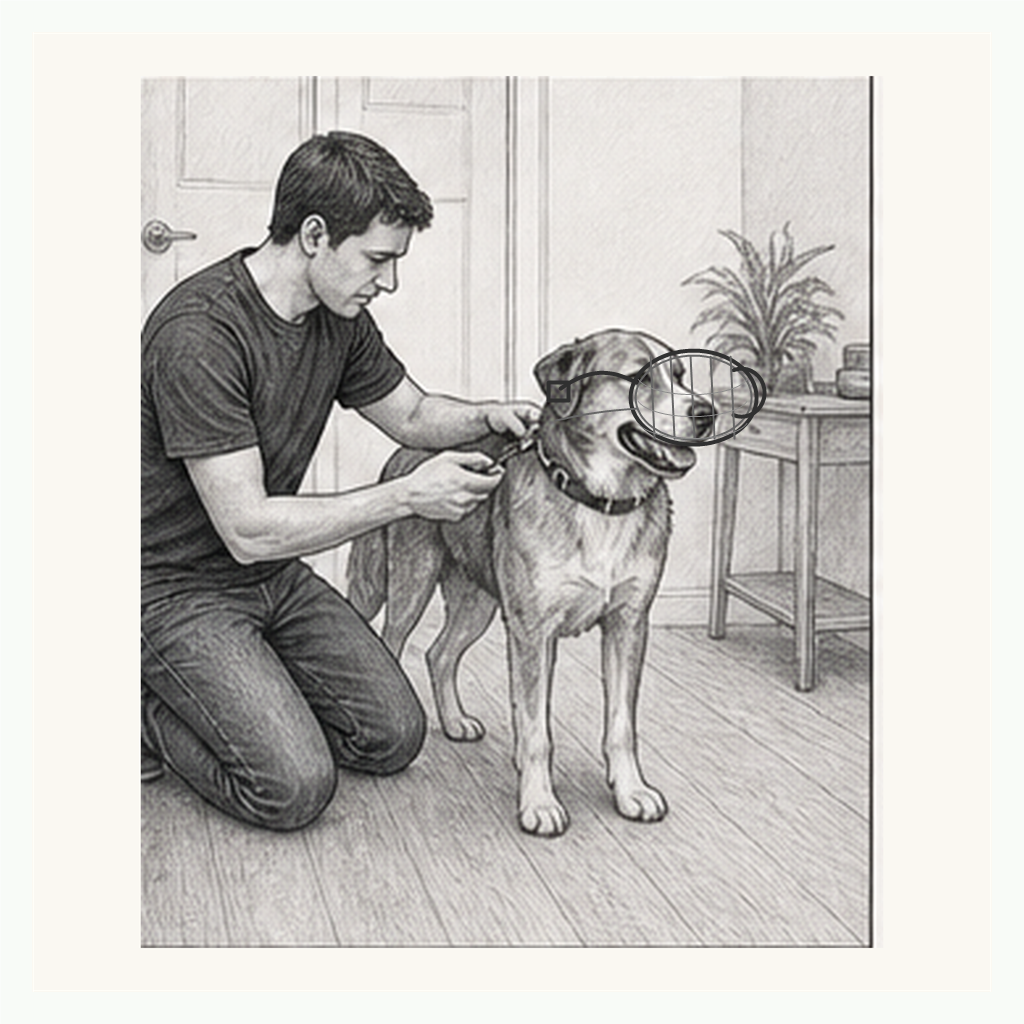
Day 28Expert

Muzzle Comfort for Emergency Care

Detailed sketch demonstrating Muzzle Comfort for Emergency Care

Tiny Win

Voluntarily place nose in a muzzle for future safety.

Do This - 10 Minutes

  1. Show the muzzle to your dog and reward for sniffing it.
  2. Place a treat inside the muzzle and let the dog eat it.
  3. Encourage the dog to place their nose inside for 2 seconds.
  4. Mark and reward for voluntary cooperation without straps fastened.
  5. Slowly build up to 5 seconds of nose-in time over several sessions.

Watch For

  • Your dog places their nose in the basket for 2 seconds and backs out freely.
  • 5-second voluntary nose-in relaxed.
  • Your dog can reset before the session gets noisy or frustrated.

If It Gets Messy: Muzzle training is responsible care, but it should stay voluntary here. Do not fasten straps, force the nose in, or use this as emergency restraint training without professional guidance.

Track One Thing: 5-second voluntary nose-in relaxed.

Need More Help?
  • Setup: Basket muzzle, soft treats, quiet room.
  • Why it works: Voluntarily place nose in a muzzle for future safety.
  • Common mistake: Making the setup too hard before the easy version is fluent.
  • Level up: Repeat with one small increase in distance, duration, or distraction.
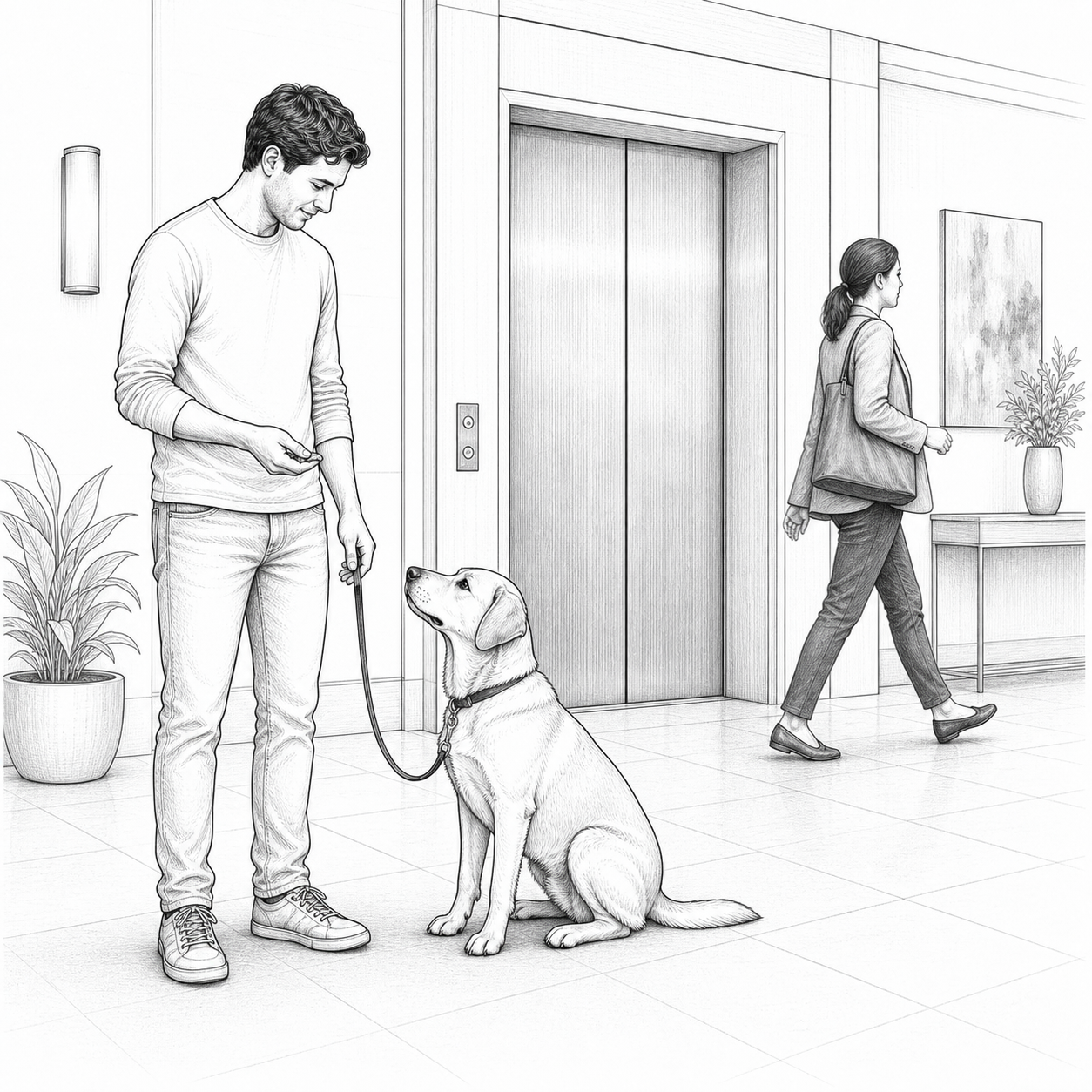
Day 29Expert

Lobby Calm Pattern

Detailed sketch of a dog staying calm beside the handler in a lobby while another person passes

Tiny Win

Handle small shared spaces with controlled positioning.

Do This - 10 Minutes

  1. Enter a quiet lobby and cue your dog to 'Sit' beside you.
  2. Reward for maintaining focus as elevator doors open and close.
  3. Practice stepping into the elevator and facing the back wall.
  4. Reward the dog for staying settled during the floor transition.
  5. Exit calmly only when the 'Free' or 'Okay' cue is given.

Watch For

  • An empty elevator opens; your dog steps in beside you, sits, then exits calmly.
  • 2 calm entries and exits.
  • Your dog can reset before the session gets noisy or frustrated.

If It Gets Messy: Skip crowded elevators; safety beats proving a point.

Track One Thing: 2 calm entries and exits.

Need More Help?
  • Setup: Leash, treats, quiet lobby or building entrance.
  • Why it works: Handle small shared spaces with controlled positioning.
  • Common mistake: Making the setup too hard before the easy version is fluent.
  • Level up: Repeat with one small increase in distance, duration, or distraction.
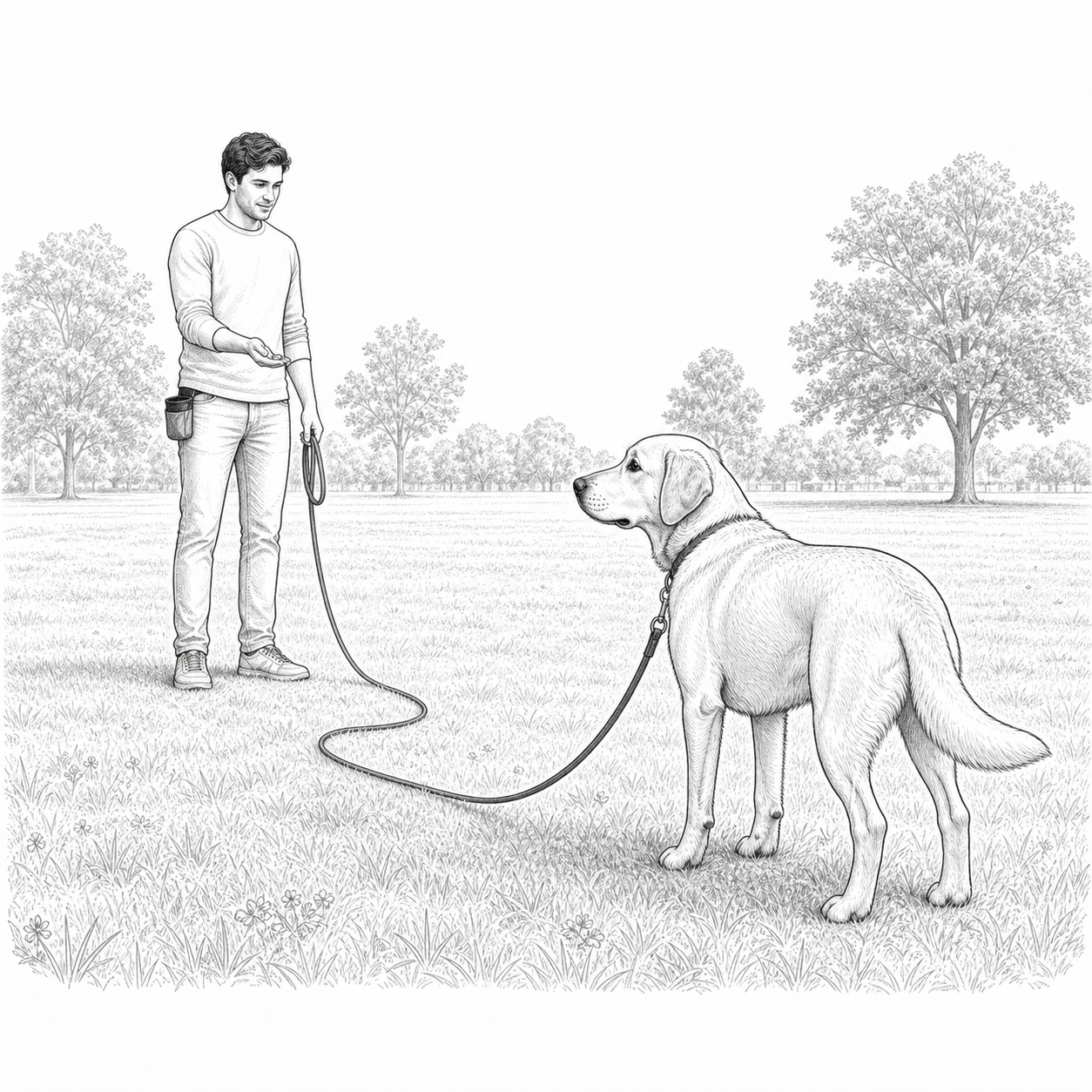
Day 30Expert

Emergency Stop on Long Line

Detailed sketch of a dog stopping on a long line and turning attention back to the handler

Tiny Win

Stop at a distance for safety in open areas.

Do This - 10 Minutes

  1. Let the dog trot ahead of you on a 30ft long line in a field.
  2. Give a clear 'Wait' or 'Stop' cue.
  3. The moment the dog stops, mark and jackpot.
  4. Walk up to the dog to deliver the reward so they don't return.
  5. Release them to continue forward as the ultimate reward.

Watch For

  • Your dog trots ahead; you say “wait,” they stop, and you walk up to reward.
  • 4 of 5 stops within 2 steps from 20 feet.
  • Your dog can reset before the session gets noisy or frustrated.

If It Gets Messy: Reward where the stop happened.

Track One Thing: 4 of 5 stops within 2 steps from 20 feet.

Need More Help?
  • Setup: Long line, harness, high-value treats, fenced field.
  • Why it works: Stop at a distance for safety in open areas.
  • Common mistake: Making the setup too hard before the easy version is fluent.
  • Level up: Repeat with one small increase in distance, duration, or distraction.